FDA clears new DMG treatment: What it means for a deadly pediatric brain tumor
Expert answers questions about ONC201, the first FDA-approved therapy for diffuse midline glioma
5:00 AM
Author |
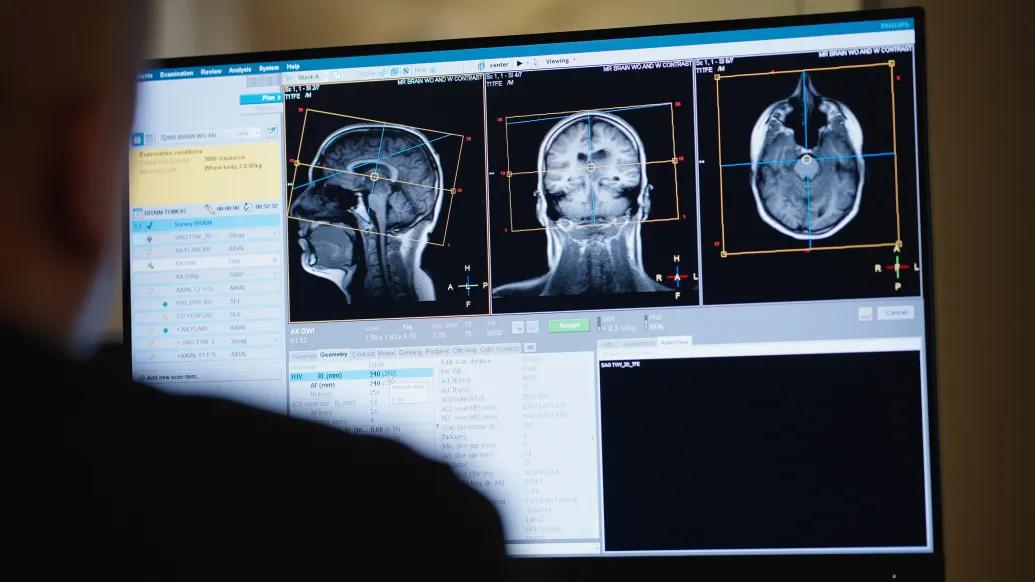
Diffuse midline gliomas are aggressive tumors that begin in the brain or spinal cord. A class of these cancers contains a mutation called H3K27M, which usually occurs in pediatric patients.
It's universally fatal, and patients typically live for nine to 15 months after diagnosis. There’s new hope, though, in the fight against DMG, as the Food and Drug Administration has approved ONC201 (dordaviprone) to treat recurrent H3K27M-mutant diffuse glioma.
It's the first-ever FDA-approved treatment for this disease.
Carl Koschmann, M.D., pediatric oncologist at University of Michigan Health C.S. Mott Children’s Hospital and co-director of the Chad Carr Pediatric Brain Tumor Center, answers questions about ONC201, the research that led to the FDA approval and what this means for patients.
How is ONC201 different from other drugs?
Koschmann: ONC201 is a unique drug. It was designed to target dopamine receptors, which are sometimes upregulated in solid tumors, including brain tumors.
Over the last few years, we and others have discovered that it primarily works by entering tumor cells and disrupting the mitochondria, which are responsible for generating energy.
How has ONC201 helped patients at U-M?
Koschmann: The Chad Carr Pediatric Brain Tumor Center at C.S. Mott Children’s Hospital has been a leading site for clinical trials involving the use of ONC201 in patients with H3K27M-mutant DMG or the related diffuse intrinsic pontine glioma.
Over the last seven years, we have treated over 125 of these patients with ONC201. Most are children and young adults, but we have also treated older adults.
Our overall experience is that some patients respond to ONC201 and, for a small subset of patients, we have seen significant reduction in tumor that has been sustained for years.
While tumors eventually regrow despite treatment, one benefit is that it is very well tolerated with minimal side effects, and the medicine is taken by mouth once a week.
What role did U-M play in furthering ONC201 research?
Koschmann: A collaborative study between my lab and Sriram Venneti’s lab found that brain tumor samples from patients treated with ONC201 demonstrated reversal of a key feature of H3K27M-DMG tumors.
A tumor marker called H3K27me3 is abnormally low in H3K27M tumors.
In ONC201-treated tumors, H3K27me3 was restored, showing that the tumor cells could revert to biology closer to normal brain tissue.
We uncovered the mechanism of how ONC201 reverses energy usage in H3K27M cells to make this change.
This was a key finding that was a critical step for the FDA review and approval of the drug.
U-M is also a leading site for studying blood and spinal fluid from patients treated with ONC201.
We found that these liquid biomarkers confirmed patient responses and could be used as early predictors of treatment response.
What does FDA approval of ONC201 mean for patients?
Koschmann: The FDA approved the use of ONC201 for patients whose tumors have progressed after initial treatment.
Physicians who study DMG therapies have found that there are many hurdles, in terms of defining what response data is appropriate for reviewing and what represents clinical success in DMG, since it is unlike any other brain tumors.
This approval helps define new rules for DMG drug approval which will help in the design of future trials.
We currently have patients traveling from around the country to obtain ONC201 at U-M through clinical trials and expanded access programs.
With this approval, the drug can now be prescribed by doctors throughout the United States, allowing patients with recurrent H3K27M-DMG to stay closer to home for their care.
We will now focus our efforts on other clinical trials, including those that combine ONC201 with other promising agents, since we know eventual treatments will require multiple treatment approaches.
What are the future directions for the field?
Koschmann: Another early success in DMG/DIPG includes using CAR-T to modify a patient’s T-cells and infuse into the brain to find the tumor.
With support from the ChadTough Defeat DIPG Foundation, we have recently opened a clinical trial from the City of Hope and have begun treating patients from around the Midwest and eastern U.S.
We will be one of only a few U.S. and international sites opening a surgical-based virus trial for DIPG through PNOC consortium this year.
Finally, we are launching a Pediatric Brain Tumor Metabolic Targeting Initiative to move new promising agents that target metabolism and epigenetics in DMG/DIPG and other high-risk pediatric brain tumors into trials.
We have just begun the ambitious goal of bringing the next compound to the clinic with the aim of eventual approval in the next five years.
It's an exciting time for our researchers, and we hope to build on this momentum in the years to come.

Health Lab
Explore thousands of health news & research stories by visiting the Health Lab homepage for more.
Media Contact

Public Relations
Department of Communication at Michigan Medicine
In This Story
Carl Koschmann, MD
Associate Professor
Related
Path forward for glioblastoma treatment

Pediatric brain tumors rely on different metabolic “route” to fuel treatment resistance
Stay Informed
Want top health & research news weekly? Sign up for Health Lab’s newsletters today!
Featured News & Stories
Comprehensive DNA sequencing reveals hidden drivers of cancer

Many older adults make Medicare decisions quickly and most don’t change plans, poll finds
‘Molecular glue’ stabilizes protein that inhibits development of non-small cell lung cancer and uterine cancer
What’s the latest on 7-OH and kratom availability and addiction care?

A metabolic “switch” that could help reset scar-producing cells in scleroderma