FDA-approved cancer drug fedratinib reshapes how cell organelles communicate, providing new therapeutic avenues
The anti-cancer drug alters communication between organelles that control specific metabolic pathways
5:00 AM
Author |
Cells behave like cities and organelles carry out infrastructural roles: Mitochondria are powerhouses, the endoplasmic reticulum serves as a transport hub and lysosomes help with waste disposal.
Communication between different parts of a cell is important for metabolism.
This inter-organelle communication can occur at sites where these parts are in contact with each other, known as membrane contact sites.
One of the most abundant interactions occurs at the endoplasmic reticulum and mitochondria contact sites, or ERMCS, and dysregulation leads to various diseases, including neurodegeneration, obesity, cancer and diabetes.
However, little is known about what drives ERMCS organization.
In a new study, University of Michigan researchers found that the FDA-approved drug fedratinib can lead to ERMCS formation, providing a potential therapeutic avenue.
Using human and mouse cell lines, the researchers screened a library of FDA-approved drugs to see which ones can influence ERMCS formation.
They found that the anti-cancer drug fedratinib could do so, and this increase was reversible when fedratinib was washed away from the cells.
The team found that fedratinib inhibits BRD4, a protein that controls how DNA is read by the cells in a process called transcription.
This inhibition activates a transcriptional pathway that induces ERMCS formation.
“Over the past few decades, researchers have seen that cell organelles work in conjunction and they need to talk to each other to do that. By identifying this signaling pathway, we can better understand how these contact sites are sustained,"
-Yatrik Shah
“Over the past few decades, researchers have seen that cell organelles work in conjunction and they need to talk to each other to do that,” said Yatrik Shah, Professor of Molecular and Integrative Physiology and member of the Rogel Cancer Center.
“By identifying this signaling pathway, we can better understand how these contact sites are sustained.”
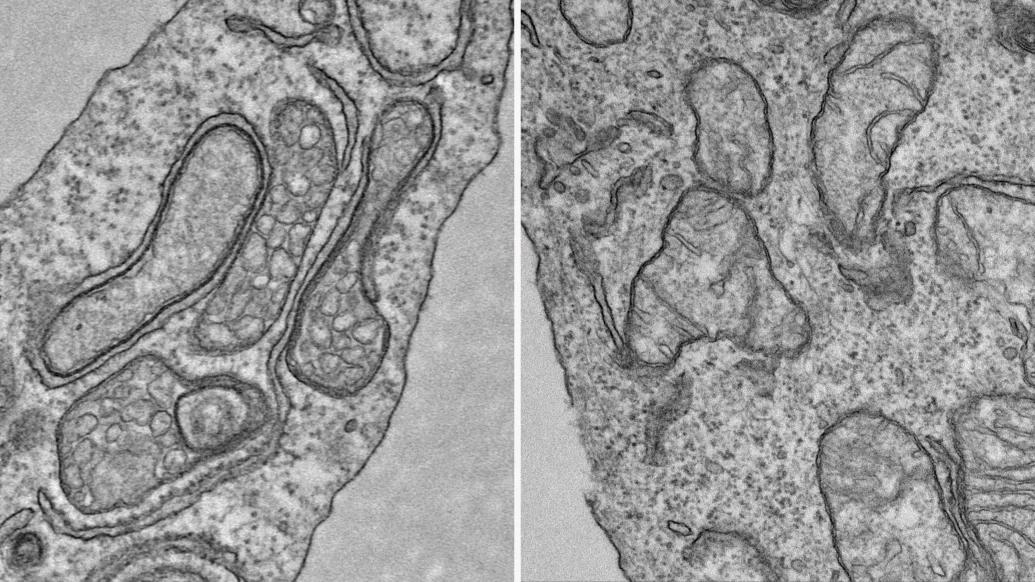
Using electron microscopy, the researchers showed that fedratinib also caused novel structural changes in the ERMCS sites.
These changes were similar to what is seen when cells are infected with SARS-CoV-2 and in metastatic melanoma cells.
“We found 3D envelopment of the endoplasmic reticulum that formed around the mitochondria in our cell lines,” said Drew Stark, a graduate student in the Shah and Lyssiotis labs and an author of the paper.
“There were also different populations of mitochondria that differed in their degree of contact with the endoplasmic reticulum.”
Approximately 30% of the mitochondria exhibited structural alterations, and the researchers believe that those with abundant contact sites are being used to support specific metabolic pathways.
The researchers are investigating whether the same effects are seen in mouse models.
They also aim to understand how these mitochondria are affecting metabolic processes and whether they have similar roles in other diseases.
Additional authors: Brandon Chen, Pankaj V. Jadhav, Theophilus M. Lynn-Nguyen, Benjamin S. Halligan, Nicholas J. Rossiter, Nicole Sindoni, Myunsun Shin, Joao A. Paulo, Matthew Chang, Imhoi Koo, Sergei Koshkin, Sanjana Eyunni, Paolo Ronchi, Michelle T. Paulsen, Harrison S. Greenbaum, Mariana T. Ruckert, Pietro Morlacchi, David A. Hanna, Jason Lin, Rachel M. Guerra, Tao Liu, David J. Pagliarini, Ruma Banerjee, Abhijit Parolia, Mats E. Ljungman, Andrew D. Patterson, Joseph D. Mancias, Shyamal Mosalaganti, Jonathan Z. Sexton, Tito Calì, and Costas A. Lyssiotis.
Funding/disclosures: Chen was supported by NCI F99CA284256-01. Stark was supported by NIGMS 5T32GM145304-03. Shah was supported by NCI R01CA148828, R01CA245546, and NIDDK R01DK095201. Lyssiotis was supported by NCI R37CA237421, R01CA248160, and R01CA244931. Mosalaganti was supported by NIGMS DP2GM150019. Pagliarini was supported by NIDDK R01DK098672 and NIGMS R35GM131795. Rossiter was supported by NIGMS T32GM145470 and T32GM150581. Greenbaum was supported by NIGMS T32GM156550. Banerjee was supported by NIGMS R35GM130183. Hanna was supported by NIGMS F32GM140694. Patterson was supported by NIH S10OD021750, USDA National Institute of Food and Federal Appropriations Project PEN04917, Accession 7006712 and Pennsylvania Department of Health using Tobacco CURE funds. Cali was supported by Italian Ministry of University and Research PRIN2017, University of Padova STARS Consolidator Grant 2019 and Progetto di Ateneo 2023 no. CALI_BIRD23_01, and PNRR – CN3 National Center for Gene Therapy and Drugs based on RNA Technology n. CN00000041 (2022-26).
Tech transfer(s)/Conflict(s) of interest: Lyssiotis has consulted for Astellas Pharmaceuticals, Odyssey Therapeutics, Third Rock Ventures, and T-Knife Therapeutics and is an inventor on patents pertaining to Kras regulated metabolic pathways, redox control pathways in pancreatic cancer, and targeting the GOT1-ME1 pathway as a therapeutic approach (US Patent No: 2015126580-A1, 05/07/2015; US Patent No: 20190136238, 05/09/2019; International Patent No: WO2013177426-A2, 04/23/2015). Mancias reports research support from Novartis and Casma Therapeutics and has consulted for Third Rock Ventures and Skyhawk Therapeutics.
Michigan Research Core(s): University of Michigan Biomedical Research Core Facilities, Flow Cytometry Core, Advanced Genomics Core and Microscopy Core.
Paper cited: “BRD4-mediated ER membrane contact creates functionally distinct mitochondria subtypes,” Molecular Cell. DOI: 10.1016/j.molcel.2026.01.012
Sign up for Health Lab newsletters today. Get medical tips from top experts and learn about new scientific discoveries every week
Sign up for the Health Lab Podcast. Add us wherever you listen to your favorite shows.

Health Lab
Explore thousands of health news & research stories by visiting the Health Lab homepage for more.
Media Contact

Public Relations
Department of Communication at Michigan Medicine
In This Story

Yatrik M Shah
Professor
Stay Informed
Want top health & research news weekly? Sign up for Health Lab’s newsletters today!
Featured News & Stories
FDA-approved drug offers hope for patients with polycythemia vera, a rare bone marrow disorder
Pediatric patient treated for rare kidney cancer
Rare cancer diagnosis inspires community of support
Talent show brings joy to kids at children’s hospital
Max Wicha set to retire after 46 years