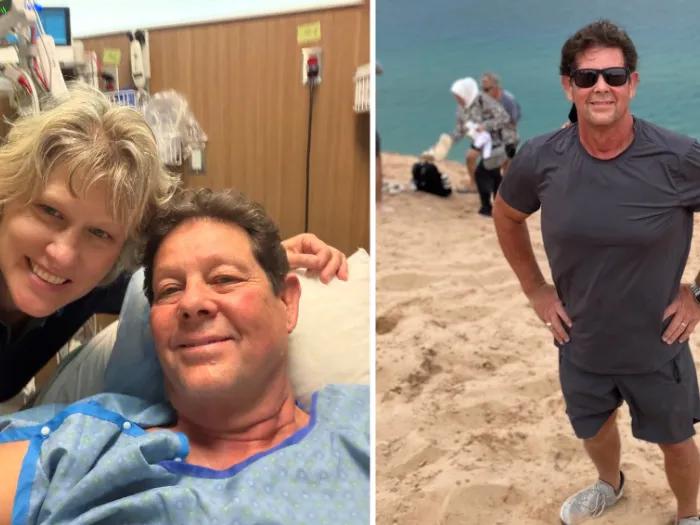
Father’s journey with glioblastoma inspires son to become neurosurgeon
Family’s annual golf outing benefits brain cancer research
11:52 AM
Author |
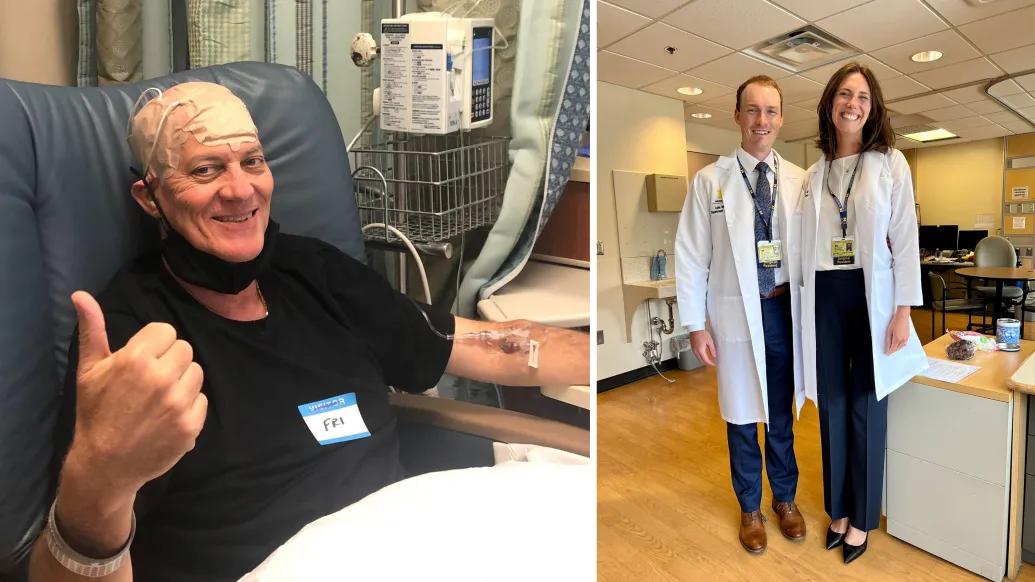
Three years after losing his father to brain cancer, a resident at University of Michigan Health is practicing neurosurgery in his honor — and raising money for glioblastoma research.
“Going through this process with my dad, built upon preexisting interests, inspired me to enter the specialty,” said Luke McVeigh, M.D., who is in the first year of a seven year residency program in the Department of Neurosurgery.
“Sometimes people can be discouraged by neurosurgery due to the volume of neurointensive and critically ill cases we see. But this journey encouraged me to work with very sick neurosurgical patients.”
Brian McVeigh, Luke’s father, was diagnosed with glioblastoma in fall 2019. The fast growing cancerous brain tumor is aggressive, and glioblastoma patients rarely live longer than a year and a half with the condition.
Neurosurgeons at a hospital in West Michigan resected the tumor in November. Despite an emerging COVID-19 pandemic, Luke McVeigh says his father had a strong recovery after surgery. A scan taken in July appeared to show the cancer had shrunk.
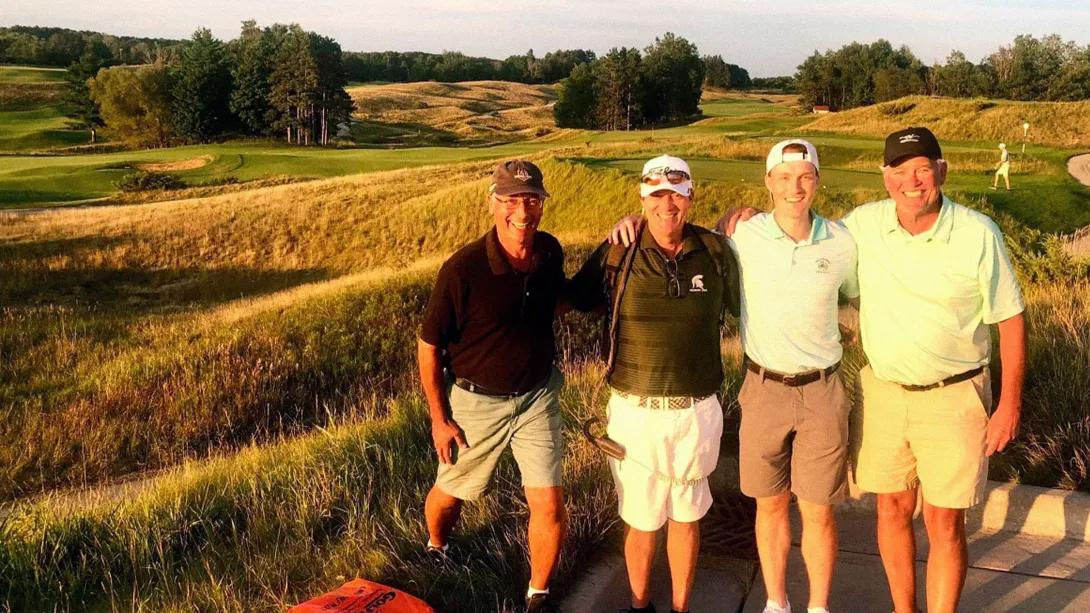
The news allowed Brian McVeigh to enjoy summer 2020 more than the family anticipated. He joined Luke and two friends on a golf trip to Arcadia Bluffs in northern Michigan that August.
“He said this was his dream foursome, ” said Luke McVeigh, who was a second year medical student at Indiana University at the time.
“My dad was a big golfer, and northern Michigan in the summer is one of the best places on earth. It was a wonderful time with lifelong friends, filled with laughs and sharing old stories.”
In September 2020, a scan revealed that the cancer had progressed to other hemisphere of Brian McVeigh’s brain. Despite receiving a gamma knife radiosurgery and a new chemotherapy medication, he declined quickly over the next few months.
“Seeing the process of how he recovered and also caring for him toward the end of life is what kind of shifted things for me,” Luke McVeigh said.
“He had some great times before his recurrence later that year, which happens for pretty much everyone with glioblastoma. Going through that with him showed me the value that neurosurgeons have, even when some people look at the life expectancy and see it as pretty grim. It’s something we deal with a lot in neurosurgery and not something I want to run away from.”
Just over one year after his death, Brian McVeigh’s family started a memorial golf outing and banquet in 2022. The first outing raised nearly $50,000 for brain cancer research and about 250 people attended.
Now a neurosurgery resident in Ann Arbor, Luke McVeigh plans to donate funds from the third annual outing to brain cancer research at U-M.
“We were very lucky to be able to recruit Luke to train at the University of Michigan — he is a stellar young physician, humble and hardworking, with excellent academic abilities and a superior work ethic”, said Oren Sagher, M.D., neurosurgeon at U-M Health and director of the Department of Neurosurgery residency program.
“His personal experience with the tragedy of glioblastoma has clearly inspired him, and it allows him to connect with patients and their families on a deep level. I believe it will continue to propel him to make advances in the field and to change the lives of the patients lucky enough to be under his care.”
While still undecided on the specific subspecialty within neurosurgery he plans to pursue, Luke McVeigh says he will carry his father with him throughout his medical career.
“He took an interest in people, he was very good about making people feel cared for,” he said.
“I try to emulate him and will remember this when I work with the patients who come to me for care.”
Sign up for Health Lab newsletters today. Get medical tips from top experts and learn about new scientific discoveries every week by subscribing to Health Lab’s two newsletters, Health & Wellness and Research & Innovation.
Sign up for the Health Lab Podcast: Add us on Spotify, Apple Podcasts or wherever you get you listen to your favorite shows.

Health Lab
Explore thousands of health news & research stories by visiting the Health Lab homepage for more.
Media Contact

Public Relations
Department of Communication at Michigan Medicine
Stay Informed
Want top health & research news weekly? Sign up for Health Lab’s newsletters today!
Featured News & Stories

A concussion expert and football father discusses why he values teamwork over zero-risk

5 things to know about ALS
First person-centered measure of dementia caregiving styles improves partner, patient outcomes
Can blood tests detect Alzheimer’s disease in its early stages?
College of Pharmacy alum advances U-M Medical School addiction research