Family seeks answers as rare neurodegenerative disease affects teen daughter
Noelle is among an estimated 500 people in the world diagnosed with BPAN, which causes severe cognitive decline and life-limiting symptoms
1:38 PM
Author |
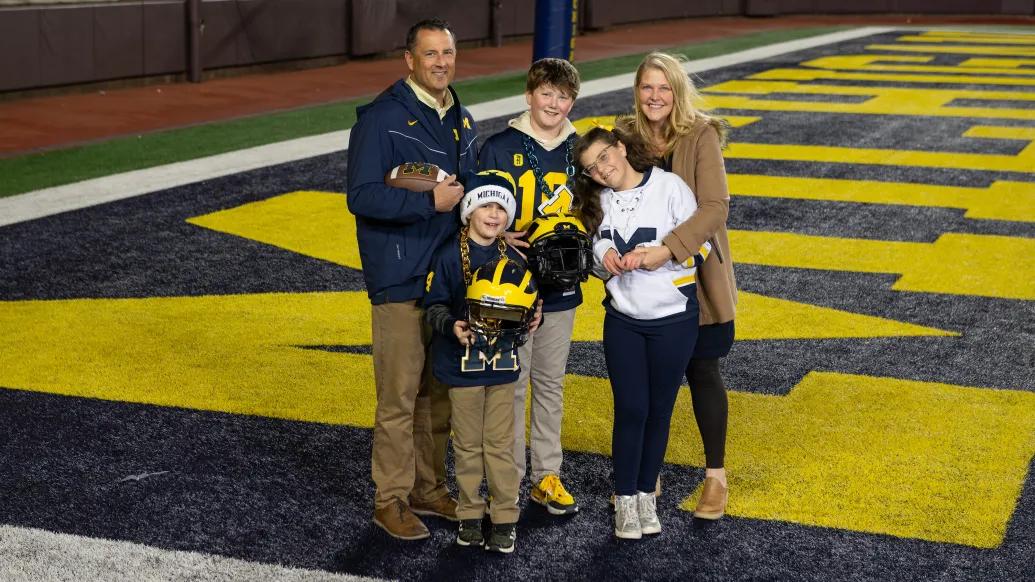
Learn more about supporting BPAN research at Michigan Medicine.
Noelle “Elle” Kegler loves music, all things Disney and getting hugs from everyone.
Because of a rare neurodegenerative disease causing progressive cognitive decline, the 13-year-old also has trouble talking, walking and performing day-to-day functions.
Her parents, Brian and Kaci Kegler, describe the day of her diagnosis as devastating.
After multiple consultations about delays in Elle’s developmental milestones and seizures, the family was referred to the pediatric genetics team at University of Michigan Health C.S. Mott Children’s Hospital when she was five years old.
Full genome sequencing helped determine that Elle had what’s called beta-propeller protein-associated neurodegeneration, or BPAN, a rare genetic disorder that damages the nervous system and affects roughly 500 people in the world.
The disease was discovered in 2012, the year after Elle’s birth.
It was so obscure that the description was just one paragraph long. There was little research, few treatment options and no cure.
“We had to accept the fact that while we finally had an answer, we still didn’t have answers,” Kaci Kegler said.
“Our whole world shattered that day.”
It’s why the Keglers, who today both work at U-M, are dedicated to raising awareness and fundraising for research for the rare condition: hope for better answers for Elle and other children like her.
“We share Elle’s story to help bring this to the forefront and be part of the solution,” Brian Kegler said.
A life-limiting, incurable condition
BPAN is characterized by the accumulation of iron in the brain caused by gene mutations on the X chromosome. It’s more common in girls.
Symptoms range in severity but affected children often experience intellectual disability and have difficulty with gross and fine motor skills like using utensils or tying shoes, and commonly experience seizures, repetitive behaviors and expressive language delays that lead to only being able to speak a few words.
Children may make some developmental gains, but then stop and experience regression, including parkinsonism.
BPAN is a pure example of how mutations can lead to a disease. Other conditions like heart disease or cancer aren’t caused by a single mutation but with BPAN, there’s a smoking gun. We know what to go after.”
-Sami Barmada, M.D., Ph.D.
A severe loss of reasoning abilities can also lead to dementia in adolescence and early adulthood.
There’s no cure for BPAN, but treatments can help manage symptoms.
Because the disease is still extremely rare, grassroot fundraising – primarily driven by families – has been the main source of research support.
Such efforts support research at Michigan Medicine where scientists like Sami Barmada, M.D., Ph.D., associate professor of neurology at the U-M Medical School, and colleagues seek to answer questions about BPAN.
Barmada’s team reprogrammed blood cells from patients with BPAN into stem cells, allowing them to create nerve cells that are missing the disease-causing gene, WDR45.
The goal is to use prime editing, a highly accurate form of the genome-editing tool CRISPR, to correct the mutation and ultimately prevent neurodegeneration.
“BPAN is a pure example of how mutations can lead to a disease. Other conditions like heart disease or cancer aren’t caused by a single mutation but with BPAN, there’s a smoking gun. We know what to go after,” Barmada said.
“If we can reverse that mutation using genome editing therapies in the lab, that opens the door to doing the same in humans and addressing more conditions caused by inherited mutations. This would make a huge difference for families affected by devastating diseases like BPAN.”
Celebrating moments of hope
Elle’s care is led by Martha Carlson, M.D., a pediatric neurologist at Mott where she’s regularly monitored.
At home, she requires constant caretaking and supervision because her cognitive abilities are almost 10 years behind peers, her parents say.
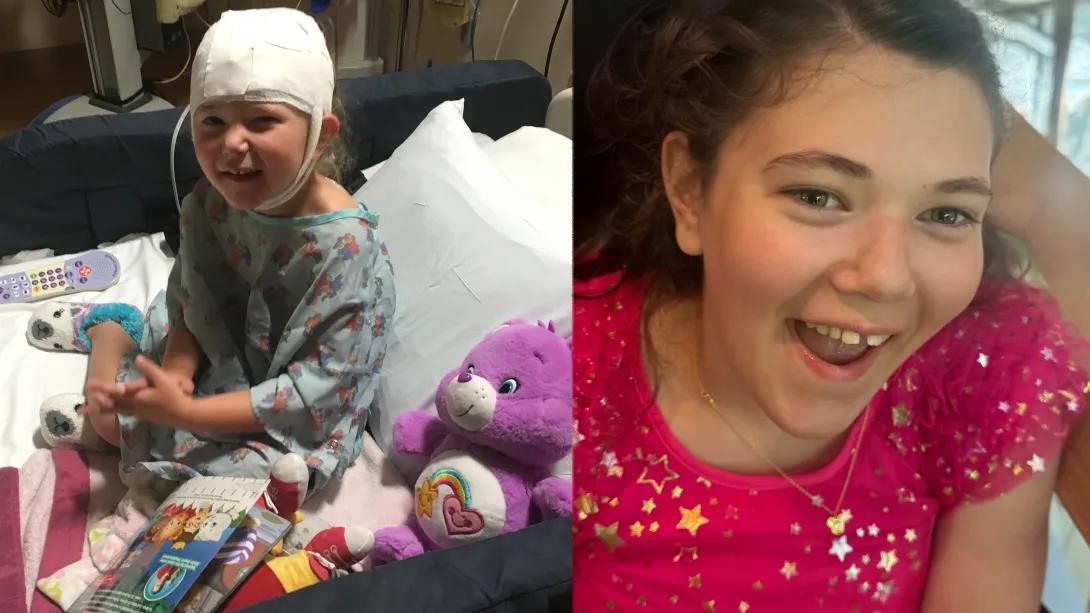
Her family recognizes her frustration in not being able to verbalize her feelings or always feeling understood and as she ages, she’s expected to continue losing mobility and brain function.
But Elle is “full of joy,” enjoying time with her family, which includes brothers Nolan, 14, and Theo, 7.
And there are moments when the teen, who loves Minnie Mouse, Taylor Swift and Disney’s “Frozen,” surprises her family by singing to her favorite songs or completing a task before leaving the house.
“Her current prognosis is heartbreaking. But we have those glimmers of hope in moments that are so beautiful and that we can celebrate,” Kaci Kegler said.
“Those moments make you think of the “what ifs.” What if there was a gene therapy or treatment that would help her have some of that clarity more often and save her from what we know could be a painful future.”

Health Lab
Explore thousands of health news & research stories by visiting the Health Lab homepage for more.
Media Contact

Public Relations
Department of Communication at Michigan Medicine
In This Story

Martha Diane Carlson, MD, PhD
Clinical Associate Professor
Stay Informed
Want top health & research news weekly? Sign up for Health Lab’s newsletters today!
Featured News & Stories
U-M alumni return from Central Asia to seek treatment for their child at Mott
C.S. Mott Children’s Hospital first in country to implant expandable heart valve during FDA review phase
How to improve mental health safety on social media – not just for young people

5 things to know about ALS

Many parents face challenges getting kids to eat a healthy breakfast before school