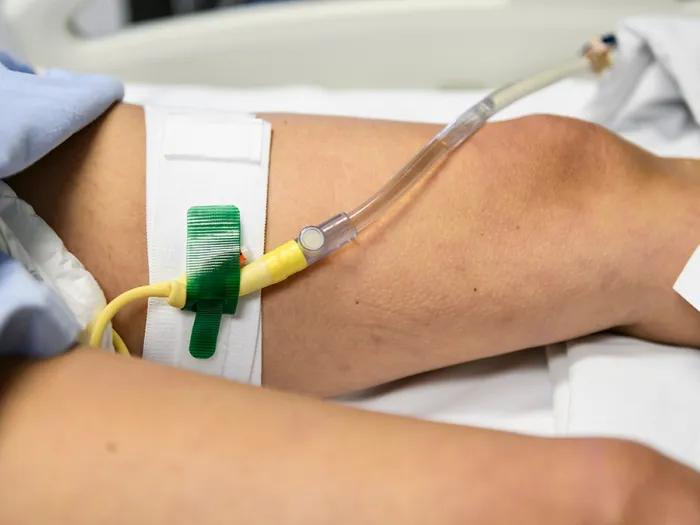
Extreme temperature changes increase number of out-of-hospital cardiac arrests, model finds
A machine learning model identifies environmental and social risk factors that contribute to these cardiac events
5:00 AM
Author |

Out-of-hospital cardiac arrest, or OHCA, is a leading cause of mortality worldwide and 90% of cases are fatal.
Patients lose cardiac function and circulation, and every minute they remain untreated decreases the likelihood of a good outcome.
In a study published in npj Digital Medicine, a team of researchers led by the University of Michigan developed a machine learning model that identified 17 environmental and social factors that can influence the risk of OHCA.
They hope that their findings will help emergency medical services adjust their resources based on environmental risk.
Previous studies have shown that changes in outside temperature are associated with increased cardiovascular events.
However, those models were based on simpler statistical methods, known as conventional linear regression, and are less suited to handling large amounts of data and variables that change in complex ways.
To overcome these limitations, the U-M team used advanced machine learning techniques capable of analyzing multiple interacting variables.
The researchers used patient data from the Cardiac Arrest Registry to Enhance Survival, or CARES, the largest national system that tracks OHCA.
They built their model using more than 190,000 cases from 2013 to 2017 and identified 17 factors that can predict OHCA risk.
Weather conditions and OHCA incidence
The researchers tested their findings on more than 140,000 cases between 2018 and 2019 and found that their model consistently predicted nationwide OHCA incidence, even in areas not included in the training data.
Mean ambient temperature, including both colder days and extremely warm ones, as well as higher relative humidity, influenced the number of OHCA incidents.
Social factors, such as including poverty and race, may also amplify their impact.
"The risks associated with cardiovascular events were mostly based on the individual risk factors, including hypertension,” said Takahiro Nakashima, M.D., Ph.D., a postdoctoral research fellow in the Neumar group and the first author of the paper.
"Our prediction model is the first to show that external environmental factors also influence risk."
In addition to its high prediction accuracy, the model was able to predict OHCA patterns up to seven days in advance.
Although it is unclear why rapid changes in weather increase the incidence of OHCA, the researchers emphasized the need for more patient data to improve the model.
"The model works on a national level and in areas that participated in the CARES registry,” said Robert Neumar, M.D., Ph.D., professor of emergency medicine and member of the Weil Institute for Critical Care Research.
"In areas that didn’t participate, we had to extrapolate the results, which led to a slight decrease in predictive accuracy."
The team hopes that their findings will help emergency medical services balance how they deploy their ambulances to reduce response time and improve patient outcomes.
Additionally, by incorporating individual risk, public health agencies could use weather forecasts to educate vulnerable populations on high risk days.
Additional authors: Soshiro Ogata, Eri Kiyoshige, Mohammad Z. Al-Hamdan, Yifan Wang, Teruo Noguchi, Theresa A. Shields, Rabab Al-Araji, Bryan McNally and Kunihiro Nishimura.
Funding/disclosures: This research was partially supported by a Grant-in-Aid for Young Scientists (20K17914) from the Japan Society for the Promotion of Science and Takeda Science Foundation.
Paper cited: “Development and evaluation of a machine learning model predicting out-of-hospital cardiac arrest using environmental factors,” npj Digital Medicine. DOI: 0.1038/s41746-025-02235-4

Health Lab
Explore thousands of health news & research stories by visiting the Health Lab homepage for more.
Media Contact

Public Relations
Department of Communication at Michigan Medicine
In This Story

Robert W Neumar, MD, PhD
Professor
Related
5 hot weather tips that could save an older adult’s life

4 ways to stay safe during the big winter storm
Stay Informed
Want top health & research news weekly? Sign up for Health Lab’s newsletters today!
Featured News & Stories
A metabolic “switch” that could help reset scar-producing cells in scleroderma

Depression in OBGYN residents needs more attention, study suggests

Emergency room intervention pairs smartphone, telehealth counseling to reduce risky firearm behavior
Better prenatal care data could help prevent maternal complications, experts say
Pain, psychological factors and physical function closely linked in people with systemic sclerosis