Is everything you know about Alzheimer's wrong?
Confidence waned after a scientific scandal, but the recent success of amyloid-targeting drugs in Alzheimer's disease gives new hope -- and Michigan researchers have made strides beyond amyloid and shown the power of prevention too
11:56 AM
Author |

Originally published in 2022; updated in October 2025.
If you've followed the news about Alzheimer's disease research in recent years, you might find yourself wondering what else could go wrong in the quest to find a cure for this devastating disease.
First, a much-anticipated new drug called Aduhelm got approval from the Food & Drug Administration – but its actual effect on patients was so small that insurance wouldn't cover it.
Not surprisingly, it’s no longer on the market.
Several other promising drugs also got sidelined or showed less-than-impressive results in clinical trials.
And then a scandal broke: New evidence came to light that researchers had faked images in a paper published 16 years ago – a paper that other researchers had trusted and relied on as they did their own work.
What do these developments have to do with one another?
They're tied to the protein beta-amyloid, the plaque-forming sludge that gunks up outside brain cells.
It's a protein that's been the focus of decades of research, as an important factor in the disease and potential treatments to reverse it.
With these scandals and failures, some have suggested scientists were wrong in thinking amyloid is so important. But now, says the head of the Michigan Alzheimer's Disease Research Center, scientists know they weren’t wrong.
Amyloid is important. But it’s only part of the Alzheimer’s puzzle.
Two anti-amyloid treatments recently succeeded in clinical trials and are now available in clinics across the country, including at University of Michigan Health.
The two treatments, lecanemab (Leqembi) and donanemab (Kisunla), slow disease progression by almost 30% in patients with mild symptoms of Alzheimer’s. Both are intravenous medications, and they come with some risk. A subcutaneous form (injected under the skin by a device used at home) is currently being tested.
So amyloid is, in fact, important. But the fact that anti-amyloid treatment is only partly effective indicates much more must be going on in Alzheimer’s. In fact, scientists at MADC have spent years looking beyond amyloid for answers to the roots of dementia and ways to prevent or treat it.
"It's true that amyloid plays a role in the brain and dementia, but Alzheimer's disease is complicated and there's much more to it than one molecule," said Henry Paulson, M.D., Ph.D., who directs the center and has devoted his own laboratory's research at Michigan Medicine and his clinical care to dementia and other neurodegenerative diseases for decades.
The paper at the center of the scandal focused on a specific form of amyloid, AB*56, that was put forth as an important "toxic oligomer" encouraging plaque formation.
But Paulson says he and many of his colleagues did not pay much attention to it for many years, because researchers couldn’t replicate the results.
"I'm more worried about what the news of the scandal does to the public's perception of science than to our ability to make progress against this disease," he said. “We scientists spend much of our time replicating our own work -- to make sure we don’t get it wrong! In this case, the delay in uncovering the fraud wasn't ideal, and shows the importance of scientists speaking up and publishing results even when their experiments fail to prove another team's claim."
This kind of publishing of "negative results" – papers that don't give good news about a potentially promising idea – is not always encouraged, because scientists have more reason to leave those results on the shelf and spend time writing papers about things that do work.
But if no one knows that an effort to reproduce a scientific discovery has failed, then other scientists could spin their wheels driving down a blind alley.
"We believe much more attention needs to be paid to other factors and proteins underlying various dementias, ranging from environmental factors, to the immune system, to specific molecules like tau, which is the other hallmark protein of Alzheimer's disease," Paulson explained.
“Targeting amyloid for treatments may be like trying to saddle up a horse that has already left the barn,” he says – too much has happened in the disease process by the time the plaques begin to form for a treatment to make a difference. “That’s why these new anti-amyloid drugs only work for people with mild symptoms of disease.”
Working further upstream in the process, and doing more with modern tools to understand the process by studying people in the early stages of memory loss, could prove important.
That's why the Michigan Alzheimer's Disease Center is always seeking people to take part in studies involving everything from brain scans to surveys. Anyone who wants to get involved can start the process by making an initial inquiry.
Alzheimer's and other forms of dementia are complicated diseases, and likely result from multiple things going wrong in the brain over time, not one rogue molecule, Paulson explains.
So it may end up that we need to treat patients with multiple treatments at once, targeting several aspects of their disease – just like cancer or HIV-positive patients receive today. But in the meantime, research has already shown another important upstream effect that many people may not realize, Paulson says.
There's plenty of evidence that middle-aged and older adults who want to reduce their risk of dementia, or slow its onset, should focus on healthy habits like sleep, nutrition, exercise, social engagement, treating high blood pressure, high cholesterol and diabetes. The role of lifelong education and learning – whether informal or formal – is also clear.
"If you're 70 years old, I can't tell you to go back in time and eat healthier or get more years of school. But I can tell you to do more to get a good night's sleep as often as possible, and connect socially with other people," said Paulson, a professor of neurology at the U-M Medical School.
For the millions of families dealing with a loved one who has more advanced dementia, the hope of new treatments may seem like a faint light that's fading as their loved one gets further into their disease.
That's why it's also important to focus on supporting caregivers and understanding their needs through research that could impact public policy and insurance coverage – another focus of the center's programs and research.
Research takes time, which today's patients may not have a lot of. But with help from patients and families willing to volunteer for research studies, including tests of new drugs, it can move as quickly as possible, with safeguards in place to make sure it's happening safely and honestly.

Health Lab
Explore thousands of health news & research stories by visiting the Health Lab homepage for more.
Media Contact

Public Relations
Department of Communication at Michigan Medicine
In This Story
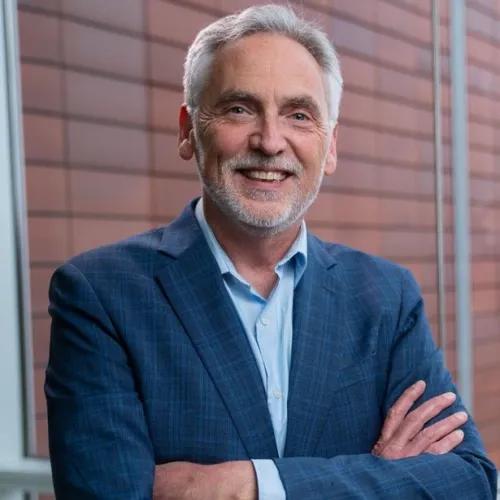
Henry L Paulson, MD PhD
Professor
Related

How virus-like proteins shape a cell’s stress response
What you can do now to prevent Alzheimer’s disease
Stay Informed
Want top health & research news weekly? Sign up for Health Lab’s newsletters today!
Featured News & Stories

The AI is listening: Implications of machine generated clinical notes on health care

Comprehensive DNA sequencing reveals hidden drivers of cancer
‘Molecular glue’ stabilizes protein that inhibits development of non-small cell lung cancer and uterine cancer

4 in 5 parents say having a baby is too expensive

Many older adults make Medicare decisions quickly and most don’t change plans, poll finds