Celebrating cardiac arrest survivors and their lifesavers
Less than half of the people who experience an out-of-hospital cardiac arrest receive bystander CPR
5:00 AM
Author |
Would you know what to do if a loved one’s heart stopped beating while you were at home or if someone suddenly collapsed in front of you, no pulse in sight?
Cardiac arrest is a leading cause of death worldwide, but less than half of the people who experience an out-of-hospital cardiac arrest receive CPR, or cardiopulmonary resuscitation, from bystanders while waiting for emergency responders to arrive.
Only 1 in 10 survive — but hands-only CPR can double or triple that chance of survival.
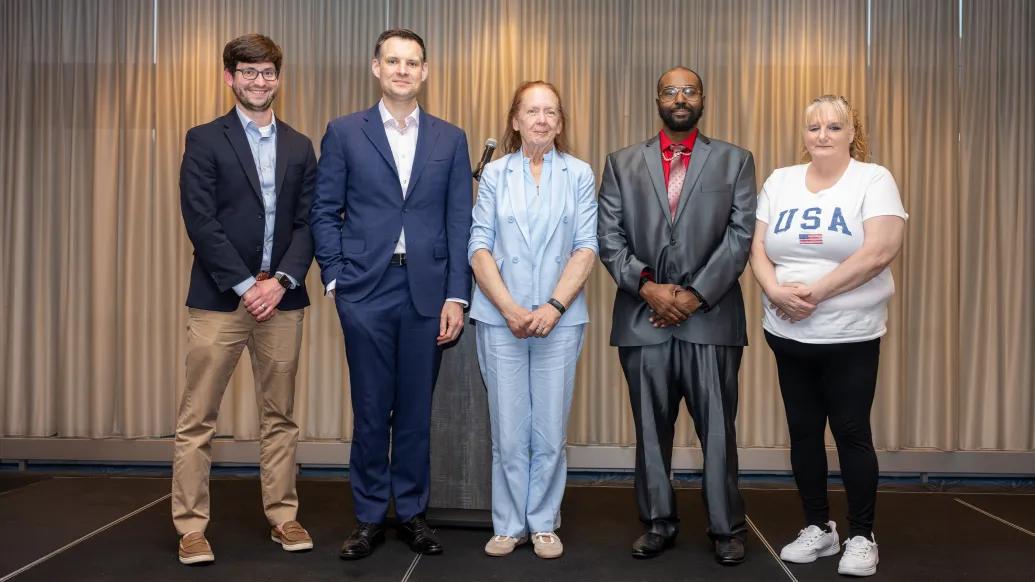
For five cardiac arrest survivors and the people who helped save their lives, those statistics became reality.
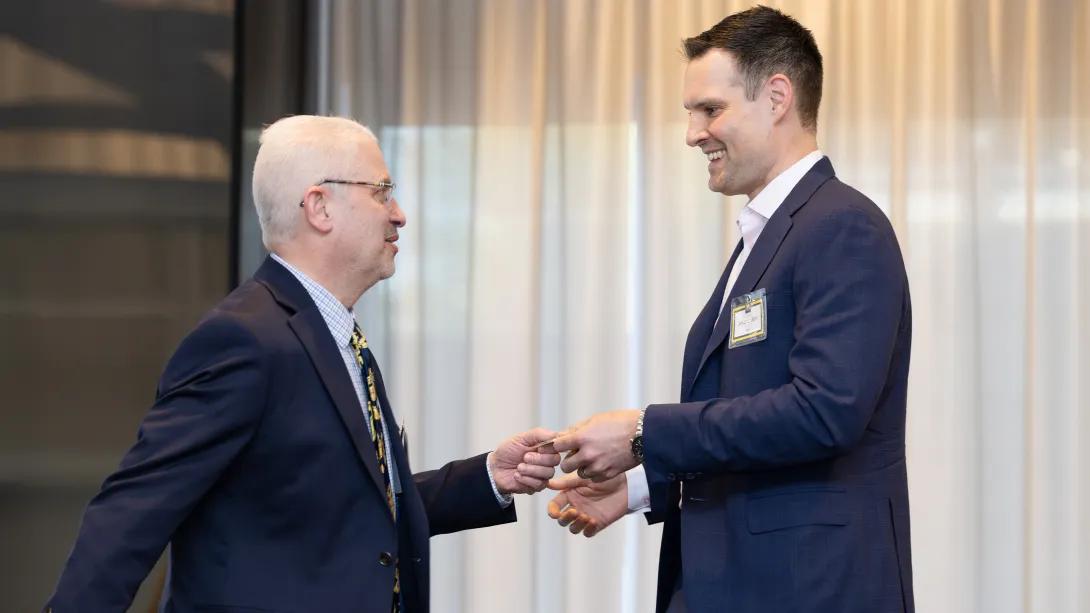
To recongize that, Michigan Medicine is hosting an annual Cardiac Arrest Survivor Recognition Dinner to bring together survivors, families, first responders, physicians, nurses, researchers and care teams to celebrate lives saved and recognize the many people who made that possible.
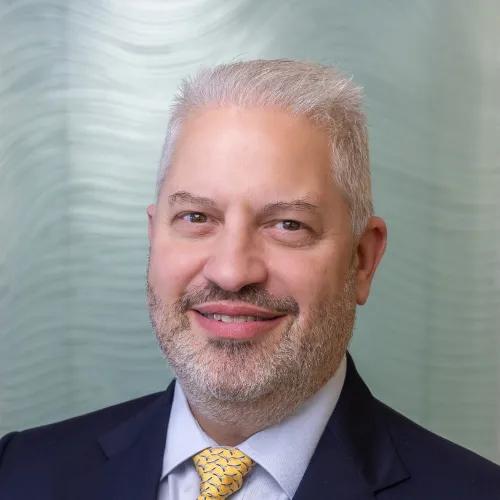
"The event is super important for a few reasons," said David Pinsky, M.D., a Director of the University of Michigan Health Frankel Cardiovascular Center.
"It gives a chance to celebrate the heroes and the whole chain of care that's helped them."
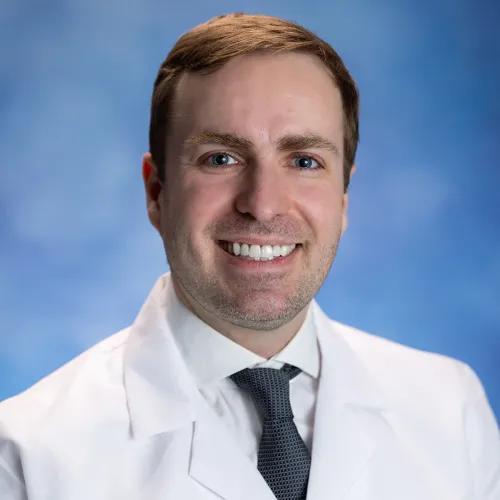
Hosted by the University of Michigan Health Department of Emergency Medicine and the Frankel Cardiovascular Center, with support from the Weil Institute for Critical Care, it's an important one, Florian Schmitzberger, M.D., M.S., Clinical Assistant Professor of Emergency Medicine, notes.
"The survival of a cardiac arrest is not attributed to one person," said Schmitzberger.
"It's really all the links in the chain of survival."
One of those survivors was Jonathan Aplin, who experienced a cardiac arrest while on a ski vacation with his wife and two kids.
During the recent dinner, his family shared four lessons they learned from their experience.
Lesson 1: It can happen to anyone
Aplin's story challenges the common misconception that cardiac arrest only affects people with known heart disease or poor health.
"I am a 43-year-old, I drink kombucha every day,” Jonathan said.
“I did deadlifting, I ran marathons, I took my executive physical like it was a competitive sport, and I was a healthy-ish father of two."
Despite living an active lifestyle and prioritizing his health, Aplin's life changed in an instant.
Lesson 2: Everyone plays a part
The Aplins’ story emphasizes the importance of the chain of survival — the series of actions taken by family, bystanders, first responders, emergency medical service providers and health care teams that improve a person’s chance of surviving cardiac arrest.
When Aplin collapsed, his wife called 911 and started compressions.
His 10-year-old son ran to the hotel lobby to call for help, and his 8-year-old daughter held the door open to direct first responders to their room.
Every second counted, and the quick actions of his family, even in an uncertain moment, saved his life.
"U-M calls my sister, me, and all of us here the ‘chain of survival,’” said Aplin’s 10-year-old son. “We should prepare everyone, young, old to act in case of an emergency."
Lesson 3: Rising to the occasion and relying on training
In the most stressful moments, preparation and action matter.
"My children and I had nine minutes and 42 seconds to save my husband, who I love and who my children adore," said K.M. Zouhary, Aplin's wife.
Although she had not been CPR certified at the time of her husband's cardiac arrest, Zouhary acted immediately.
"There's no such thing as perfect in CPR," she said. "There's only good enough."
Today, Zouhary is now CPR certified and advocates for CPR training and encourages others to learn the lifesaving skill.
"Let's everybody — man, woman, child — learn CPR," Pinsky said.
Lesson 4: Saying thank you
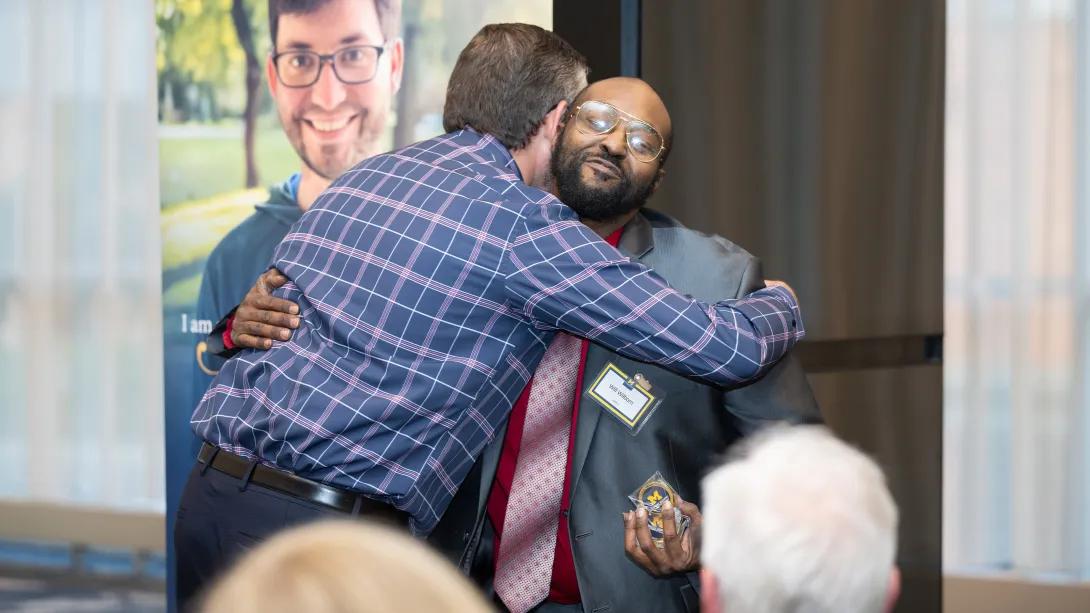
Throughout their presentation, the Aplins thanked everyone who played a role in Jonathan's survival and recovery — from ski patrol and first responders to emergency and cardiac physicians, nurses, rehabilitation specialists, friends and family members.
"In the worst moments of my life, they are stacked like Jenga blocks next to the greatest kindnesses we have ever received," Aplin said.
Reflecting on the night that changed their lives, Aplin credited those closest to him with saving his.
"My wife and my children truly saved my life in that moment," he said.
The emotional stories shared throughout that evening served as a reminder that survival is rarely the result of a single person or action.
"Good outcomes are not statistics," Schmitzberger said. "They're people. They're family members. They are you."
The event also highlighted Michigan Medicine's ongoing efforts to improve cardiac arrest survival through research, education and community preparedness programs.
Faculty across emergency medicine, cardiology, neurology and the Weil Institute are studying ways to improve CPR effectiveness, restart the heart faster and protect the brain during cardiac arrest.
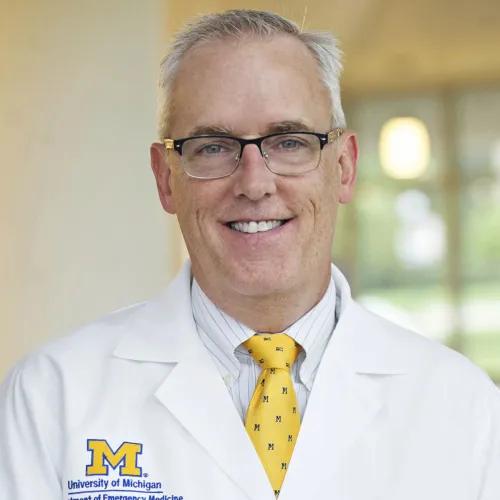
"We are relentless in our mission to improve survival," said Robert Neumar, M.D., Ph.D., Immediate Past Chair of the Department of Emergency Medicine.
"We hope that we will continue to need a bigger and bigger room for this celebration."
CPR is a human responsibility; You don't have to be a health care professional to save a life. By learning CPR and how to use an AED, or an automated external defibrillator, anyone can become a vital link in the chain of survival.
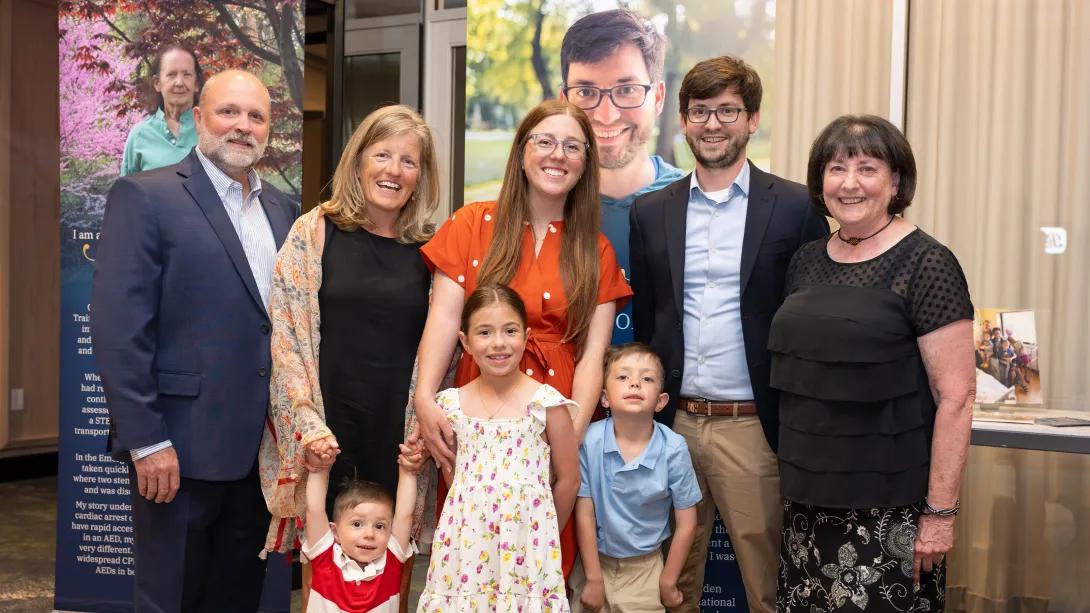
"Whoever saves a single life is considered to have saved the world,” Pinsky said. "Those important, essential human moments are made possible if you become part of that chain of survival."
Hands-only CPR is recommended because it works and is endorsed by the American Heart Association and the American Red Cross for teens and adults.
For effective hands-only CPR, push hard and fast in the center of the chest at a rate of 100-120 beats, like the Michigan Fight Song.
Find a CPR class at heart.org/nation.

Health Lab
Explore thousands of health news & research stories by visiting the Health Lab homepage for more.
Media Contact

Public Relations
Department of Communication at Michigan Medicine
In This Story
David Pinsky
Professor
Florian F Schmitzberger, MD, MS
Clinical Assistant Professor
Robert W Neumar, MD, PhD
Professor
Related

Common CPR questions answered by doctors
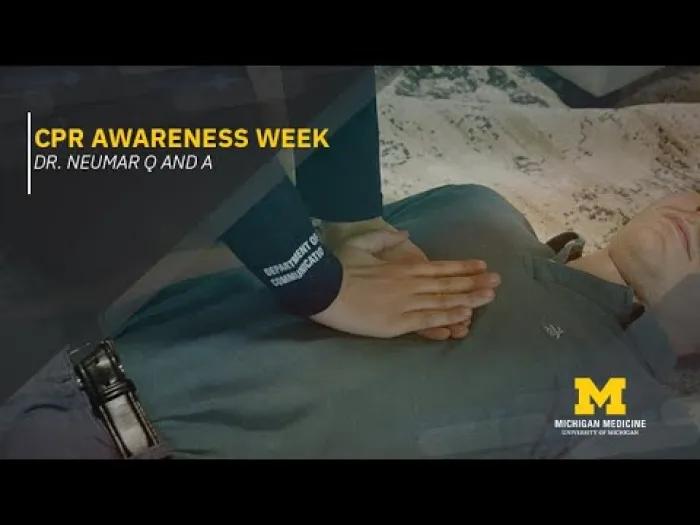
Most cardiac arrests happen at home. Here’s how to make yours ‘heartsafe’
Stay Informed
Want top health & research news weekly? Sign up for Health Lab’s newsletters today!
Featured News & Stories

Many older adults make Medicare decisions quickly and most don’t change plans, poll finds
4 in 5 parents say having a baby is too expensive

What’s the latest on 7-OH and kratom availability and addiction care?
Better prenatal care data could help prevent maternal complications, experts say
Many hospitals still don’t do enough to prevent UTIs from catheters