Enhancing mobility and independence through orthotics and prosthetics
The hidden talent, and work, by orthotic and prosthetic technicians that help patients
5:00 AM
Written by Lilia Simeck. A version of this story originally ran in Headlines, Michigan Medicine's internal publication.
Often, when people think of orthotics, the first idea to come to mind may be shoe inserts.
However, the orthotics and prosthetics team members provide much more than that, including custom fabricated braces for every part of the body and prosthetic limbs for upper and lower extremities.
“Prosthetics and orthotics are uniquely designed to each patient to give them the best chance possible to live their life to the fullest," explained Jeff Wensman, a certified prosthetist orthotist and clinical director of the Orthotics and Prosthetics Clinic at Michigan Medicine.
The team includes physicians, prosthetists, orthotists and pedorthists as well as clinical assistants, specialized orthotic fitters for off-the-shelf items and a technical staff who fabricate and repair custom orthotic devices (braces) and prosthetic limbs.
Behind the scenes
Each day, the team creates, fits and adjusts these orthoses and prostheses to provide patients with the devices they need to achieve their goals.
“We see patients of all ages and ability levels, so needs can vary drastically,” Wensman said. “But we will always take the time and effort to make sure everything we create is made to suit our patients’ needs.”
On a typical day, infants are fitted for cranial molding helmets, while other individuals are fitted with devices for patients with varying diagnoses including multiple sclerosis, scoliosis or ACL tears.
Molly Steinbrunner, certified prosthetist orthotist, explains that their work also expands over into acute and chronic cases.
“Some long term patients I’ve been seeing since I was a resident. I see a lot of pediatric patients with cerebral palsy or spina bifida who need leg braces to keep them moving throughout their lives,” she said.
“These patients are generally seen for a lifetime, where a patient with a knee injury may be seen once for a knee brace and then not need to be seen again.”
Regardless of the situation, the team is always vigilant in providing excellent service.
“I always tell patients if something with their brace isn’t working, they should come back,” Steinbrunner said.
“We work hard to ensure that patients leave their appointment with the best possible option to improve their mobility and live the lifestyle they want.”
Getting technical
The technical staff plays a key role in customizing patients’ braces and prosthetic limbs.
Upon a patient’s first visit, patients are evaluated for their functional needs and goals and physical measurements.
The practitioner then takes a scan or cast of the body segment that needs the device.
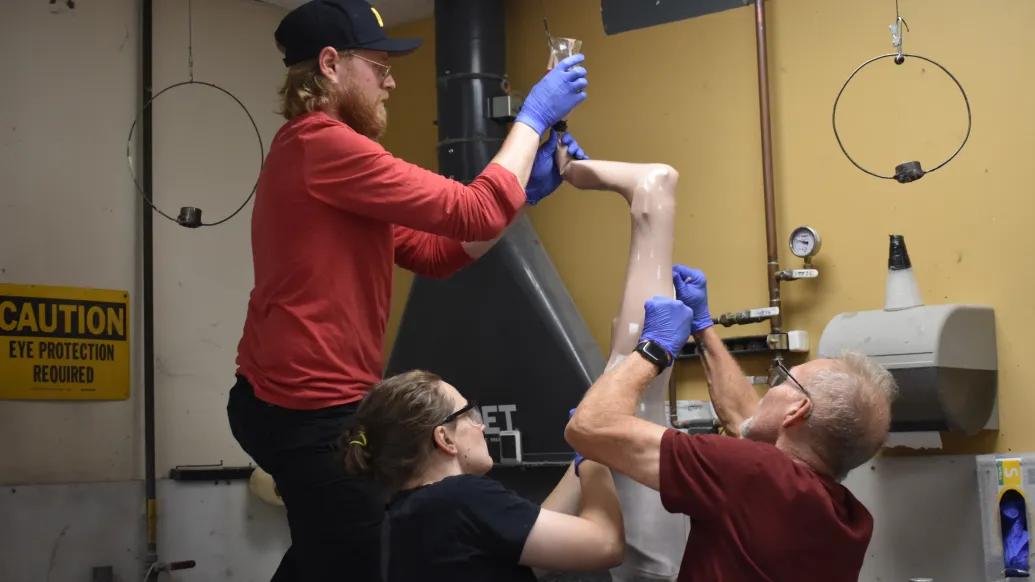
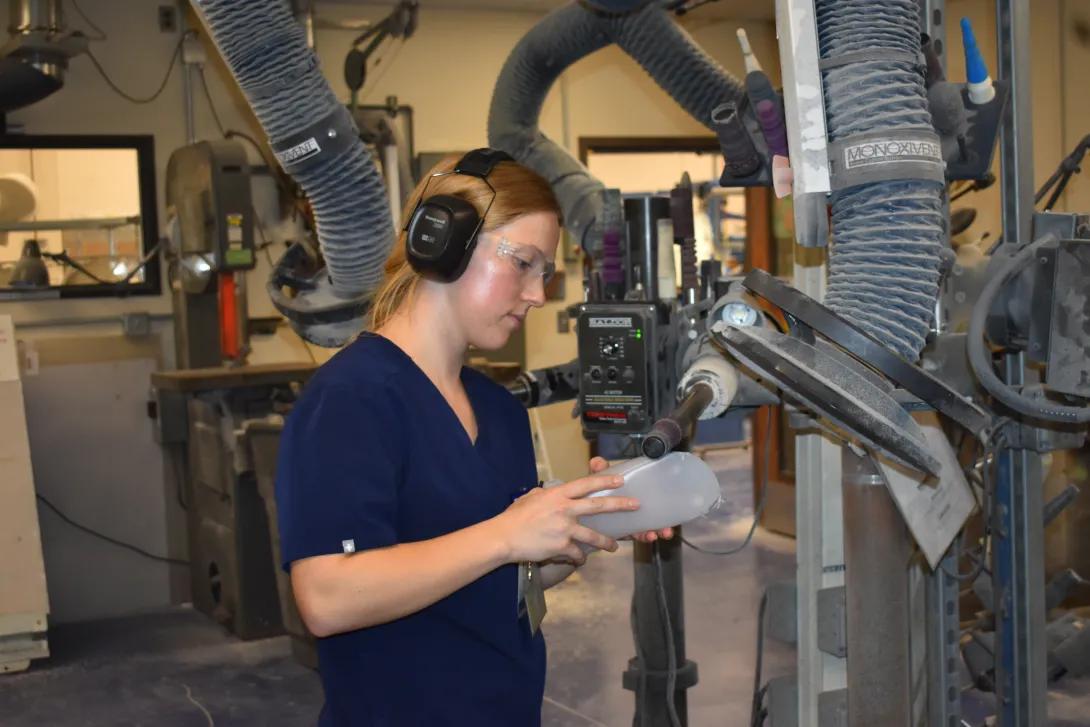
The technical team then creates the prosthetic or orthotic device by hand from a combination of raw materials and purchased hardware.
A few weeks later, the patient returns for their fitting.
“The work of the technicians is pretty incredible,” Wensman said.
“Everything is made by hand because machines cannot replicate their skills or efficiency.”
Last year, the team completed 12,226 prescriptions, many of which were custom devices that were fabricated by these skilled technicians.
“It’s a team effort here. It takes all of us to do our jobs well,” Wensman said.
Work that matters
The orthotics and prosthetics team is dedicated to their work for many reasons.
For Steinbrunner, a significant source of joy comes from her patients’ excitement.
“I love working with kids. Seeing them pick out colors for their braces or running down the hall during a fitting is special,” she said.
“I also enjoy building relationships with patients and watching them grow and thrive over the years.”
The Orthotics and Prosthetics Clinic's primary location is in Ann Arbor, Mich., with three satellite locations at University Hospital, Northville Health Center and the Brighton Center for Specialty Care. All four locations provide inpatient and outpatient care. The department also services the Inpatient Rehabilitation Unit at Chelsea Hospital.

Health Lab
Explore a variety of health care news & stories by visiting the Health Lab home page for more articles.
Media Contact

Public Relations
Department of Communication at Michigan Medicine
Stay Informed
Want top health & research news weekly? Sign up for Health Lab’s newsletters today!
Featured News & Stories
Every Link Matters: Celebrating Cardiac Arrest Survivors and Their Lifesavers
How AI is helping emergency physicians learn from their patients

A link between e-cigarettes and oral cancer
Research may help better predict outcomes in kids with congenital cytomegalovirus
12-year-old shares journey with sickle cell anemia on Capitol Hill