Emergency EEG study suggests need for faster seizure diagnosis and care options
More research is needed on best care for emergency department patients without convulsions, but with altered mental states that could be a long-lasting seizure
2:04 PM
Author |
Hospital emergency department teams often have to figure out what’s going on with patients with mysterious and serious symptoms who can’t communicate with their care team.
In some of those patients, convulsing or flailing makes the diagnosis of a seizure relatively straightforward.
But a new study suggests that emergency teams need faster access to a kind of brain wave test that can reveal if a seizure is what’s causing a patient to seem stuck in a trance, staring or confused and unable to communicate clearly for hours on end.
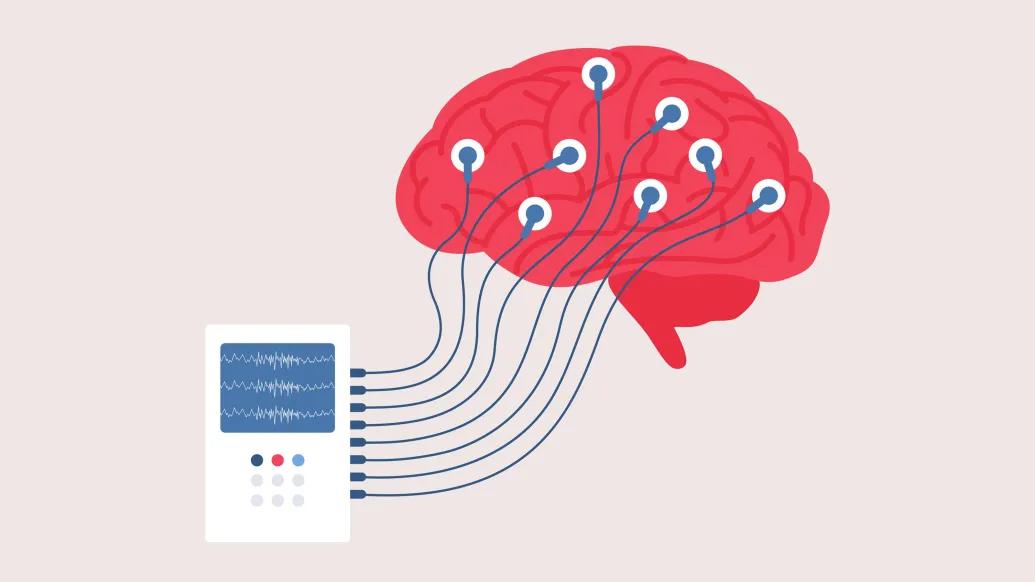
The test, called an electroencephalogram, or EEG, can reveal if the person is having a seizure that is difficult to see, or had a seizure recently.
This is particularly important for prolonged, repeated or continuous seizures, a condition called status epilepticus that can lead to brain damage and death.
But the new study in the International Journal of Emergency Medicine suggests that in patients whose emergency care teams ordered an EEG, it could take many hours from the time the patient arrived to the time they have the test.
In all, 9% of the patients in the study did have a seizure even though they were not convulsing; 40% of these patients were in non-convulsive status epilepticus which can cause serious brain damage if it’s not reversed through medication.
But 72% of the entire group of 112 patients had another type of abnormal EEG reading, which could help their care team decide on treatment options.
The study shows the importance of more research to help guide emergency teams in the care of patients with altered mental status that might be seizure-related, says lead author Mariama Runcie, M.D., an emergency medicine physician at University of Michigan Health and research scholar at the U-M Institute for Healthcare Policy and Innovation.
“These are patients who appear to be sitting there ‘stably’ but something is terribly awry,” said Runcie, a Clinical Instructor in the U-M Medical School’s Department of Emergency Medicine.
“We don’t have clear guidelines for emergency care of seizure beyond the first line of treatment, including guidance for when to use EEG. We hope this study will inform efforts to create such guidelines.”
About the study
Runcie did the study with her former colleagues at Massachusetts General Hospital, where she did her emergency medicine training.
They analyzed data from 112 emergency patients whose records showed they had arrived at the ED with altered mental status and had an EEG ordered while they were still in the emergency department.
While just over half had been brought to the ED within six hours of starting to experience confusion or other symptoms, 21% had had symptoms for more than 24 hours before being brought in.
These pre-hospital delays are concerning, says Runcie, because prolonged untreated seizures can damage brain tissue and interfere with breathing.
But the time delay between when an EEG was ordered and completed is also concerning, especially considering the study’s findings that most of those who got an EEG for altered mental status had some sort of abnormality, but it took on average 20 hours to get the EEG completed and get that information.
Need for more research and guidance
Getting information from EEGs more quickly might help speed diagnosis and treatment when a patient doesn’t have a history of seizure, or a clear seizure exam like convulsing or even shaking a limb, the researchers suggest.
But getting rapid access to an EEG team and a neurologist to read the tracings, especially outside of major academic medical centers, may be very difficult, Runcie says.
Some manufacturers have begun selling rapid EEG machines that can be used in the ED, but the evidence for their use has been from manufacturer-funded studies.
Only one patient in the study had such an EEG.
That’s why Runcie and her colleagues call for more research on the issue of emergency treatment for patients with altered mental status, suspected seizure, and no clear explanation for their condition such as drug reactions or dementia.
“When access to EEG is slow, patients may have anti-seizure medications started or modified by medical teams that don’t have full information needed for decision-making,” she said.
“The kinds of seizures and abnormalities that we saw on the EEGs for the patients in this study are the kinds that are much more difficult to diagnose with methods that do not include EEG.”
She notes that clinical trials are now under way to test different approaches to treating neurological emergencies including seizures.
U-M is the clinical coordinating center for the SIREN Network, which is running several such studies, including the KESETT study that is testing a single or combination medication for patients with status epilepticus who don’t respond to the initial standard therapy.
Such studies could help more patients avoid having to be put under general anesthesia to stop their seizure, which involves a breathing tube and intensive care hospital stay.
Similarly, more research on when EEG is appropriate and how to speed its use could help diagnose not only status epilepticus but other conditions.
Runcie also notes that it’s important for patients who are already on anti-seizure medications to take them as directed, and to have information about their medication and diagnosis available in case they experience an emergency, such as in their wallet or on their phone’s emergency card.
People who have been diagnosed with any type of brain tumor should also be aware they can experience seizures, and that seizures may not involve convulsions but can alter their mental state.
Five of the 10 patients diagnosed with EEG as having an active seizure causing their altered mental state had had brain tumors already diagnosed.
In addition to Runcie, the study’s authors are IHPI member Robert Silbergleit, a Professor of Emergency Medicine at the University of Michigan, Fábio A. Nascimento of Washington University, and Harvard University researchers Neal Nolan, Olivia Yoo, Maura Kennedy, M. Brandon Westover and Joshua N. Goldstein, who is the study’s senior author.
Citation: "EEG in patients with altered mental status in the emergency department," International Journal of Emergency Medicine. DOI: 10.1186/s12245-026-01200-6

Health Lab
Explore thousands of health news & research stories by visiting the Health Lab homepage for more.
Media Contact

Public Relations
Department of Communication at Michigan Medicine
In This Story

Mariama Runcie-Bruder, MD
Clinical Instructor
Stay Informed
Want top health & research news weekly? Sign up for Health Lab’s newsletters today!
Featured News & Stories

Comprehensive DNA sequencing reveals hidden drivers of cancer

Many older adults make Medicare decisions quickly and most don’t change plans, poll finds

‘Molecular glue’ stabilizes protein that inhibits development of non-small cell lung cancer and uterine cancer

What’s the latest on 7-OH and kratom availability and addiction care?

A metabolic “switch” that could help reset scar-producing cells in scleroderma