E-bikes are faster than ever. Are families prepared for the risks?
Emergency medicine physicians warn that many e-bike riders and their parents may not fully understand the speeds these devices can reach or the injuries that can follow when things go wrong
5:00 AM
Author |
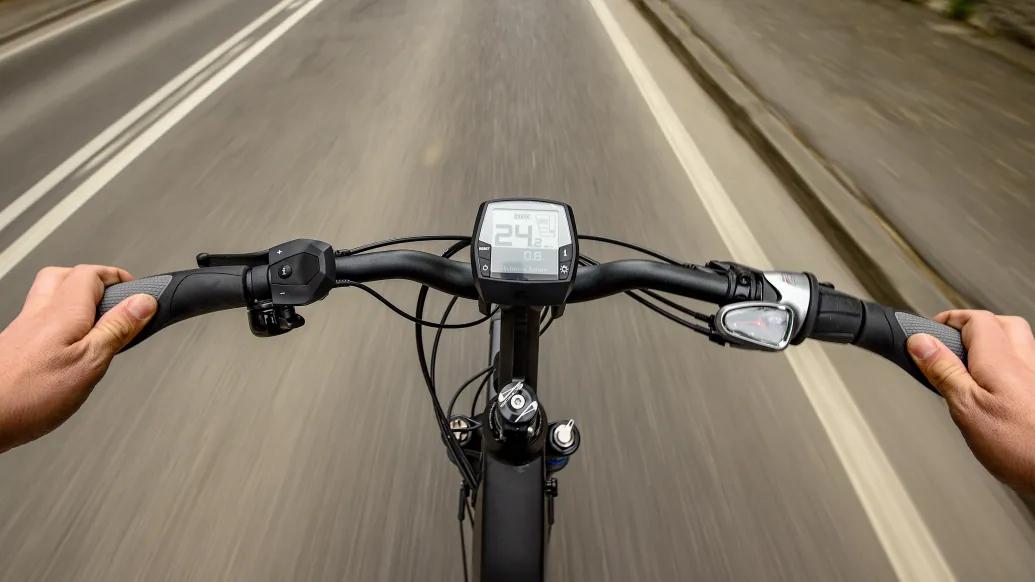
A child unwraps an e-bike. Parents see a bicycle with a little extra speed.
Emergency medicine physicians see something entirely different.
“Can you imagine a 12-year-old kid going 40, 45 miles an hour?” said Andrew Hashikawa, M.D., Clinical Professor of Emergency Medicine and Pediatrics at University of Michigan Health.
The question gets at a growing concern among injury prevention experts as electric bikes, scooters and other motorized devices become increasingly common in neighborhoods across the country.
As e-bikes and e-scooters grow in popularity, U-M experts are warning families that many riders and parents may not fully understand the speeds these devices can reach or the injuries that can follow when things go wrong.
The concern comes as injuries continue to rise nationwide.
A recent study presented at the 2026 American Academy of Orthopedic Surgeons Annual Meeting found that e-bike accidents involving children at a pediatric Level 1 trauma center in San Diego increased by more than 300% between 2019 and 2023.
During the same period of the study, e-bikes grew from just 1.75% of trauma incidents to 39%.
According to Hashikawa, the rapid growth of e-bikes, e-scooters, and similar devices has outpaced many consumers' understanding of what they are buying.
“I think the e-scooters and e-bikes often are bought without a lot of apparent knowledge about how fast they go,” Hashikawa said.
“Many of these e-motorcycles are being advertised as e-bikes, when they're actually motorcycles.”
Many families look at an e-bike as a bicycle with extra speed; experts say some products marketed as e-bikes may function more like motorcycles.
That distinction matters in the emergency department.
“Especially if they are not wearing a helmet, I've seen injuries such as concussions, and fractured arms and legs,” said Hashikawa.
“I've seen kids run into trees and get hit by cars.”
Understanding the speed of e-bikes can help in selecting proper helmets
Speed is often what separates e-bike crashes from traditional bicycle injuries.
Class 3 e-bikes can reach speeds of up to 28 miles per hour, while some higher-powered motorized devices can go much faster.
Higher speeds can make devices more difficult to control, especially for novice riders.
At intersections, it can be harder for drivers to see riders, while uneven pavement, cracks, and road debris can create additional hazards.
Many of these e-motorcycles are being advertised as e-bikes, when they're actually motorcycles."
-Andrew Hashikawa, M.D., Clinical Professor of Emergency Medicine and Pediatrics at University of Michigan Health
A major concern for Steven Broglio, Ph.D., A.T.C, Director of the University of Michigan Concussion Center, is that e-bike riders wear the proper safety gear.
“What we really are trying to advocate for is an awareness that these bikes are traveling faster than standard bikes, and that requires a different helmet than a standard bicycle would require.”
Not all helmets offer the same level of protection, and regular bike helmets will not protect you at the higher speeds of some e-bikes.
Researchers at Virginia Tech have evaluated hundreds of bicycle helmets and recommend choosing helmets that earn four or five stars in their ratings.
Some riders of higher-speed e-bikes may also consider helmets that meet the NTA 8776 standard.
Broglio encourages riders who crash, strike their head, or damage a helmet to seek medical attention.
“Not every crash is going to result in concussion, but better to be checked out and get the appropriate care,” Broglio said.
Rider education is important for responsible use of e-bikes
According to Hashikawa, the most significant factor to ensuring that e-bikers stay safe is to start safe behavior before they ride.
He encourages parents to research the class of a device, top speeds, and all safety requirements before making a purchase.
He also recommends that parents supervise new riders, model good helmet use, and talk with their children about the dangers of riding e-bikes owned by friends.
“I’ve actually seen two or three of the traumas occur, because they were on their friend's e-bike,” Hashikawa said.
To help educate families, U-M experts recently partnered with AAA in an event to promote e-bike safety and increase awareness about rider education, proper helmet selection, and responsible use of e-bikes.
The effort comes as the University of Michigan works to better understand e-bike safety trends and plans to collect injury data this summer to help identify opportunities for prevention and education.
For Hashikawa, the message is simple: get to know the device, understand the risks, get the right helmet, and take the time to learn before handing over the keys.
“You would never give a kid who's driving a car the keys and say, ‘hey, go at it,’” Hashikawa said.
“You need to be out there supervising and going over the e-bikes with them in a safe environment.”
Sign up for Health Lab newsletters today. Get medical tips from top experts and learn about new scientific discoveries every week.
Sign up for the Health Lab Podcast. Add us wherever you listen to your favorite shows.

Health Lab
Explore thousands of health news & research stories by visiting the Health Lab homepage for more.
Media Contact

Public Relations
Department of Communication at Michigan Medicine
In This Story

Steven P Broglio
Professor

Andrew N Hashikawa
Clinical Professor
Related

Rules Every Child Should Know Before Riding a Bike, Scooter or Skateboard
Surgery and PT Helps 5 Year Old Ride His Bike Again
Stay Informed
Want top health & research news weekly? Sign up for Health Lab’s newsletters today!
Featured News & Stories

What’s the latest on 7-OH and kratom availability and addiction care?

Emergency room intervention pairs smartphone, telehealth counseling to reduce risky firearm behavior

A pediatric epilepsy fundraiser that changes lives
Better prenatal care data could help prevent maternal complications, experts say
Digital alerts support timely treatment decisions of critically ill cardiac patients