Drug targets identified for pancreatic cancer
Simultaneous targeting of PIKfyve and KRAS-MAPK eliminates tumors in preclinical human and mouse models
5:00 AM
Author |
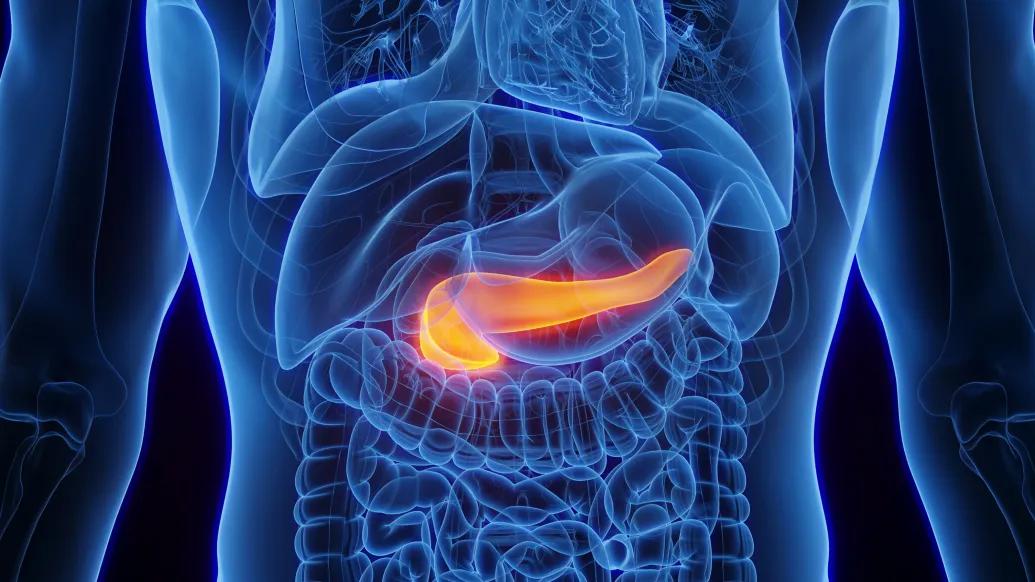
Pancreatic cancer is a leading cause of cancer-related death, with a five-year survival rate of 13%.
The high mortality is largely due to a lack of effective therapy options.
In a recent paper, published in Nature, researchers from the University of Michigan have discovered that simultaneously targeting PIKfyve and KRAS-MAPK can eliminate tumors in preclinical human and mouse models.
Pancreatic ductal adenocarcinoma, the most common type of pancreatic cancer, is challenging to treat because of the cellular environment.
“Pancreatic tumors are predominantly composed of non-cancer cells. In some patients, only 10% of the tumor is made up of the malignant cells,” said Maisel Endowed Professor of Oncology Costas Lyssiotis, member of the Rogel Cancer Center and co-director of the Rogel and Blondy Center for Pancreatic Cancer.
“Even though these malignant cells don’t have access to blood-derived nutrients because of dysfunctional blood vessels, they survive by turning on different processes.”
These processes include recycling pathways, using nutrient transporters and evading the immune system.
Lysosomes, which are responsible for breaking down and recycling worn-out cell parts, play a key role in helping malignant cells thrive.
“Although the lysosomes are an attractive target, there are no medicines that work against them for pancreatic cancer,” Lyssiotis said.
In the current study, the researchers focused on PIKfyve, an enzyme that has been identified as a lysosomal target for other cancer types, including blood malignancies.
“Even though PIKfyve inhibitors have cleared phase 1 clinical trials for other cancers, it was unclear how they worked to decrease tumor development and growth and whether they would work for pancreatic cancer,” said Caleb Cheng, a graduate student in the Lyssiotis and Chinnaiyan lab, and the lead author on the study.
Using genetically engineered mouse models, the team showed that mice lacking PIKfyve developed cancer to a lesser extent compared to the mice that had PIKfyve.
Additionally, mice treated with PIKfyve inhibitors, apilimod and ESK981, had lower cancer growth after 10 weeks.
To understand how PIKfyve drives lysosomal processes in pancreatic cancer cells, researchers used human cell lines to identify which genes were affected by PIKfyve inhibitors.
“Lysosomes degrade molecules in the cell and use the resulting products to either make useful proteins or convert them into energy,” Cheng said.
“We showed that lysosomes need PIKfyve to recycle fats. If we inhibit PIKfyve, the cells are now forced to make their own fats, and the relevant genes are turned on.”
The team demonstrated that tumor cells make new fat through the KRAS-MAPK pathway.
“KRAS is the master regulator of pancreatic cancer, and new medicines are now in clinical trials to bring down this kingpin,” Lyssiotis said.
While the implementation of KRAS inhibitors marked a major milestone for the field, cancer cells treated with KRAS inhibitors eventually became resistant.
This illustrates the need for combination approaches, further illuminating the potential of PIKfyve inhibitors.
"We definitively demonstrated the critical role of the PIKfyve gene in KRAS-driven pancreatic cancer," said Yuanyuan Qiao, research assistant professor of translational pathology, an author on the study.
In several state-of-the-art preclinical models, this combination therapy completely cured mice of pancreatic cancer.
"The most exciting aspect of our findings is the discovery of a novel strategy to rewire lipid metabolism and significantly enhance the efficacy of KRAS inhibitors—therapies already approved for pancreatic cancer treatment," said S.P. Hicks Endowed Professor of Pathology and Urology Arul Chinnaiyan, member of the Rogel Cancer Center.
The team is now working to find a way to eliminate the tumors.
“These cancer cells have perfected their ability to develop backup pathways, all of which we have tried to shut down in this study,” Lyssiotis said.
“We believe that recruiting the immune system to target the surviving tumors will be the missing piece of the puzzle.”
Additional authors: Jing Hu, Rahul Mannan, Tongchen He, Rupam Bhattacharyya, Brian Magnuson, Jasmine P. Wisniewski, Sydney Peters, Saadia A. Karim, David J. MacLean, Hüseyin Karabürk, Li Zhang, Nicholas J. Rossiter, Yang Zheng, Lanbo Xiao, Chungen Li, Dominik Awad, Somnath Mahapatra, Yi Bao, Yuping Zhang, Xuhong Cao, Zhen Wang, Rohit Mehra, Pietro Morlacchi, Vaibhav Sahai, Marina Pasca di Magliano, Yatrik M. Shah, Lois S. Weisman, Jennifer P. Morton and Ke Ding.
Funding/disclosures: This work was supported by the National Cancer Institute Outstanding Investigator Award R35-CA231996 (Chinnaiyan), the NCI Early Detection Research Network U2C-CA271854 (Chinnaiyan), NCI P30-CA046592, National Institute of Neurological Diseases and Stroke R01 1NS129198 (Weisman), Department of Defense Idea Development Award HT9425-23-1-0084 (Qiao), CRUK core funding to the CRUK Scotland Institute (A17196 and A31287), to Morton (A29996), by a CRUK Precision Panc grant (A25233), and by the CRUK Scotland Centre (CTRQQR-2021\100006). Lyssiotis was supported by the NCI (R37-CA237421, R01-CA248160, R01-CA244931). Chinnaiyan and di Magliano were supported by NIH grants (U54 CA274371 and U01 CA274154). Shah was supported by the NCI (R01CA148828, R01CA245546). Cheng was supported by an NCI F30 fellowship (F30CA288093) and NIH T32 training grants (CMB: 5T32-GM145470, MSTP: T32GM00786). Chinnaiyan is a Howard Hughes Medical Institute Investigator, A. Alfred Taubman Scholar, and American Cancer Society Professor.
Conflicts of interest: Chinnaiyan is a co-founder and serves on the Scientific Advisory Board of Esanik Therapeutics, Inc. which owns proprietary rights to the clinical development of ESK981. Esanik Therapeutics, Inc. did not fund or approve the conduct of this study. Chinnaiyan is co-founder and serves on the SAB of Medsyn Bio, Lynx Dx, and Flamingo Therapeutics. Chinnaiyan serves as an advisor to Tempus, Proteovant, Aurigene Oncology, RAPTTA Therapeutics, and Ascentage Pharmaceuticals. Chinnaiyan, Qiao, Lyssiotis, Cheng, Bao, Ding, Wang and Li, are listed as inventors on the following patents pertaining to development of methodologies and compounds targeting PIKfyve in diseases: PCT: PCT/US2021/057022 (Chinnaiyan and Qiao); PCT: PCT/US2024/017088 (Chinnaiyan and Qiao); PCT: PCT/CN2024/087809 (Chinnaiyan, Qiao, Wang, Ding, Li), US Patent No: 63/537,996 (Chinnaiyan, Qiao and Bao), US Patent No: PCT/CN2024/078381 (Lyssiotis, Chinnaiyan, Qiao, Ding, Wang, Li, and Cheng). In the past three years, Lyssiotis has consulted for Astellas Pharmaceuticals, Odyssey Therapeutics, Third Rock Ventures, and T-Knife Therapeutics, and he is an inventor on patents pertaining to KRAS-regulated metabolic pathways, redox control pathways in pancreatic cancer, and targeting the GOT1-ME1 pathway as a therapeutic approach (US Patent No: 2015126580-A1, 05/07/2015; US Patent No: 20190136238, 05/09/2019; International Patent No: WO2013177426-A2, 04/23/2015).
Paper cited: “Targeting PIKfyve-driven lipid metabolism in pancreatic cancer,” Nature. DOI: 10.1038/s41586-025-08917-

Health Lab
Explore thousands of health news & research stories by visiting the Health Lab homepage for more.
Media Contact

Public Relations
Department of Communication at Michigan Medicine
In This Story
Costas A Lyssiotis, PhD
Professor
Related

Why Every Pancreatic Cancer Patient Should Consider Genetic Testing

Major Strides in Pancreatic Cancer Give ‘Actual Reasons for Hope’
Stay Informed
Want top health & research news weekly? Sign up for Health Lab’s newsletters today!
Featured News & Stories

Online resources and coaching helped people seek genetic testing for cancer
‘Molecular glue’ stabilizes protein that inhibits development of non-small cell lung cancer and uterine cancer

Many older adults make Medicare decisions quickly and most don’t change plans, poll finds

Exceptional response to immunotherapy gives patient with liver cancer more milestones to celebrate

Pain, psychological factors and physical function closely linked in people with systemic sclerosis