Drug candidate successfully treats atherosclerosis, fatty liver disease in large mammals
The compound has potential as a dual therapy for two common conditions
5:00 AM
Author |
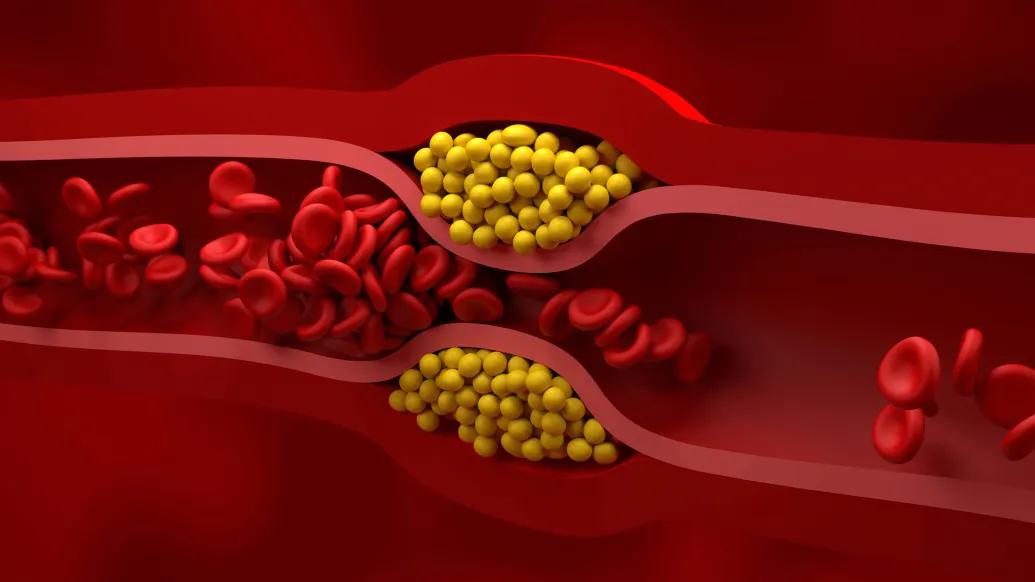
A drug candidate, previously successful at treating severe fatty liver disease, reduces atherosclerosis — a primary driver of cardiovascular death worldwide — in large mammals, a study suggests.
DT-109 limited the formation of atherosclerotic plaques in both the aorta and coronary arteries of nonhuman primates.
The amino acid compound was developed at University of Michigan.
This glycine-based tripeptide also stopped critical processes that lead to vascular calcification, a significant catalyst of arterial stiffening and plaque instability.
Results of the study, conducted in partnership with Xi’an Jiaotong University Health Science Center, are published in Signal Transduction and Targeted Therapy.
“Atherosclerosis and vascular calcification remain among the leading global health threats, yet current standard-of-care medications fail to effectively address them,” said Eugene Chen, M.D., Ph.D., co-senior author of the study and Frederick G. L. Huetwell Professor of Cardiovascular Medicine at University of Michigan Medical School.
“DT-109 has demonstrated a remarkable ability to counteract the progression of atherosclerosis, an achievement that holds immense therapeutic potential.”
Chen’s team developed DT-109 in 2019 after it was discovered that impaired glycine metabolism can cause non-alcoholic fatty liver disease.
In a 2023 study published in Cell Metabolism, the compound reversed fat buildup and prevented scarring in the livers of mice and nonhuman primates that had developed the most severe form of fatty liver disease, nonalcoholic steatohepatitis.
NASH — renamed metabolic dysfunction-associated steatotic liver disease in 2023 — affects nearly 7% of the global population.
The condition is strongly associated with an elevated risk of atherosclerosis, which increases the likelihood of life-threatening events like heart attack and stroke.
“The emergence of DT-109 as a dual-action drug capable of treating both MASH and the vascular complications associated with atherosclerosis marks a significant advancement in the treatment landscape,” said Jifeng Zhang, Ph.D., co-author and research professor of cardiovascular medicine at U-M Medical School.
“There is significant demand yet limited options for effective drug therapies to treat MASH, which leaves a critical gap in medical treatments that can effectively address both liver dysfunction and its cardiovascular effects."
During the 2025 study, researchers fed nonhuman primates a cholesterol-rich diet for 10 months before treating them with oral DT-109.
In addition to suppressing the formation of atherosclerotic plaques, DT-109 quelled chronic inflammation that is associated with calcification of the arteries.
This occurred in part by reducing signaling from the NLRP3 “inflammasome” protein, which plays a necessary role in vascular calcification.
“These results are of particular importance because they suggest that DT-109 could not only reduce atherosclerotic lesions but also prevent the vascular calcification that exacerbates arterial stiffness and plaque vulnerability in advanced atherosclerosis,” Chen said.
“This presents an opportunity to address the root of the issue, rather than managing complications as they come up.”
Current standard-of-care for treatment of atherosclerosis primarily involves lipid-lowering drugs, like statins and PCSK9 inhibitors, to manage cholesterol levels.
Those treatments, Chen says, fail to prevent vascular calcification and the progression of atherosclerosis and leave patients at continued risk for cardiovascular events.
The use of nonhuman primate models in these studies, researchers note, present a distinct advantage that could fast track evaluations of DT-109.
Compared to genetically modified mice, the primates exhibit a more accurate representation of human atherosclerosis and metabolic dysfunction.
“Our results in nonhuman primate models strengthens the potential for successful clinical translation, offering hope in a disease landscape currently devoid of effective treatments,” Chen said.
“Given its ability to reduce liver damage, modulate lipid metabolism and inhibit the inflammatory pathways driving atherosclerosis, DT-109 is positioned as a groundbreaking candidate for clinical trials, with the potential to significantly improve patient outcomes and reduce the risks associated with cardiovascular events in those with MASH.”
Additional authors: Yang Zhao, Ph.D., Yongjie Deng, M.D., Lingxuan Kong, M.S., Ying Zhao, Oren Rom, Ph.D., all of University of Michigan. See remaining authors online.
Funding/disclosures: Ying Zhao, Oren Rom, Jifeng Zhang, and Y. Eugene Chen are inventors of the patent application (Tri-peptides and treatment of metabolic, cardiovascular, and inflammatory disorders).
Diapin Therapeutics is a University of Michigan startup company that was founded by Chen and launched with the help of Innovation Partnerships. DT-109 was patented and licensed to Diapin Therapeutics by the University of Michigan. The University of Michigan has a financial interest in Diapin Therapeutics and DT-109.
All experimental protocols involving non-human primates were approved by the Laboratory Animal Care Committee of Xi'an Jiaotong University (approval number: 20191278) and the Institutional Animal Care and Use Committee of Spring Biological Technology Development Co., Ltd. (approval number: 201901). The study was performed in accordance with the National Institutes of Health Guide for the Care and Use of Laboratory Animals.
Paper cited: “Tripeptide DT-109 (Gly-Gly-Leu) attenuates atherosclerosis and vascular calcification in nonhuman primates,” Signal Transduction and Targeted Therapy. DOI: 10.1038/s41392-025-02201-2

Health Lab
Explore thousands of health news & research stories by visiting the Health Lab homepage for more.
Media Contact

Public Relations
Department of Communication at Michigan Medicine
In This Story

Yuqing E Chen
Professor

Jifeng Zhang
Research Professor
Related
Potential drug treats fatty liver disease in animal models, brings hope for first human treatment
New immune target to treat cardiovascular disease discovered
Stay Informed
Want top health & research news weekly? Sign up for Health Lab’s newsletters today!
Featured News & Stories
Gene editing is coming for common diseases. Are we ready?
Comprehensive DNA sequencing reveals hidden drivers of cancer
‘Molecular glue’ stabilizes protein that inhibits development of non-small cell lung cancer and uterine cancer

Many older adults make Medicare decisions quickly and most don’t change plans, poll finds
What’s the latest on 7-OH and kratom availability and addiction care?