Is dribbling after peeing normal?
Although often not a major health concern, it can feel embarrassing
11:08 AM
Author |
Ever notice a dime size urine stain in your underwear after you’ve peed?
It’s called post-void dribbling.
And guess what?
It’s perfectly normal, says John Stoffel, M.D., a urologist at Michigan Medicine.
“Some people have more urine dribble after voiding than others, enough so that it can soak through their pants,” he explained.
And while it can be annoying, it’s not usually dangerous, Stoffel reassures, or a sign that something worse is happening in your bladder or nervous system.
What is post-void dribble?
In men there are two muscles, called sphincter muscles, that keep urine from leaking out from the bladder: one is the external sphincter at the tip of the prostate, and the other is the internal sphincter that exists between your prostate and bladder.
“When your bladder fills up, both sphincter muscles squeeze to keep the urine inside the bladder. When you urinate (also called voiding), both sphincter muscles relax, allowing your bladder to empty before the sphincter muscles close again,” explained Stoffel.
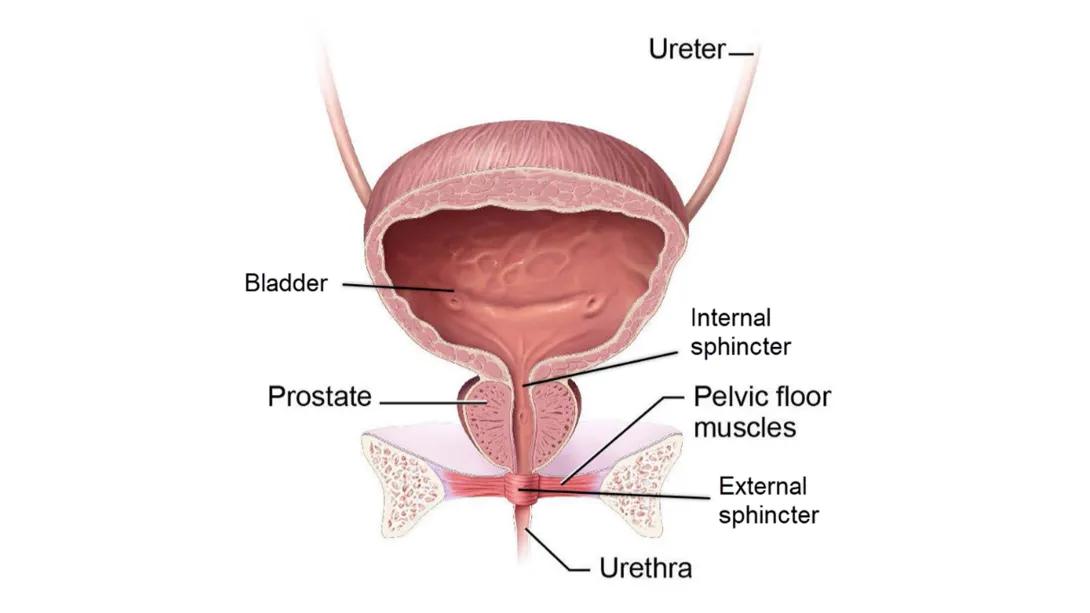
In the case of post-void dribbling, though, the external sphincter closes before all of the urine had made its way out of the prostate, causing pee to get trapped inside.
Shortly after you finish urinating, that muscle then relaxes, leading to that trapped urine then leaking (dribbling) out.
Who experiences post-void dribble?
Older men experience post-void dribble the most, but it can happen in younger men as well. It can also occur in those with strong pelvic floor muscles who have a hard time relaxing their external sphincter.
SEE ALSO: The truth about penile implants
How to treat post-void dribble
“When approaching how best to treat this for patients, we need to think about how to get this trapped urine out while people are still using the toilet,” said Stoffel.
He explains that there are two treatments for post-void dribble that can help reduce or prevent it from happening.
The first are Kegel exercises, which work well to relax your pelvic floor.
“A good idea is to work on relaxing your pelvic floor muscles so that those muscles don’t become so tight that urine gets trapped inside the prostate.”
To start, tighten the muscle of your rectum and then hold for a count of five. Then relax the muscle for a count of 10.
Repeat this 15 times in the morning and again 15 times at night.
By repeating this exercise you can make a big difference in helping to control and relax your sphincter muscle, which in turn will help avoid the dribbling issue.
The second is to remove the trapped pee with a technique that milks out any trapped urine from your prostate.
To do this, after urinating, place a finger underneath your scrotum on the skin between the base of your scrotum and your rectum, called the perineum.
“Milk” this area by gently applying pressure and moving your finger upward toward the base of the scrotum.
Then, shake out your penis to drain out all the urine.
“After three to four months of consistently completing these exercises, you should be able to manage your post-void dribbling so that it’s no longer an issue,” Stoffel said.
If you’ve tried these exercises consistently, though, and you’re still having symptoms, consider reaching out to your doctor to discuss the issue further.
For more information on post-void dribble, contact U-M’s Urology department to schedule an evaluation at 734-936-7030.
Sign up for Health Lab newsletters today. Get medical tips from top experts and learn about new scientific discoveries every week.
Sign up for the Health Lab Podcast. Add us wherever you listen to your favorite shows.

Health Lab
Explore thousands of health news & research stories by visiting the Health Lab homepage for more.
Media Contact

Public Relations
Department of Communication at Michigan Medicine
In This Story

John Thomas Stoffel, MD
Clinical Professor
Stay Informed
Want top health & research news weekly? Sign up for Health Lab’s newsletters today!
Featured News & Stories

Many hospitals still don’t do enough to prevent UTIs from catheters

E-Bikes are everywhere, but most parents say they don’t know enough about them

U-M Regents approve Michigan Medicine leadership changes

School night bedtime tips every parent should know

E-bikes are faster than ever. Are families prepared for the risks?