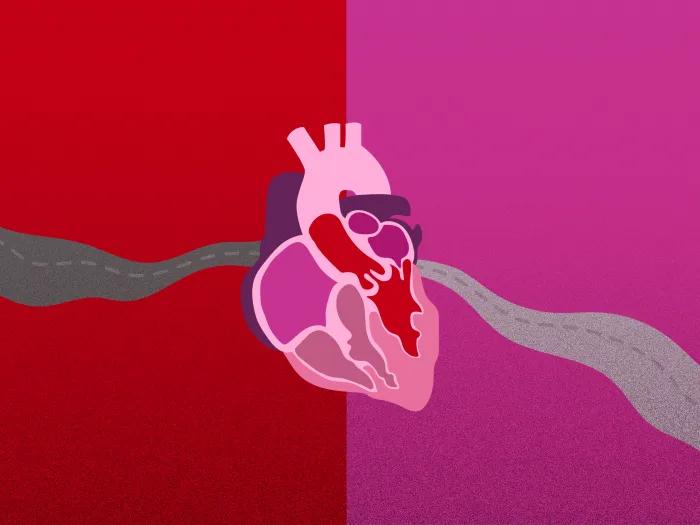
Donor hearts can be reprogrammed with medication for longer storage, improved transplant outcomes
Metabolic mechanism protects hearts from damaging metabolites that build up in cold storage, study finds
2:05 PM
Author |
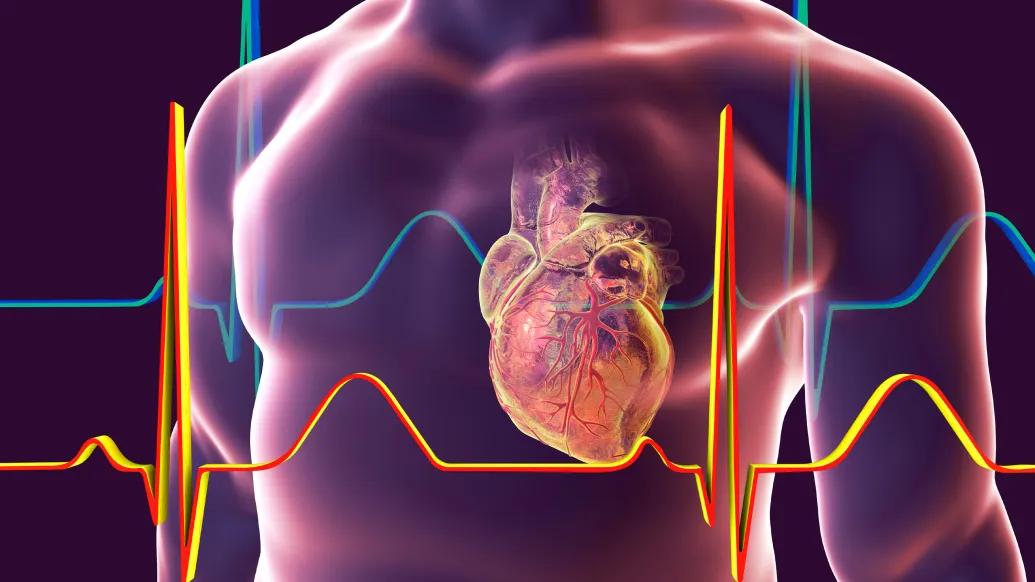
Hundreds of thousands of Americans with heart failure are sick enough to benefit from a transplant, yet only around 4,000 heart transplants are performed annually.
One reason for this gap is the time window during which a heart can survive outside the donor body before transplant hovers around four hours. And the longer it takes for the donor heart to be transported to the recipient, the more likely that heart will not work well once it’s implanted.
Using a drug previously used to treat seizures, researchers have found a way to reprogram donor hearts to boost the production of a beneficial enzyme that both increases the amount of time they can be stored and transported, as well as improves their function after they are transplanted, a study published in Science Translational Medicine suggests.
“This technology that coaxes donor hearts to mount adaptive responses to existence outside the body could lead to a paradigm shift not only for extending the time a heart can be outside of the donor during transport but for improving heart function after transplant,” said Paul C. Tang, M.D., Ph.D., senior author of the study and a heart transplant surgeon at University of Michigan Health. “Being able to extend the storage of hearts by figuring out the pathways that define and modulate preservation biology is the first step toward the ultimate goal of organ banking.”
In around 10-20% of heart transplants, transplanted hearts cannot pump sufficient blood to supply to the rest of the body. The condition, known as primary graft dysfunction, is responsible for nearly 40% of early deaths after heart transplant and can still predictably occur despite newer machine heart perfusion technology.
Not only could this possibly double the time a heart could spend in cold storage, but it could reduce the risk of primary graft dysfunction to make transplant even safer. Paul C. Tang, M.D., Ph.D.
Investigators in the study sought to reduce primary graft dysfunction by increasing the production of itaconate, an anti-inflammatory and antioxidant metabolite produced by the enzyme Irg1. Itaconate neutralizes the effects of succinate, a harmful molecule which accumulates while a heart is on ice and creates a flash of oxidative stress following blood reperfusion that causes the heart to malfunction.
“Current donor preservation techniques focus on cold storage and, more recently, technologies that keep the organs perfused during transport to minimize injury to the heart, but there are no targeted molecular therapies to improve heart preservation in a very precise fashion,” said Ienglam Lei, Ph.D., first author of the study and a research investigator in the Department of Cardiac Surgery at U-M Medical School.
When an organ is in cold storage, succinate is free to build up in excess — more ammunition for stress against the soon-to-be-transplanted heart. To reprogram hearts to take on the heart-damaging succinate, researchers used valproic acid, a histone deacetylase inhibitor previously used as an anti-seizure medication. They found that it defused a significant amount of this cumulative stress in both human and pig hearts by instructing the donor heart to produce antioxidants and anti-inflammatory proteins while preserved on ice.
“Using a metabolomic screen, we found that valproic acid can reprogram the donor heart to produce beneficial itaconate during preservation,” said Tang, who is also an assistant professor of cardiac surgery at U-M Medical School. “We showed previously that hearts are in fact biologically very active while stored on ice, which opens up the therapeutic opportunity to help it protect itself from metabolic stress during this time. Not only could this possibly double the time a heart could spend in cold storage, but it could reduce the risk of primary graft dysfunction to make transplant even safer.”
SEE ALSO: A new heart brings new hope (michiganmedicine.org)
Valproic acid is approved by the FDA to treat seizures, bipolar disorder and for the prevention of migraine headaches. For that reason, researchers believe the road to a clinical trial may be shorter.
“This discovery will buy time to allow a donor heart to reach patients in parts of the country not previously accessible — greatly impacting the landscape of organ transplant in America,” said Y. Eugene Chen, M.D., Ph.D., co-author of the study and Frederick G. L. Huetwell Professor of Cardiovascular Medicine at U-M Medical School. “The overarching principles here can be expected to apply to preservation of other organs, such as lungs, livers and kidneys. I would also anticipate this treatment strategy to be relevant for other conditions where blood supply is disrupted, such as heart attack or stroke.”
Live your healthiest life: Get tips from top experts weekly.
Headlines from the frontlines: The power of scientific discovery harnessed and delivered to your inbox every week.
Like Podcasts? Add the Michigan Medicine News Break on Spotify, Apple Podcasts or anywhere you listen to podcasts.
Additional authors include Wei Huang, Suyash Naik, B.S., Miriyam Ghali, B.S., Liu Liu, Ph.D., Francis D. Pagani, M.D., Ph.D., Ashraf Abou el ela, M.D., Bertram Pitt, M.D., Jeffrey L. Platt, M.D., Marilia Cascalho, M.D., Ph.D., Zhong Wang, Ph.D., Richard M. Mortensen, M.D., Ph.D., all of University of Michigan, Pierre Emmanuel Noly, M.D., Ph.D., Université de Montréal, and Jordan S. Pober, M.D., Ph.D., Yale University.
This study was funded in part by the National Institutes of Health, Thoracic Surgery Foundation – Southern Thoracic Surgery Association, Gardner Surgical Investigator Award- American Association for Thoracic Surgery, McKay Research Grant, Frankel Cardiovascular Center, University of Michigan-Ann Arbor, and American Heart Association Career Development Award.
Researchers at University of Michigan have filed a U.S. provisional patent (Title:
Histone-acetylation-modulating agents for the treatment and prevention of organ injury; no. 63/045,784; International Application No.: PCT/US2021/039650). Ashraf Abou El Ela has a consulting agreement with TransMedics, Inc. Pagani is an ad hoc, non-compensated scientific advisor for Medtronic, Abbott, FineHeart and CH Biomedical, a non-compensated medical monitor for Abiomed. Pagani is also a member of the Data Safety Monitoring Board for Carmat and the NHLBI PumpKIN clinical trial as well as the chair of data safety and management for the DCD heart national FDA clinical trial and the EXPAND heart-Continuous access protocol national FDA trial.
Paper cited: “Metabolic Reprogramming by Immune-Responsive Gene 1 Upregulation Improves Donor Heart Preservation and Function” Science Translational Medicine. DOI: 10.1126/scitranslmed.ade378

Health Lab
Explore thousands of health news & research stories by visiting the Health Lab homepage for more.
Media Contact

Public Relations
Department of Communication at Michigan Medicine
Stay Informed
Want top health & research news weekly? Sign up for Health Lab’s newsletters today!
Featured News & Stories

Digital alerts support timely treatment decisions of critically ill cardiac patients
Is the United States Lagging Behind Europe in Memory Improvement?
Reducing infections after heart surgery could save Medicare $441 million per year
Young father survives aortic dissection after delayed diagnosis
C.S. Mott Children’s Hospital first in country to implant expandable heart valve during FDA review phase