Does Public Policy Affect Alcohol-Related Liver Disease Deaths?
A team of liver experts examine how statewide policies impact mortality rates among individuals with alcohol-related liver disease.
1:56 PM
Author |
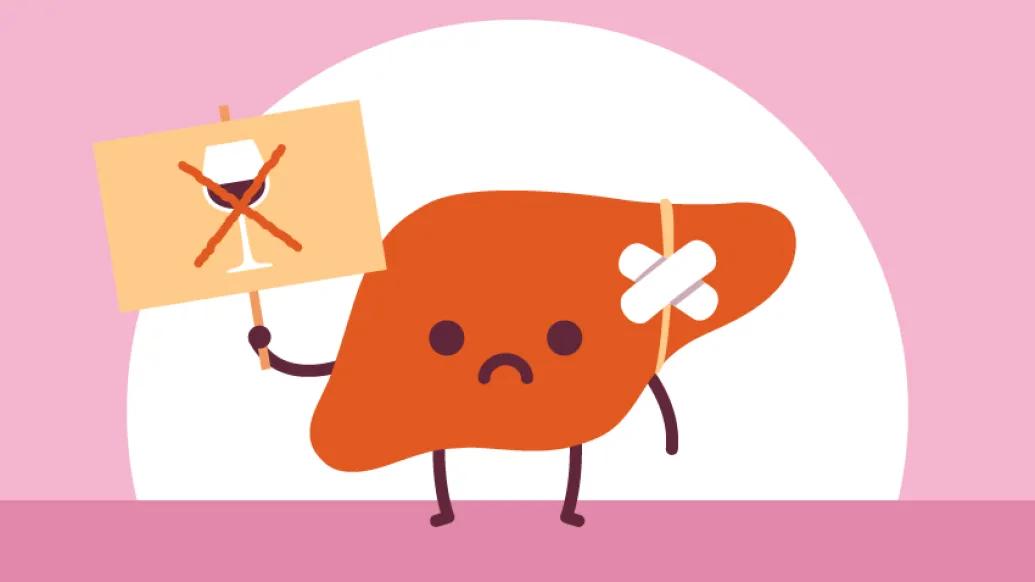
Alcohol-related liver disease is on the rise in the United States. Most strikingly, this epidemic is disproportionally affecting young, otherwise healthy, people, leading to rapid increases in alcohol-related liver disease deaths.
"Changes in mortality rates for alcohol-related liver disease vary significantly from state-to-state, so we think socioeconomic factors and policies are likely interconnected with the condition," says Neehar Parikh, M.D., M.S., a liver specialist and assistant professor at Michigan Medicine. "But as a society, we have limited ways to respond to this epidemic."
These notions inspired Parikh and a team of experts to examine the effects of alcohol-related policies on alcohol-related liver disease mortality rates in the U.S. Their findings were recently published in Gastroenterology.
In order to gather the mortality rates for alcohol-related liver disease in each state in the country, the team used the CDC's Wide-ranging Online Data for Epidemiologic Research, or WONDER, platform.
"WONDER is an encompassing database that includes birth certificate causes of death throughout the U.S.," says Parikh. "We've previously used it in various research studies, as it helps us understand how causes of death vary geographically and trend over time."
MORE FROM THE LAB: Subscribe to our weekly newsletter
The team pulled data for adults that were 25 years and older and then quantified the alcohol-related policies in each state by using the Alcohol Policy Scale.
"The Alcohol Policy Scale is an index that rates state-level alcohol-related policies according to their strength," says Parikh. "We were able to determine whether the policies were tax-related or not. We also made sure to control for important state-based variables such as sex, race, education and income."
Parikh adds that in 2018, he was a part of a team that researched the number of deaths related to cirrhosis and liver cancer throughout the U.S.
"We found that there were stark increases in alcohol-related deaths, but there was still a lot of variance in different parts of the country," he says. "So our main question became, 'Why?' We wanted to know why there was this variation from state-to-state when it came to alcohol-related liver disease mortality rates."
At a state level, the team found that local alcohol policies appeared to influence the burden of mortality for liver disease across populations. But especially in key subgroups of demographics that were considered high-risk.
"We observed that the differences in Alcohol Policy Scale were quite notable across the states," says Parikh. "We didn't find an association between tax policy and alcohol-related liver disease mortality, likely because U.S. taxes are quite low when compared to many other countries."
He adds that some associations were stronger than others: "Like race, socioeconomic status and other factors, for example," he says. "We also observed a strong association between states tightening their alcohol-related policies and a subsequent decrease in alcohol-related liver disease mortality numbers."
Like Podcasts? Add the Michigan Medicine News Break on iTunes, Google Podcast or anywhere you listen to podcasts.
According to Parikh, this research is important because of the growing number of alcohol-related liver disease -related deaths throughout the country. He also acknowledges that their findings go hand-in-hand with the ongoing opioid crisis and other "deaths of despair."
"After all this, we're left wondering what to do to help curb it all," he says. "But we now know that policies may make a difference. If you're interested in truly curbing the burden of alcohol-related liver disease , improving your policy environment and making it stricter could actually help."
Lastly, Parikh notes how difficult it can be for someone going through alcohol dependency. But also, that help is out there.
"Sometimes it's too late because people that far into addiction often drink alone and come to us for help when they're already severely ill," he says. "We saw higher alcohol-related liver disease mortality rates from 2008 onwards, possibly because of the downturn of the economy. And now, with the pandemic still looming and the isolation of quarantine and other mental health stressors, it's no surprise that rates are skyrocketing again. We showed that policy can help, but ultimately even these instruments have limitations. If you know someone who is using alcohol excessively, there is help available and hope for recovery."
Paper cited: "Alcohol Policies and Alcohol-Related Liver Disease Mortality," Gastroenterology. DOI: 10.1053/j.gastro.2021.03.031

Health Lab
Explore thousands of health news & research stories by visiting the Health Lab homepage for more.
Media Contact

Public Relations
Department of Communication at Michigan Medicine
Stay Informed
Want top health & research news weekly? Sign up for Health Lab’s newsletters today!
Featured News & Stories

Top 7 tips for choosing Medicare prescription drug coverage for 2027

Many older adults make Medicare decisions quickly and most don’t change plans, poll finds

4 in 5 parents say having a baby is too expensive

What’s the latest on 7-OH and kratom availability and addiction care?

Better prenatal care data could help prevent maternal complications, experts say