Does getting ADHD drugs via telehealth increase addiction risk?
Starting on stimulants through a virtual visit largely doesn’t lead to more substance use disorder, except in young adults
9:33 AM
Author |
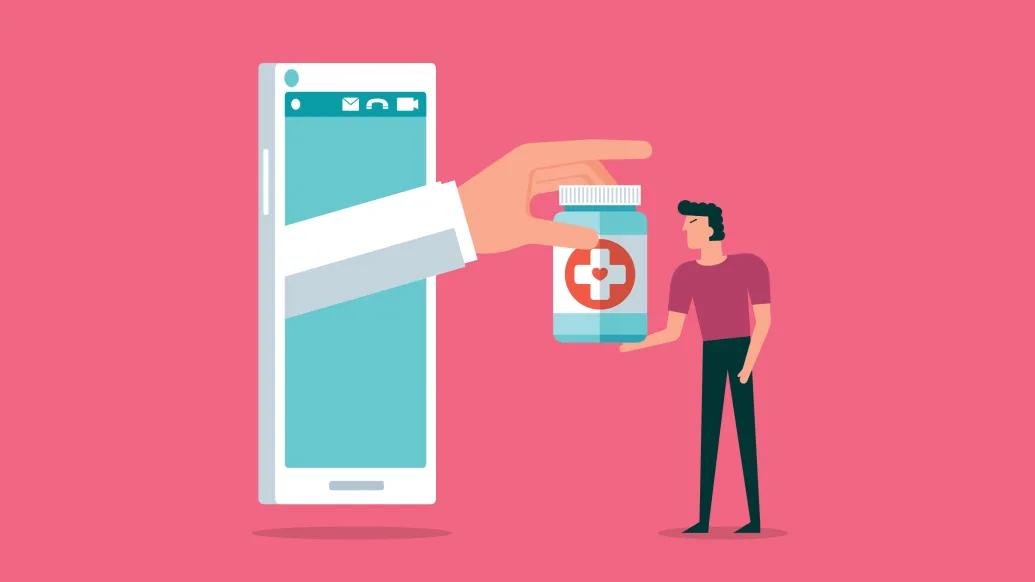
For nearly five years, people with attention deficit/hyperactivity disorder have had the option of getting their stimulant medications prescribed and renewed by doctors they see only over a computer screen, despite the risks that these stimulant drugs can pose if misused.
But with expiration dates coming up for the telehealth rules that made this possible, a study offers key evidence about the safety of virtual ADHD care that could inform policymakers.
Published in the journal Health Affairs by a team from the University of Michigan, the study shows people aged 12 to 64 who started getting stimulant medications via telehealth were slightly more likely to develop a substance use disorder (SUD, also sometimes called addiction) within the next year than those who started getting the medications via in-person care. The risk in these two groups was 3.7% versus 3.2%.
However, for the entire study population of 12- to 64-year-olds, the higher risk disappeared when accounting for the fact that people using telehealth to start stimulant therapy were also more likely to have mental health conditions, such as depression.
These conditions are strong risk factors for SUD.
But the study finds one group – adults between the ages of 26 and 34 who started their ADHD stimulant medications through telehealth – did have a higher risk of SUD even after accounting for mental health condition.
“Although there appeared to be an increased risk of substance use disorder among patients who initiated their ADHD stimulant medication through telehealth, when we accounted for psychiatric diagnoses that also increase risk, the difference disappeared except for those aged 26 to 34,” said Joanne Constantin, Ph.D., the study’s lead author and a postdoctoral research fellow at the Susan B. Meister Child Health Evaluation and Research (CHEAR) Center, based in the U-M Medical School’s Department of Pediatrics.
The fact that young adults are largely no longer able to be covered by a parent’s health insurance after age 26 may play a role, said Constantin.
“Young adults are more independent about getting their own medication without parental supervision, which highlights the importance of screening and monitoring for this age group.”
The researchers conclude that screening for addiction risk and monitoring for signs of SUD on an ongoing basis could be important to include in any future policies regarding telehealth-based ADHD care.
Current federal telehealth rules allow behavioral health care without an in-person visit to continue through December 31.
That’s in addition to other policies designed to prevent misuse and diversion of stimulant drugs used for ADHD, which are specially regulated controlled substances.
Such drugs, sold under names such as Ritalin and Adderall, now carry strong warnings from the United States Food and Drug Administration about potential risks from misuse.
“Telehealth can be an essential way to access care, but this study suggests an ongoing need to balance such access with protecting safety, through guidelines for providers about screening and follow-up,” she added.
Constantin worked with Michigan Medicine pediatrician and health care researcher Kao-Ping Chua, M.D., Ph.D., a member of CHEAR, on the study.
Current ADHD prescribing climate
To prescribe stimulants for ADHD, clinicians must be licensed by the U.S. Drug Enforcement Agency and often need to check their state’s prescription drug monitoring program records to see the patient’s history of receiving medications that are controlled because of their risk of misuse.
But there are no specific guidelines for screening for SUD risk factors at the start of treatment or monitoring patients for SUDs on an ongoing basis, beyond the FDA “black box” warning.
That warning focuses not just on the potential risk of using ADHD stimulant medication in different ways than prescribed but also the risks to people without ADHD whom the patient might give or sell their medication to.
Several companies have started offering standalone ADHD care entirely via telehealth during the past five years, after the insurance requirements for virtual care became much more flexible due to the COVID-19 pandemic.
Some of those companies have been the subjects of criminal and non-criminal proceedings from state law enforcement, because of alleged lack of oversight of how the stimulants their clinicians prescribe are used.
More about the study
The study used data from anonymous health insurance records from people with private insurance or Medicaid coverage. It included 77,153 people who had not received stimulant ADHD medication or an SUD diagnosis in the past year, and who started on a stimulant in 2021.
The researchers then looked at the records for the same people over the year after they got their first stimulant prescription, to see if they were diagnosed with an SUD of any kind.
More than 21,000 of the patients started on their stimulant via a telehealth visit, while the rest started via an in-person visit.
Those starting via telehealth were much more likely to also have a diagnosis of anxiety, depression and/or another psychiatric condition in their records.
So, the researchers adjusted for this difference, and for other differences between the two populations, in their analysis.
Additional authors: In addition to Constantin and Chua, the study’s authors are Sean Estaban McCabe, Ph.D., and Emily Pasman, Ph.D., LMSW, of the U-M School of Nursing, and Timothy Willens, M.D., chief of child and adolescent psychiatry and co-director of the Center for Addiction Medicine at Massachusetts General Hospital.
McCabe directs the U-M Center for the Study of Drugs, Alcohol, Smoking and Health, also called the DASH Center. McCabe and Chua are members of the U-M Institute for Healthcare Policy and Innovation.
Funding/disclosures: The study did not receive any direct funding. Chua has consulted for the U.S. Department of Justice on unrelated topics.
Paper cited: “Association Between Telehealth Initiation of Stimulant Therapy And New Substance Use Disorder Diagnoses,” Health Affairs. DOI: 10.1377/hlthaff.2024.01026
Sign up for Health Lab newsletters today. Get medical tips from top experts and learn about new scientific discoveries every week.
Sign up for the Health Lab Podcast. Add us wherever you listen to your favorite shows.

Health Lab
Explore thousands of health news & research stories by visiting the Health Lab homepage for more.
Media Contact

Public Relations
Department of Communication at Michigan Medicine
In This Story

Kao-Ping Chua, MD, PhD
Associate Professor
Related

Does virtual care mean low-value care? Study says no
Adderall shortage may be associated with increased use of alternative ADHD medication in kids
Stay Informed
Want top health & research news weekly? Sign up for Health Lab’s newsletters today!
Featured News & Stories

A pediatric epilepsy fundraiser that changes lives

Better prenatal care data could help prevent maternal complications, experts say
Liver cancer can be preventable. Do you know the treatable risk factors?
Innovative children’s vision research gets a boost from the Knights Templar Eye Foundation

Pain, psychological factors and physical function closely linked in people with systemic sclerosis