Digital alerts support timely treatment decisions of critically ill cardiac patients
Researchers say alerts can assist clinicians in high pressure situations
5:00 AM
Author |

For busy health care workers, the electronic health record can feel like an endless stream of clicks and prompts.
But three Michigan Medicine studies suggest that well-designed alerts for critically ill cardiac patients can change what happens at the bedside, prompting clinicians to make recommended treatment decisions and recognize when patients are deteriorating.
The studies — published in in Heart & Lung, the Journal of Cardiac Failure and JACC: Case Reports — demonstrated the effectiveness of EHR alerts at two different moments for critically ill cardiac patients: in the emergency department and the cardiac intensive care unit.
The results reveal that implementing alerts directly into the digital workflow can nudge clinical teams toward evidence-based decisions in these situations.
“These clinical decision support tools are most useful when they help clinicians make the right decision in the moment, rather than adding more noise to their busy workflows,” said Scott Ketcham, M.D., a Cardiologist at the University of Michigan Health Frankel Cardiovascular Center and author on all three studies.
“These findings suggest that well-designed EHR CDS tools have potential to improve clinical decision making, even in the fast-paced environments of the emergency department and cardiac intensive care unit.”
Heart failure in the emergency department
In the emergency department study, researchers evaluated a tool designed to help clinicians choose the appropriate dose of an intravenous loop diuretic for patients with acute decompensated heart failure.
The medication removes excess fluid that allows the heart to pump more effectively and relieves shortness of breath.
Guidelines recommend giving acute decompensated heart failure patients at least twice the dose of diuretics they take at home when they arrive in the emergency department.
However, the demands of a busy emergency department can make it challenging for clinicians to quickly review home medications and adjust diuretic therapy appropriately.
At the U-M Health Emergency Department, an alert of fluid overload or kidney dysfunction was triggered in 223 patient encounters.
Nearly three-quarters of clinicians followed the recommended diuretic dosing.
Using the alert did not delay treatment; the median time from arrival at the emergency department to diuretic dosing was roughly two hours in both groups.
“Our study did not assess whether following these digital alerts affected patient outcomes, such as fluid removal or length of hospital stay, but it does show that these tools are easily used in a clinical setting and affect treatment decisions,” said Sarah Adie, Pharm.D., a Clinical Cardiology Pharmacy Specialist at U-M Health and author on all three studies.
“This is a critical first step toward broad clinical adoption in settings that treat critically ill cardiac patients.”
Sedation in cardiac ICU
Another study examined sedation practices in more than 1,600 patients on a ventilator in the cardiac and medical intensive care units.
While deep sedation is common in the ICU, leading cardiac and critical care society guidelines favor limiting its use because prolonged sedation may contribute to worse outcomes.
The research team introduced an EHR-based intervention that encouraged physicians and nurses to use lighter sedation.
After implementation, the average amount of time patients spent deeply sedated during the first 48 hours after intubation dropped in the cardiac ICU from 16.8 to 12.4 hours.
Nurses also reduced the continuous dose of commonly used sedatives — including fentanyl, propofol, midazolam and dexmedetomidine — in 23% of cases when the EHR generated an alert.
“The alerts are not designed to replace clinical judgment, rather they are a tool given at high pressure moments to assist clinicians with evidence-based guidance,” said Anna Barker, M.D., Ph.D., a Pulmonologist at University of Michigan Health who is senior author of the paper on light sedation.
Escalation of cardiogenic shock care
The third study examined how targeted alerts can help clinicians identify normotensive cardiogenic shock, which occurs when the heart cannot pump enough blood to the organs despite a patient having normal blood pressure.
This condition can be difficult to recognize because cardiogenic shock is often linked to low blood pressure, and delays in diagnosis can be life threatening.
Researchers implemented an EHR alert that identified patients who displayed additional physiological signs of normotensive cardiogenic shock and facilitated communication with a shock team in cardiac ICU.
Clinicians engaged with the alert in 14% of cases, and those encounters were linked with higher rates of cardiac ICU consultation within 12 hours.
Future of electronic health record alerts
Together, the three studies illustrate how targeted EHR alerts can assist clinicians across the continuum of critical cardiac care, from the emergency department to the cardiac ICU.
In one study, the tool offered patient-specific recommendations when the diuretic order was placed.
In the two ICU studies, alerts prompted clinicians to limit deep sedation or to escalate shock cases to specialized critical care teams.
Researchers say the studies offer proof of concept, but more work must be done to ensure electronic alerts are beneficial without disrupting clinical workflow.
“These studies show that thoughtfully designed clinical decision support tools can influence care at critical moments,” Ketcham said.
“Our next step is to evaluate these interventions across multiple health systems to better understand their impact on patient outcomes and determine how they can help improve the care of critically ill cardiac patients nationwide.”
Additional authors: Find full lists online for each paper.
Papers cited:
“Implementation of an emergency department electronic interruptive alert to guide intravenous diuretic dosing in acute decompensated heart failure,” Heart & Lung. DOI: 10.1016/j.hrtlng.2026.102869
“Implementation of an Electronic Health Record Initiative to Reduce Deep Sedation in a Cardiac Intensive Care Unit,” Journal of Cardiac Failure - Intersections. DOI: 10.1016/j.yjcafi.2026.04.011
“Improving Recognition of Normotensive Cardiogenic Shock Through an Electronic Health Record Nudge,” JACC: Case Reports. DOI: 10.1016/j.jaccas.2026.109450

Health Lab
Explore thousands of health news & research stories by visiting the Health Lab homepage for more.
Media Contact

Public Relations
Department of Communication at Michigan Medicine
In This Story

Scott Ketcham
Clinical Assistant Professor

Anna K Barker, MD, PhD
Clinical Instructor
Related
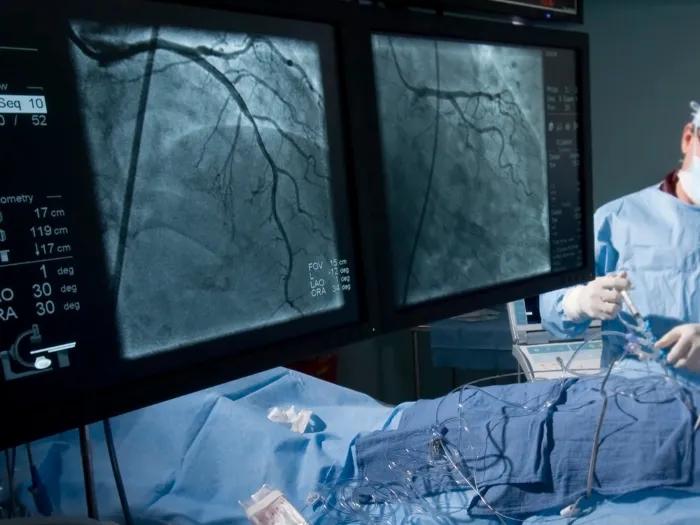
Researchers find significant differences in care of life threatening shock after heart attack
Inaccurate pulse oximeter readings could limit transplants, heart pumps for Black patients with heart failure
Stay Informed
Want top health & research news weekly? Sign up for Health Lab’s newsletters today!
Featured News & Stories
Top 7 tips for choosing Medicare prescription drug coverage for 2027

Gene editing is coming for common diseases. Are we ready?
The AI is listening: Implications of machine generated clinical notes on health care

Many older adults make Medicare decisions quickly and most don’t change plans, poll finds

What’s the latest on 7-OH and kratom availability and addiction care?