A deaf mother's birth story
How Kristin Wilks' collaboration with her care team shaped her pregnancy experience
5:00 AM
Author |
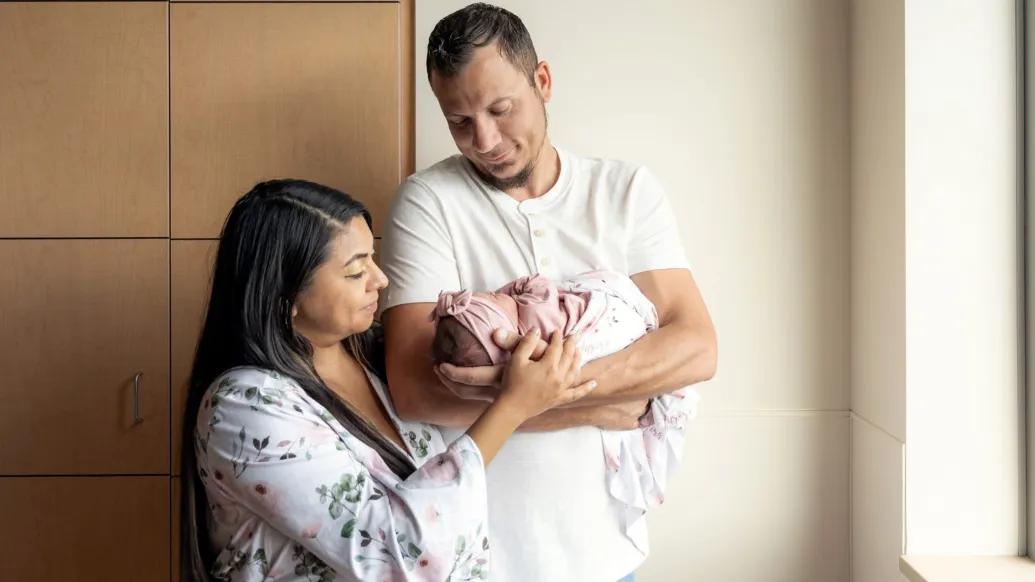
Kristin Wilks, a mother of two, recently gave birth to her daughter Aurora Rose at Von Voigtlander Women’s Hospital.
Wilks and her husband, Steve, are Deaf.
Kristin has a cochlear implant and uses spoken English and American Sign Language, while Steve uses ASL.
“I finally had the birth I had hoped for all along, surrounded by people who truly understood and respected me,” said Kristin.
However, in 2021, Kristin’s experience was very different.
When she delivered her son, Liam, during the height of the COVID-19 pandemic, she faced a number of challenges.
“It was hard, traumatic, overwhelming, exhausting and stressful all at once, especially being Deaf and first-time parents,” said Kristin.
“We couldn’t even have an in-person interpreter, so we had to use the rolling iPad stand for interpretation provided by the hospital. Everyone was wearing masks, which made it impossible for us to read lips or facial expressions. It was hard for us to communicate and discuss the options and the risks.”
Kristin also had challenges taking care of her son at home since the home alert system didn't dependably wake her up for her son’s cries.
Instead, she would stay up for hours, which added to her stress and trauma, and impeded her healing and bonding with her son.
Taking charge for a positive difference
“I often think back to my first birth experience. I wasn’t educated enough about labor and delivery — the stages, the pain management options, or the tools that could help me to have a positive birth experience,” said Kristin.
So with her second pregnancy, Wilks wanted to be proactive and have a more positive birthing experience.
She worked with a midwife, a doula who communicates in English and ASL, the Office of Patient Experience and Interpreter Services to receive the support she needed.
Having Melissa Scott, C.N.M., as her midwife provided Kristin a more, personal, respectful and supportive experience.
According to Kristin, having a doula who could also communicate using ASL made a big difference. Doctors, nurses and midwives worked collaboratively with the doula to care for Wilks. (U-M Health does not provide doula services, which are contracted privately.)
Interpreter Services provides essential link
Although Kristin uses sign, lip reading and her voice to communicate, her husband uses ASL only and relied on interpreters to communicate so that he can be fully involved in his wife’s delivery and care.
“We had wonderful U-M ASL interpreters, and we absolutely loved having in-person interpreters in our labor and delivery room — it made a huge difference in our second birth experience,” said Kristin.
“With the ASL interpreter right there in the room, we could fully understand everything that was happening in real time and communicate naturally in our own language, without delays, technical issues or feeling disconnected.”
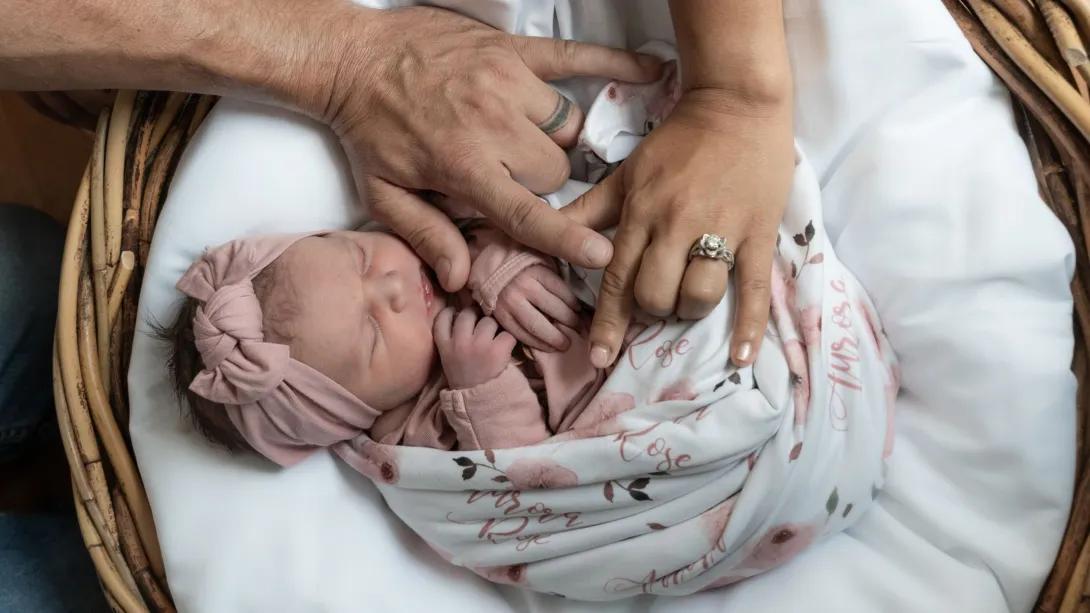
U-M Health’s Interpreter Services provides extensive services with in-person interpretation during the birthing process.
The ASL interpreters work in shifts and are available to the parents from the time they arrive at the hospital until they head home with their baby.
“The ASL team is on alert when we know the mother-to-be is nearing her due date,” said Christa Moran, ASL manager.
“Patients can notify the team when they are heading to the hospital and we meet them at the door.”
A ‘healing, empowering’ experience
In preparation for her birth, Wilks also reached out to the Office of Experience, asking for a new system that alerts the parents to when the baby cries to be provided after birth.
The organization was able to accommodate Kristin’s request and purchased the requested alert system, set it up in the room and trained the hospital floor staff on how to use it.
This alarm system enables Deaf parents to be alerted when the baby cries via a bright light flashing or a vibrational alert in their bed.
With it, parents don’t have to rely on others to notify them when their baby needs attention, allowing them to confidently respond to their child’s needs on their own.
“Our goal is to provide inclusive and accessible care for these families,” said Moran.
“In-person interpreters play a crucial role for Deaf families during childbirth and exemplify U-M Health’s commitment to the strategic priorities of belonging, access, safety and experience.”
Kristin also purchased a new alert system for her home. One that worked exactly as needed and allowed the Wilks’ to care for their newborn daughter.
“This time, I got the birth I had always dreamed of — calm, beautiful and full of love. When our baby, Aurora Rose was born, I felt so much peace and gratitude,” Kristin said.
“It was the most healing and empowering experience, one that reminded me how important the right support can be.”

Health Lab
Explore thousands of health news & research stories by visiting the Health Lab homepage for more.
Media Contact

Public Relations
Department of Communication at Michigan Medicine
Stay Informed
Want top health & research news weekly? Sign up for Health Lab’s newsletters today!
Featured News & Stories
How to improve mental health safety on social media – not just for young people

Many parents face challenges getting kids to eat a healthy breakfast before school

More teens are using AI: What parents should know

Helping kids with ADHD thrive in school

Navigating Perimenopause and Menopause