Cutting edge brain neurostimulator device significantly reduces 21-year-old’s seizures
Cody Duncan experiences new level of freedom after having novel responsive neurostimulation surgery to treat drug-resistant epilepsy
5:00 AM
Author |
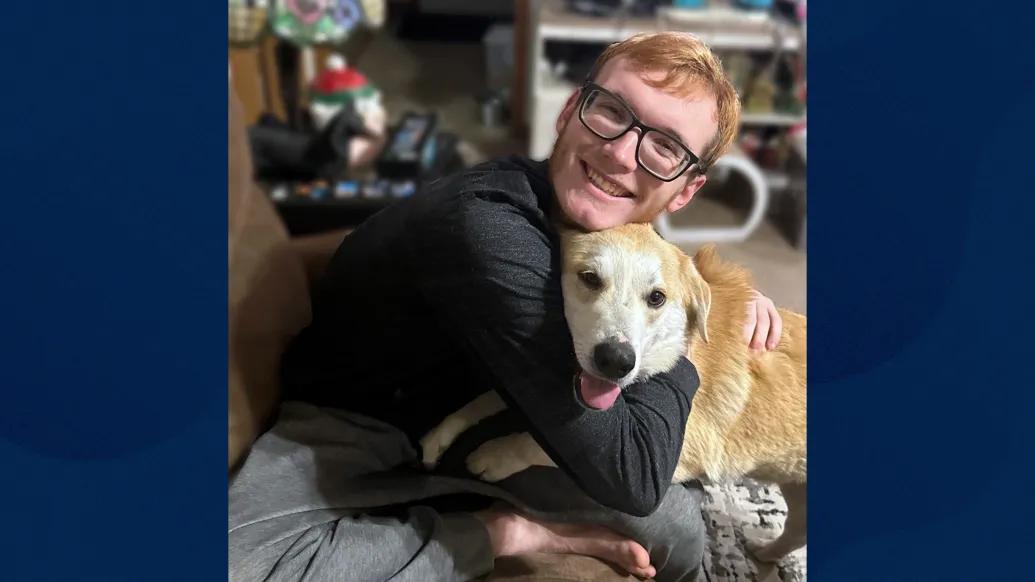
In high school, Cordel “Cody” Duncan often felt foggy and forgetful, not being able to retain the information he was learning in class.
By then, Duncan, who had been diagnosed with epilepsy in elementary school, was experiencing up to 50 seizures a day. Every time they got worse, his medication dosage would increase – as would the side effects.
He was falling behind in school, preparing for the possibility of not being able to graduate with his peers.
That’s when his family turned to University of Michigan Health C.S. Mott Children’s Hospital where evaluations revealed he had drug-resistant epilepsy. This meant his seizures continued despite trials of more than two anti-seizure medications, his doctors explained, and his epilepsy was unlikely to be fully controlled with medications alone.
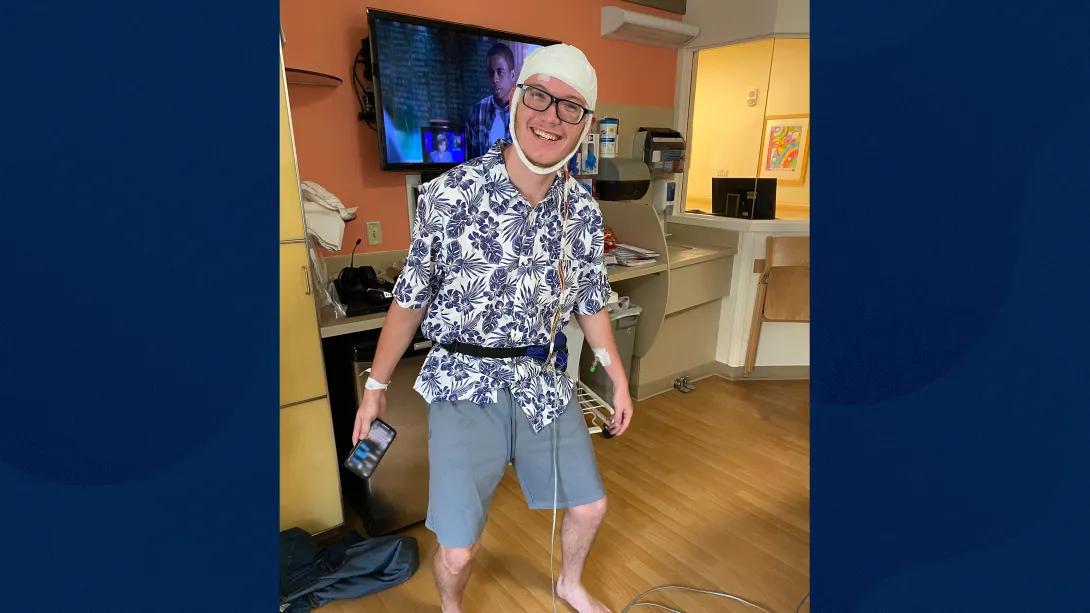
After multiple tests at the Comprehensive Pediatric Epilepsy Program at Mott to explore all possible options, his care team switched his medication plan and also determined he qualified for a cutting edge brain procedure for treatment.
The responsive neurostimulation surgery, or RNS, would involve implanting a device in his brain that would monitor activity and deliver electrical pulses to prevent or shorten seizures.
“It basically changed my entire life,” said Duncan, of Northville, who was able to graduate high school on time and is now 21.
“People don’t realize just how much seizures can affect someone physically and mentally. There’s always fear that it could happen any time and constantly feeling like you’re a burden or risk to people around you. It takes a huge toll on you and your family.”
A novel use of RNS technology
A series of tests at Mott showed that the source of Duncan’s seizures were too close to the parts of his brain controlling functions like language and motor skills and that surgically removing that area wasn’t an option.
RNS was less risky because it didn’t require taking out any brain tissue. The procedure involves making an incision in the scalp and skull, placing electrodes in the brain and implanting a neurostimulator device.
The device records electrical activity in the brain, including seizures, and then delivers treatment in response to what it’s reading.
This procedure offers people who aren’t candidates for resective brain surgery and when medications have failed another option. Even if it doesn’t lead to 100% seizure freedom, being able to significantly reduce someone’s seizure burden can allow them to shift their focus from the constant stress and disruption of frequent seizures to other life goals.”
-Kerri Neville, M.D.
But Duncan’s case would be a novel application of the technology.
Traditionally, both RNS electrodes are placed near the origin of the seizures. Duncan would be the first patient at Mott to receive RNS that would also target the thalamus, a section in the center of the brain that acts as a relay station for sensory and motor information and plays a role in alertness and sleep.
“The optimal target and electrode position really depends on the type of epilepsy and the patient,” said Mott pediatric neurologist Kerri Neville, M.D.
“The thalamus is a key node in many seizure networks and new research is showing that disrupting seizure networks may further enhance seizure control beyond just targeting the area where seizures originate from. Cody’s case met all the criteria for this novel therapeutic approach.”
Not letting setbacks get in the way
In 2023, Duncan underwent the RNS surgery led by Mott pediatric neurosurgeon Hugh Garton, M.D.
For the first month, Duncan’s doctors monitored the abnormal brain activity picked up by the electrodes that would send signals to the neurostimulator, making treatment adjustments based on their observations.
“This is a great tool to have but it’s challenging too because it’s extremely individualized and there’s not one clear setting that helps everybody,” Neville said.
“It’s not something where you just turn the device on and immediately see a reduction in seizures the first day or even first few months after surgery. You have to tailor it to information you’re collecting and constantly adjust.
“Most patients see the most benefits over time.”
She notes that RNS also isn’t designed to make someone completely seizure free, but rather to significantly reduce seizures. Cody’s case, however, “was an exception” because his seizures stopped for nearly a year.
“I suddenly had so much freedom back,” he said.
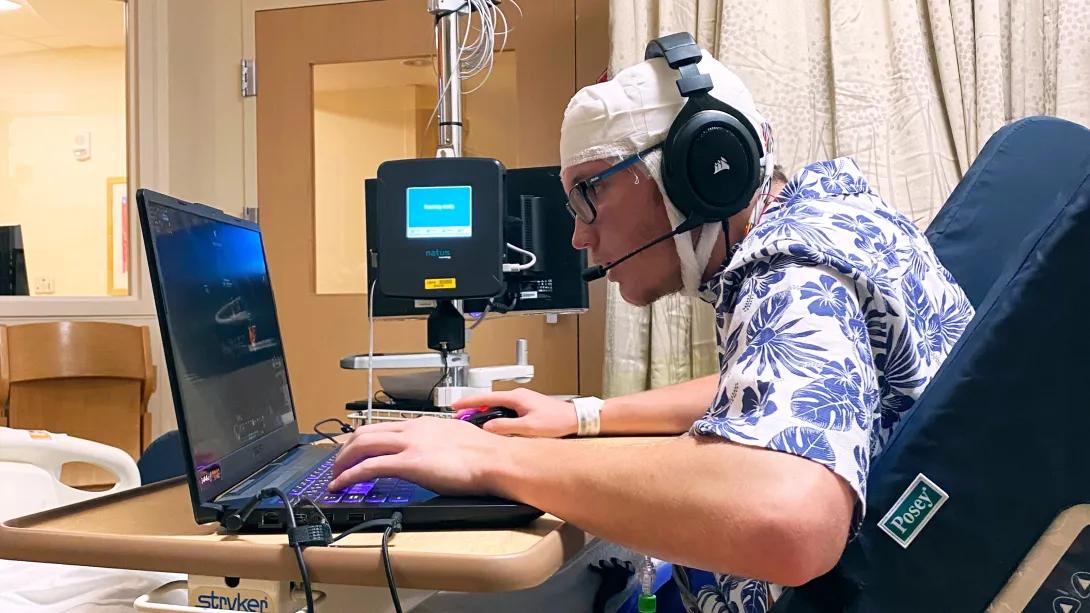
“I was able to drive and not be as reliant on other people, get to work and not have the stress of seizures getting in the way. It was the first time I was given an option besides medications that gave me hope I could possibly have a future not completely focused on my seizures.”
But in 2024 he experienced a setback when he experienced an unrelated health issue. During an MRI scan, doctors discovered a spot on his optic nerve that was ultimately diagnosed as optic pathway glioma, a slow growing brain tumor that develops in the optic nerve.
It required regular chemotherapy, and during the transition Duncan experienced his first seizure after a nearly 11-month remission that doctors believe is likely related to medication disruptions.
He credits his mom Theresa Michel and sister Sierre Michel for being critical parts of his support system.
“They really helped me stayed focused on what I needed to do to get better and to keep a positive outlook through all of this,” he said.
Cody is continuing treatment with the pediatric oncology team at Mott. When it’s complete, he plans to get formal training allowing him to do contracting work. Having his seizures under control means being able to stand on ladders and do other related functions safely.
“I’m not going to let epilepsy define me or hold me back from anything,” he said.
RNS has now been used in about a dozen patients in the pediatric epilepsy program at Mott.
“This procedure offers people, who aren’t candidates for resective brain surgery and when medications have failed, another option,” Neville said.
“Even if it doesn’t lead to being 100% seizure freedom, being able to significantly reduce someone’s seizure burden can allow them to shift their focus from the constant stress and disruption of frequent seizures to other life goals.”
Sign up for Health Lab newsletters today. Get medical tips from top experts and learn about new scientific discoveries every week.
Sign up for the Health Lab Podcast. Add us wherever you listen to your favorite shows.

Health Lab
Explore a variety of health care news & stories by visiting the Health Lab home page for more articles.
In This Story
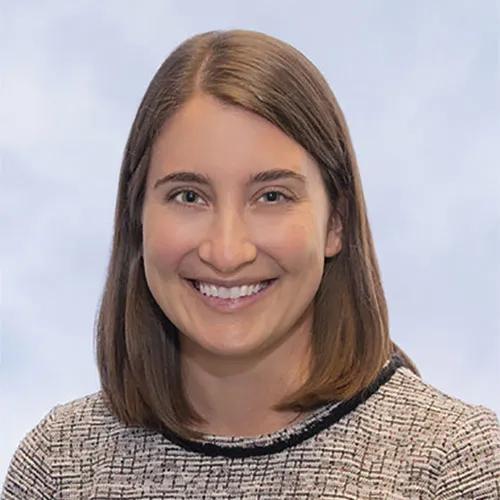
Kerri Neville, MD
Clinical Assistant Professor
Stay Informed
Want top health & research news weekly? Sign up for Health Lab’s newsletters today!
Featured News & Stories
Teen’s journey with severe epilepsy inspires family’s mission for awareness
“Miracle Maddy” pursues high school diploma after complex brain surgery for extremely rare epilepsy
Medical student’s invention aims to help infants with jaundice
Research may help better predict outcomes in kids with congenital cytomegalovirus
12-year-old shares journey with sickle cell anemia on Capitol Hill