Could your phone detect hepatic encephalopathy by listening to you read?
A novel model attempts to discern symptoms from recordings of a patient’s speech
5:00 AM
Author |
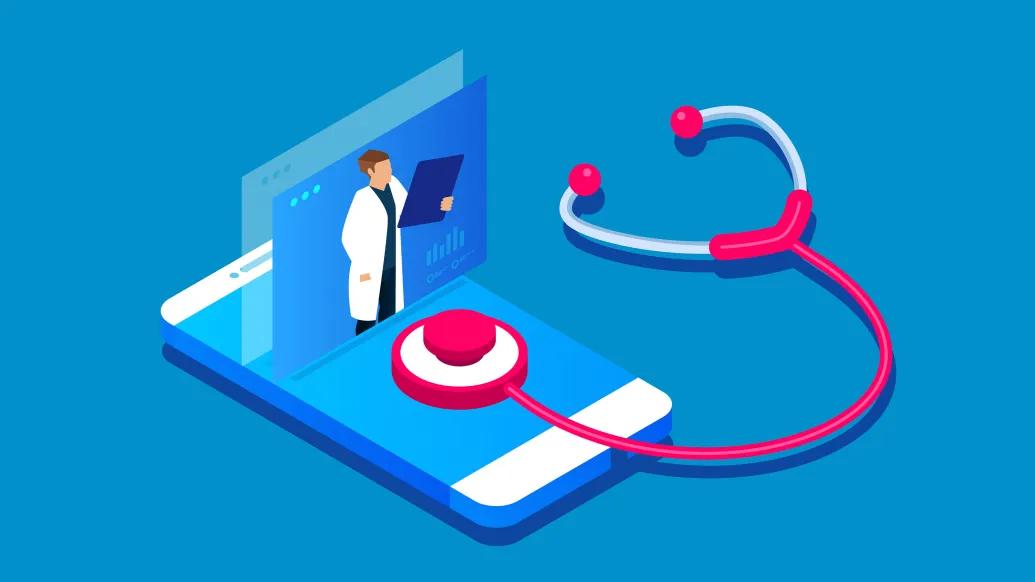
Research from the University of Michigan suggests that one day a phone app could be able to detect the development of hepatic encephalopathy in patients just by listening to them speak.
The resulting paper, “HEAR-MHE Study: Automated Speech Analysis Identifies Minimal Hepatic Encephalopathy and May Predict Future Overt Hepatic Encephalopathy” was published in Hepatology.
Hepatic encephalopathy, a brain dysfunction caused by the liver’s failure to filter toxins out of blood, often affects quality of life in patients with cirrhosis.
Minimal hepatic encephalopathy, a more subtle form of the condition, can portend overt hepatic encephalopathy, which can lead to complications such as comas.
Minimal hepatic encephalopathy can lead to confusion, sleep disturbance and personality changes, among other symptoms.
Despite its effects on quality of life, however, the minimal version can be hard to detect.
“Ten to 20% of patients with cirrhosis could have minimal hepatic encephalopathy, but as a doctor you won’t know it, because you would need to administer a psychometric hepatic encephalopathy-score test to diagnose them,” said Patricia Bloom, M.D., assistant professor of hepatology at U-M and lead author of the study.
“But that never happens in clinical practice, so these people go undiagnosed.”
A new idea
Hepatic encephalopathy often also affects speech.
Hoping to create an easier test, researchers recorded 200 patients with cirrhosis performing speech tasks.
The recordings were then analyzed for hundreds of speech variables.
Those analyses led to the development of a multi-variable model, called Hear-MHE, which was compared to verified psychometric tests to determine its ability to identify moderate hepatic encephalopathy.
Hear-MHE was highly correlated with the validated tests and showed promise at predicting the time to development of overt hepatic encephalopathy.
The speech tasks included a paragraph reading, a picture description and an animal naming test.
The paragraph reading test proved the most effective, and its relative simplicity—patients are recorded reading for 30-40 seconds, in lieu of a 15-20-minute pen-and-paper test—leads researchers to hope one day streamlined testing could lead to more diagnoses, and better treatment for those previously diagnosed.
“Let's say a patient had overt encephalopathy and you've started them on treatments, but you don't quite know how well those treatments are working,” Bloom said.
“Are those symptoms creeping back up again? This tool could potentially perform outpatient long-term monitoring to check on progress or detect recurring symptoms.”
The paragraph reading test has the additional advantage of consistency, allowing for easier comparison between a patient’s tests or interpatient comparisons.
Next steps for the researchers include testing the tool in larger, more diverse clinical settings to validate its efficacy at detecting hepatic encephalopathy.
They also hope to develop an in-home web app version of the test that could be sent to patients via text message.
“We are creating an app that patients can use easily at home,” Bloom said. “We hope this app allows for earlier diagnosis of HE and improved treatment.”
Additional authors: Caitlyn J Fisher, Nicholas Tedesco, Neil Kamdar, Luis Garrido-Trevino, Jessica Robin, Sumeet K Asrani, and Anna S Lok.
Funding/disclosures: American Gastroenterological Association Pilot Research Award; ADVANCE Grant from Michigan State University; Winterlight Labs provided a smart tablet and use of their speech analysis software at no cost.
Tech transfer/Conflict of interest: Bloom has a research grant from Vedanta Biosciences and consults for Nexilico.
Paper cited: “HEAR-MHE Study: Automated Speech Analysis Identifies Minimal Hepatic Encephalopathy and May Predict Future Overt Hepatic Encephalopathy,” Hepatology. 10.1097/HEP.0000000000001086
Sign up for Health Lab newsletters today. Get medical tips from top experts and learn about new scientific discoveries every week by subscribing to Health Lab’s two newsletters, Health & Wellness and Research & Innovation.
Sign up for the Health Lab Podcast: Add us on Spotify, Apple Podcasts or wherever you get you listen to your favorite shows.

Health Lab
Explore thousands of health news & research stories by visiting the Health Lab homepage for more.
Media Contact

Public Relations
Department of Communication at Michigan Medicine
Stay Informed
Want top health & research news weekly? Sign up for Health Lab’s newsletters today!
Featured News & Stories

Managing cirrhosis pain without drugs
Lactulose and tai chi show promise preventing falls for cirrhosis patients
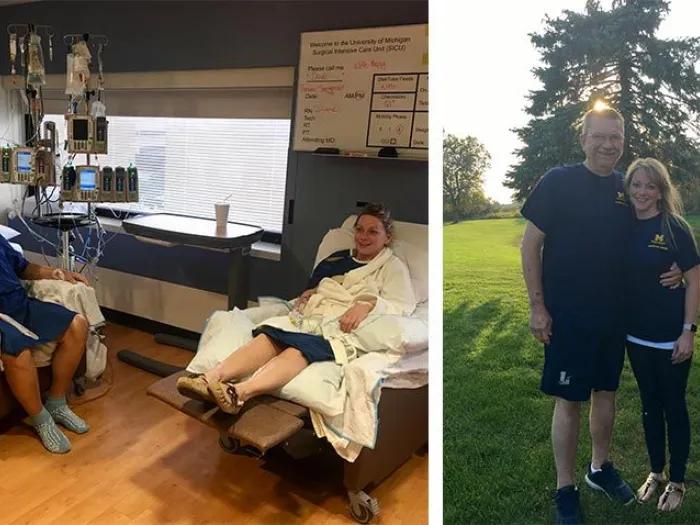
A daughter’s lifesaving gift to her father

Can meditation and stretching relieve cramping caused by cirrhosis?
How using new organ storage technology can improve liver transplantations