Cost may not keep people from filling opioid addiction treatment prescriptions
Only a small percentage of buprenorphine prescriptions go unfilled, even when patients have to pay more out of pocket, suggesting need to remove other barriers to continuous prescriptions
5:00 AM
Author |
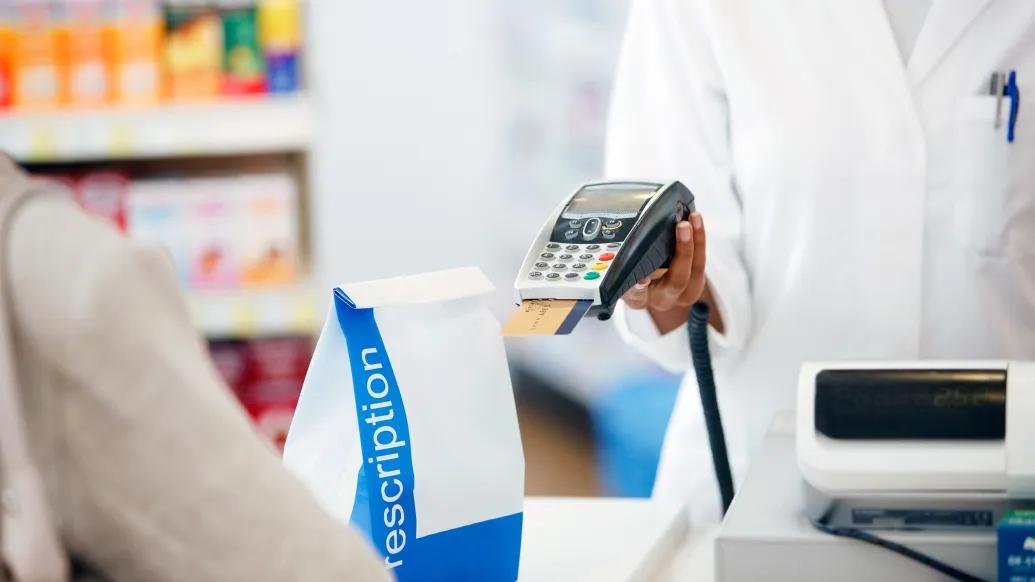
When people get a prescription for the opioid addiction medication called buprenorphine, they almost always fill it — even if they have to pay more out of their own pocket, a study shows.
Whether it’s their first prescription for the medication, or they’ve been taking it for months, nearly all patients pick up the order from the pharmacy, according to the new findings from a University of Michigan team.
Even among those just starting on buprenorphine, higher costs aren’t a deterrent.
The researchers say this suggests that removing barriers that prevent clinicians from prescribing buprenorphine should be the main focus of efforts to increase the number of people with opioid addiction who get treated with buprenorphine.
“Our findings suggest that cost-sharing may not be a particularly strong barrier to buprenorphine dispensing,” said Kao-Ping Chua, M.D., Ph.D., a member of the U-M Opioid Research Institute who is an assistant professor in the U-M Medical School and School of Public Health.
“This may be because patients understand how effective buprenorphine is and are willing to pay for it.”
Writing in the Journal of General Internal Medicine, the researchers report findings from an analysis of more than 2.3 million pharmacy records for buprenorphine prescriptions in 2022 for 286,000 people with private insurance, and more than 1.2 million similar records for nearly 145,000 people with Medicare.
Just over 1 in every 100 buprenorphine prescriptions sent to pharmacies were abandoned by the patients – that is, they were not picked up in the 14 days after the pharmacy received the prescription.
SEE ALSO: It’s easier now to treat opioid addiction with medication -- but use has changed little
Moreover, the research shows that for every $10 increase in cost-sharing, there was only a minimal increase in abandonment of prescriptions – just one-tenth of one percentage point.
This contrasts with another recent paper the team published, on cost-sharing for naloxone, a medication that can save a person from dying if they overdose on any opioid.
In that paper, every $10 increase in cost-sharing was associated with an increase in abandonment of 2 to 3 percentage points.
Costs and behaviors
Even when the monthly cost of buprenorphine was $150 or more, which it was for 3% of people with commercial insurance, less than 6% of the prescriptions were abandoned.
Less than 1% of people with Medicare coverage had cost-sharing over $100, but even among them, abandonment was rare, ranging from just under 2% to just over 3%.
Our findings suggest that cost-sharing may not be a particularly strong barrier to buprenorphine dispensing. This may be because patients understand how effective buprenorphine is and are willing to pay for it."Kao-Ping Chua, M.D., Ph.D.
The researchers looked at data for five different forms of immediate-release buprenorphine products, both generic and name-brand formulations, prescribed to patients of all ages.
About half of the prescriptions were for a generic form of a film containing both buprenorphine and naloxone that patients put under their tongue or on the inside of their cheek to dissolve.
Long-acting injections for opioid use disorder and patches used for pain relief were not included.
The average cost for a month’s supply of their prescribed product was $28 for people with commercial insurance and $8 for those with Medicare.
But 44% of people with commercial insurance paid $10 or less for a month’s supply, as did 84% of those with Medicare coverage.
And the cost was less than $20 a month for 66% of commercially insured and 92% of Medicare participants.
Trends in people new to addiction medication
People who hadn’t been on buprenorphine before were more likely to abandon prescriptions, and the chance of abandonment was highest for those who would pay the most for their first prescription.
SEE ALSO: Even as the Epidemic Shifts, We're Seeing Treatment Disparities
The researchers suggest that this was likely due in part to the fact that patients new to the drug hadn’t yet experienced its impacts on their cravings for opioids.
Still, less than 5% of new-to-buprenorphine patients abandoned their first prescription even at monthly costs of up to $70.
This is lower than the overall rate of prescription abandonment among people new to any drug, as reported by the health care analytics company, IQVIA, whose data the U-M team used.
Additional study information
The researchers didn’t study prescriptions to people covered by Medicaid, because that program for people with very low incomes has minimal to no cost-sharing for medications.
They also couldn’t tell what kind of cost-sharing individuals had, whether it was co-pays, deductibles or co-insurance, though they did know what the final cost would be after any coupons from manufacturers.
Just over 8% of people with commercial insurance and nearly 15% of those with Medicare coverage received a prescription for brand name, as opposed to generic, buprenorphine products.
Manufacturers of brand name medications may offer coupons to those with high costs; the new study is based on the cost to a patient after any such coupon is applied.
Other research on buprenorphine use has shown people falling off their treatment, including for those with private insurance that involves cost-sharing.
The study suggests that this may have much more to do with a gap in continuous prescriptions, or the cost of seeing a provider to get a prescription renewed, rather than patients not filling a prescription when they get one.
Chua is co-director of the Research and Data Domain at the U-M Opioid Research Institute, as well as a faculty member in the Susan B. Meister Child Health Evaluation and Research Center and the Institute for Healthcare Policy and Innovation.
Co-authors include Thuy Nguyen, Ph.D., a health economist at the U-M School of Public Health and member of ORI and IHPI; ORI co-director Amy Bohnert, Ph.D., ORI/IHPI member Pooja Lagisetty, M.D., M.S., CHEAR member Usha Nuliyalu, M.S., and Rena Conti, Ph.D., from Boston University.
The study was funded by the National Institute on Drug Abuse (R01DA056438-02). The content is solely the responsibility of the authors and does not necessarily represent the official views of the National Institutes of Health.
Paper cited:” Association Between Cost‑Sharing and Buprenorphine Prescription Abandonment,” J Gen Intern Med. DOI: 10.1007/s11606-024-08819-2
Sign up for Health Lab newsletters today. Get medical tips from top experts and learn about new scientific discoveries every week by subscribing to Health Lab’s two newsletters, Health & Wellness and Research & Innovation.
Sign up for the Health Lab Podcast: Add us on Spotify, Apple Podcasts or wherever you get you listen to your favorite shows.

Health Lab
Explore thousands of health news & research stories by visiting the Health Lab homepage for more.
Media Contact

Public Relations
Department of Communication at Michigan Medicine
In This Story

Kao-Ping Chua, MD, PhD
Associate Professor
Stay Informed
Want top health & research news weekly? Sign up for Health Lab’s newsletters today!
Featured News & Stories
Top 7 tips for choosing Medicare prescription drug coverage for 2027
Many older adults make Medicare decisions quickly and most don’t change plans, poll finds
What’s the latest on 7-OH and kratom availability and addiction care?

Better prenatal care data could help prevent maternal complications, experts say
Many hospitals still don’t do enough to prevent UTIs from catheters