Collaboration with community child care centers creates innovative research tool
An expert discusses the free-to-use, community-based resource called the Michigan Child Care Related Infections Surveillance Program
1:04 PM
Author |
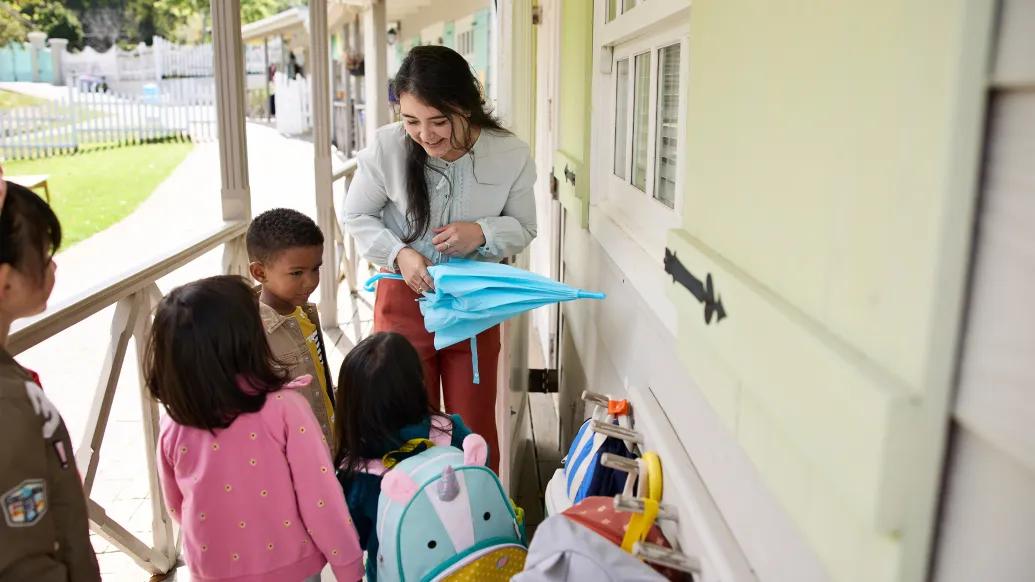
Every year, thousands of children are hospitalized in the United States, and more than 100 patients do not survive.
To combat the spread of infectious diseases, online disease tracking systems have emerged as biosurveillance tools.
Established in 2013, the Michigan Child Care Related Infections Surveillance Program, or MCRISP, was the first online tool in Michigan and among the first in the U.S. to track pediatric illness.
MCRISP brought together child care providers in Washtenaw County, Mich. and doctors at the University of Michigan Health to effectively monitor pediatric respiratory and gastrointestinal illness transmission.
Andrew Hashikawa, M.D., Clinical Professor of Emergency Medicine and of Pediatrics, discusses why it's important to track illnesses in young children, how MCRISP was developed and what a decade of surveillance has shown.
Why did you focus on young children to track illness outbreaks?
Hashikawa: There hasn’t been much emphasis on child care health in children under the age of five, even though two out of three children are enrolled in child care nationally.
However, this age group could potentially be the “canary in the coal mine” when it comes to illness detection during outbreaks.
Research suggests that during an illness outbreak, both young children and the elderly may be among the first in the community to become sick.
Younger children are vulnerable to illness because of their naïve immune systems and because they are often too young to have received specific vaccinations.
Before we developed our program, Washtenaw County used to get reports from childcare centers on a voluntary basis, but it was a paper-based system and caused delays.
We wanted to develop an electronic system that was quick and could detect illness trends as they occur daily.
How was MCRISP developed?
Hashikawa: I worked with the Department of Emergency Medicine to develop a website that is housed on our servers.
We then partnered with 25 child care centers to focus on gastroenteritis, respiratory infections and rashes.
Every day, a designated child care worker enters data for any child that has been sent home due to illness or if an absent child is reported as being ill by a parent.
The child care worker also enters specific symptoms and if medical care was needed.
Each data entry takes about 15 seconds and immediately generates an email to study coordinators so we can see illness trends as they occur daily.
Weekly electronic data reports are generated and sent to the public health department and the directors of the child care centers about general illness trends and preventative measures they can take.
For example, when we detect stomach flu, we ask centers to reemphasize hand washing or we encourage parents to schedule vaccinations when we start seeing influenza.
This tool will continue to be important as we start to worry about vaccine-preventable illnesses like measles.
What did the data show over the past decade?
Hashikawa: We discovered that using our system reported illness faster by three weeks compared to the paper-based system used by the public health department.
MCRISP’s early detection gave us critical lead time for public health responses, and I was able to let my colleagues know in advance what they could expect to see.
In ten years, we analyzed over 22,000 reports and found that children in preschool had the highest number of reported illnesses.
Respiratory illnesses, including RSV, flu and COVID were the most prevalent.
We were also able to demonstrate that child care centers did not accelerate the spread of COVID and were relatively safe.
MCRISP is a great example of engaging the community for the greater good. I think we are stronger and better when we work with our community to improve kids' health.
Paper cited: “Reflecting on a Decade of MCRISP: Leveraging Community Child Care Center Partnerships to Advance Pediatric Biosurveillance and Infectious Disease Research,” Prehospital and Disaster Medicine. DOI: 10.1017/s1049023x26108486
Sign up for Health Lab newsletters today. Get medical tips from top experts and learn about new scientific discoveries every week
Sign up for the Health Lab Podcast. Add us wherever you listen to your favorite shows

Health Lab
Explore thousands of health news & research stories by visiting the Health Lab homepage for more.
Media Contact

Public Relations
Department of Communication at Michigan Medicine
In This Story

Andrew N Hashikawa
Clinical Professor
Related

Child care centers aren’t a likely source of COVID-19 spread, study says
Stay Informed
Want top health & research news weekly? Sign up for Health Lab’s newsletters today!
Featured News & Stories

U-M-led consortium to receive up to $52 million in NIH funding to study why viral respiratory infections affect children differently

Emergency room intervention pairs smartphone, telehealth counseling to reduce risky firearm behavior

E-Bikes are everywhere, but most parents say they don’t know enough about them
C.S. Mott Children’s Hospital named No.1 children’s hospital in Michigan by U.S. News & World Report

Talent show brings joy to kids at children’s hospital