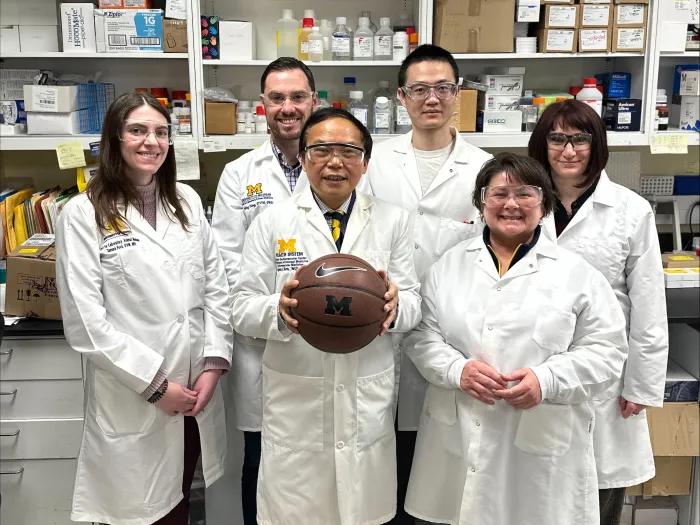
Chronic blood clots in woman’s lungs treated without surgery
Procedures are done in stages to avoid complications
5:00 AM
Author |

A Michigan woman who, one year ago, couldn’t breathe after climbing the stairs now exercises daily following a series of minimally invasive procedures to remove clots in the vessels that supply blood to her lungs.
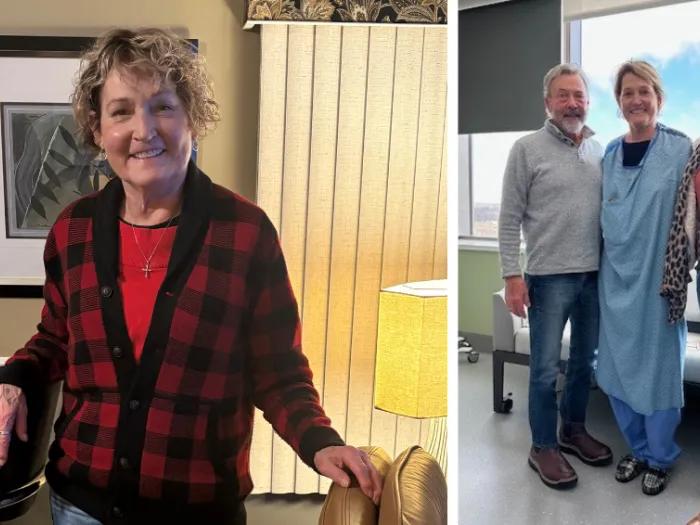
“I have a new lease on life, and there is really no other way to describe it,” said Christine Mathie, 78, of Cass City, Mich.
“I spend time outside and walk on the treadmill. I have the energy again and can go without oxygen during the day.”
Mathie first had trouble breathing in 2022, which she attributed to age.
It got worse over time, and soon she could not mow her lawn or climb stairs without gasping for air. Even lying flat to sleep caused panic.
Doctors eventually diagnosed Mathie with pulmonary embolism, a sudden blockage caused by a blood clot that travels to the lung from elsewhere in the body. They started her on a blood thinner, the first-line treatment to break down existing clots.
“I wasn’t improving whatsoever,” she said. “At that point I was not sure I was going to make it and thought, ‘Do I have to start getting myself organized?’”
In winter 2024, Mathie first visited University of Michigan Health, where she visited with heart failure cardiologist Thomas Cascino, M.D., and the pulmonary hypertension team led by Vallerie McLaughlin, M.D., and Victor Moles, M.D.
She was diagnosed with chronic thromboembolic pulmonary hypertension, or CTEPH.
The condition occurs when chronic pulmonary embolism develops into a rare type of high blood pressure in the lungs’ blood vessels.
Pulmonary embolism is relatively common, but fewer than 5% of chronic PE patients get CTEPH.
Patients with PE and CTEPH are treated at U-M Health with a multidisciplinary approach that includes specialists from cardiology, vascular medicine, hematology, pulmonary hypertension, cardiac surgery and interventional radiology.
“This is the most collaborative effort you could have to treat these extremely complex cases — with each team member bringing an important skill to determine a personalized care plan for each patient,” said interventional radiologist Minhaj Khaja, M.D., M.B.A.

Mathie underwent a pulmonary arteriogram to X-ray the blood vessels in her lungs and determine extent of the clotting, as well as a right heart catheterization to measure the heart’s pumping ability and any negative effects from chronic conditions like CTEPH.
The treatment for CTEPH depends on where the clots are located.
Larger and more centrally located clots are removed surgically with pulmonary endarterectomy. Jonathan Haft, M.D., a cardiac surgeon at U-M Health, performs the complex surgery.
Mathie’s clots, however, were smaller and spread out.
She and around 40% of other CTEPH patients are ineligible for such an operation.
In these cases, the U-M Health team pursues a minimally invasive treatment through balloon pulmonary angioplasty, or BPA.
A team of interventional cardiologists and radiologists will thread a catheter carrying a balloon through the pulmonary arteries and inflate it to break up the clots.
“In CTEPH, the chronic clots and surrounding scars may present like webs during imaging,” said Michael Thomas, M.D., an interventional cardiologist at U-M Health.
“When the clots are spread out, as they were in Ms. Mathie’s case, we push these webs to the side with the balloon to restore blood flow. This eventually allows the vessel to remodel itself.”
The U-M Health Frankel Cardiovascular Center is the only hospital in Michigan that performs both pulmonary endarterectomy and balloon pulmonary angioplasty for CTEPH.
Many institutions throughout the country have visited U-M Health to learn from its CTEPH/BPA team.
The BPA is done in four-to-six stages, with patients spending one night in the hospital for observation each time.
Teams treat vessels in different segments of the lungs during each session.
Research finds that spreading out the procedures limits complications.
“I was a bit concerned about the number of procedures, but I was just happy to hear something was going to be done,” Mathie said.
“The entire team put me at ease with their care and concern. Once I got through the first, I knew I could do them all.”
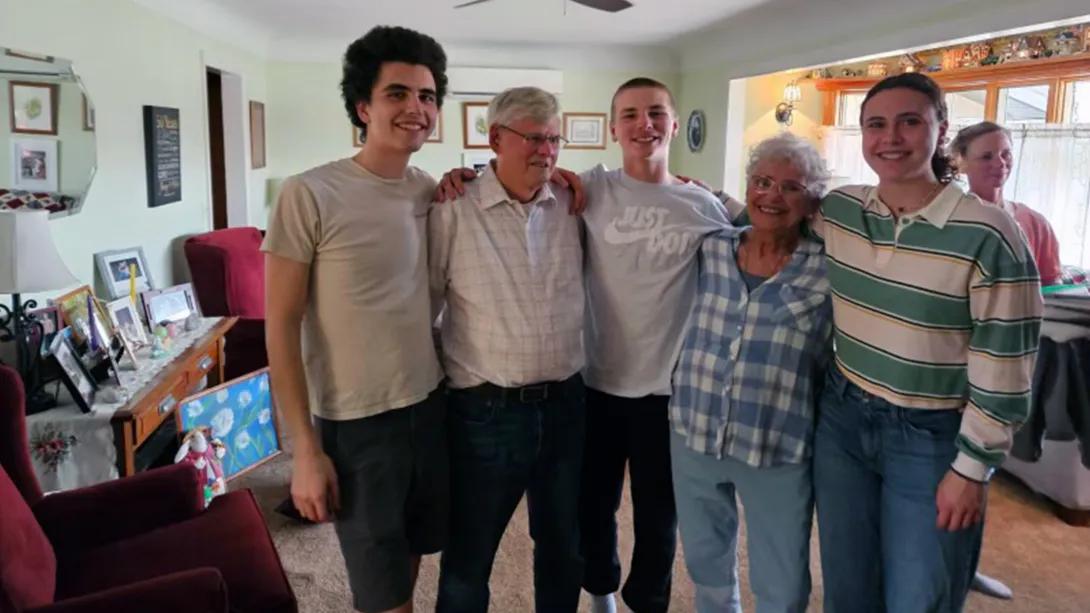
From January through March 2025, Mathie underwent six procedures.
After four treatments, she needed less supplemental oxygen.
She now walks 30-40 minutes each day.
In September, she and her husband, Jerry, camped for a month in Michigan’s Upper Peninsula.
“It is so rewarding to see patients like Ms. Mathie improve so much after this complex, involved procedure,” Khaja said.
“We work so hard to make sure our care plans work for each patient, delivering the best possible treatments for a group of conditions that can greatly affect a person's quality of life.”
In Mathie’s case, several members of the multidisciplinary team played roles in her care:
The BPA team: Elias Dayoub, Michael Thomas, and Minhaj Khaja, all M.D.
Cardiac Surgery: Jonathan Haft, M.D.
PH Team: Thomas Cascino, Victor Moles, Vallerie McLaughlin, all M.D., and the group’s nurse practitioners.
Sign up for Health Lab newsletters today. Get medical tips from top experts and learn about new scientific discoveries every week.
Sign up for the Health Lab Podcast. Add us wherever you listen to your favorite shows.

Health Lab
Explore a variety of health care news & stories by visiting the Health Lab home page for more articles.
Media Contact

Public Relations
Department of Communication at Michigan Medicine
In This Story

Minhaj S Khaja, MD, MBA, FSIR, FSVM
Clinical Professor
Stay Informed
Want top health & research news weekly? Sign up for Health Lab’s newsletters today!
Featured News & Stories

Could preeclampsia become a thing of the past?
Treating a rare coronary artery aneurysm without open heart surgery
A heart attack 9 days after giving birth: Mother of 4 shares her SCAD experience
Severe strokes linked to 5 times higher dementia risk
Fighting rejection antibodies to make heart transplant possible