Can blood tests detect Alzheimer’s disease in its early stages?
Research results offer promise for use in primary care
5:00 AM
Author |
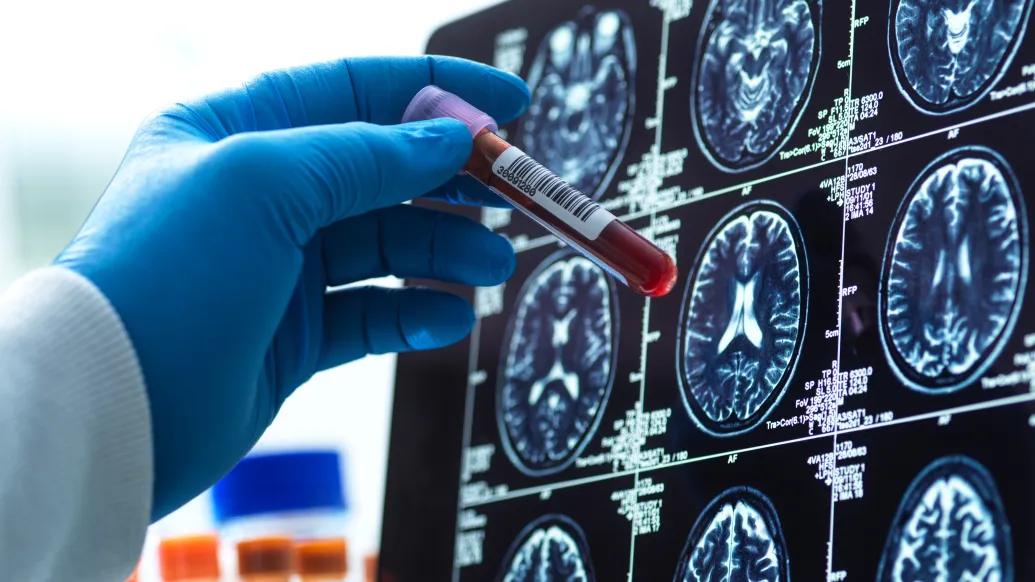
Alzheimer's disease affects more than 7 million Americans, and that number is expected to nearly double by 2060.
Despite the growing number of cases, many people with Alzheimer's disease and related dementias remain undiagnosed or untreated.
Diagnosing Alzheimer's disease can be challenging, particularly in its early stages.
Brain PET scans and spinal taps (lumbar punctures) remain the gold standard for detecting the biological markers associated with the disease, but these tests can be expensive, invasive and hard-to-find.
But, a new generation of blood tests may help change that.
In 2025, the United States Food and Drug Administration cleared two blood tests, Lumipulse and Elecsys, to help identify Alzheimer's disease biomarkers in adults 55 and older who are experiencing cognitive decline.
Researchers continue to study how these tests can improve diagnosis, expand access to care, and help guide treatment decisions.
To explain what patients and families should know, Judith Heidebrink, M.D., a University of Michigan Health Neurologist and Clinical Core Co-lead of the Michigan Alzheimer's Disease Research Center, answers common questions about Alzheimer's blood testing.
What do Alzheimer’s blood tests measure?
Heidebrink: These blood tests detect specific forms of two proteins, amyloid and tau, which accumulate in the brain and are considered hallmark signs of Alzheimer’s.
The Lumipulse test measures two biomarkers in the blood, p-tau217 and β-amyloid 1-42, and calculates a ratio that reflects the likelihood of amyloid plaques being present in the brain.
The Elecsys test measures p-tau181, another blood biomarker associated with Alzheimer's disease.
It's designed primarily to help primary care providers rule out the presence of amyloid pathology, so their evaluation can focus on other potential causes of cognitive symptoms.
The tests are performed using routine blood draws that can be done at a doctor’s office, similar to tests for cholesterol and blood sugar.
How accurate are Alzheimer’s blood tests?
Heidebrink: Research on blood tests is very encouraging.
At the Alzheimer's Association’s International Conference in July, one study found that knowing the results of a blood test helped primary care physicians diagnose Alzheimer’s disease with similar accuracy as specialists (around 90%).
Another study presented at the conference found that very high levels of p-tau217 were associated with nearly an 80% risk of developing cognitive impairment over the following decade among older adults who had no impairment at the time of testing.
These findings are exciting because they suggest blood tests could improve diagnosis for patients who are already experiencing memory or thinking problems while also helping researchers better understand who may be at greater risk of developing Alzheimer's disease symptoms in the future.
How could these blood tests affect care? Are they available?
Heidebrink: These tests have the potential to become an important part of the diagnostic toolkit in primary care, helping physicians determine whether a patient's cognitive symptoms may be related to Alzheimer's disease.
They aren't expected to entirely replace PET scans, lumbar punctures or evaluation by a specialist.
Instead, they could serve as an accessible first step that helps identify patients who would benefit from additional testing or referral to a specialist.
This could lead to an earlier diagnosis and more effective intervention.
An early diagnosis of Alzheimer’s disease is especially important now that disease-modifying therapies such as lecanemab (Leqembi) and donanemab (Kisunla) are available for some patients with early Alzheimer's disease.
Identifying eligible patients sooner could allow more people to begin treatment earlier or participate in clinical trials evaluating new therapies.
The Lumipulse and Elecsys blood tests are currently available.
Other Alzheimer’s blood tests are also available, such as p-tau217 alone, though they do not currently have FDA approval.
Specialists are increasingly using blood tests, but use by primary care providers has been limited.
This is likely for several reasons, including uncertainty about test accuracy and when it may be reduced.
In addition, Alzheimer’s blood tests are generally not covered by insurance and range in cost from a few hundred dollars to over $1,000.
Who should get an Alzheimer’s blood test?
Heidebrink: The FDA-cleared blood tests are intended for adults age 55 and older who have signs and/or symptoms of cognitive decline.
Despite recent research, they aren't currently used as a predictive tool for people without any symptoms.
Researchers continue to study whether blood tests help identify Alzheimer's disease before symptoms develop, but more evidence is needed before they are used that way in routine clinical care.
What are some potential concerns with Alzheimer’s blood tests?
Heidebrink: While blood tests may signal that a patient has Alzheimer's disease, they aren't perfect.
Certain medical conditions, including kidney disease, can affect levels of Alzheimer's-related biomarkers in the blood and increase the chance of false-positive results.
It's also important to remember that blood tests are only one piece of the diagnostic process.
Some people may have biological changes of Alzheimer's disease without experiencing symptoms, while others may have memory problems caused by different conditions.
Alzheimer’s blood test results should always be interpreted in the context of a broader evaluation of a patient's symptoms, including a health history, physical examination, cognitive assessment and tests looking for other causes.

Health Lab
Explore thousands of health news & research stories by visiting the Health Lab homepage for more.
Media Contact

Public Relations
Department of Communication at Michigan Medicine
In This Story
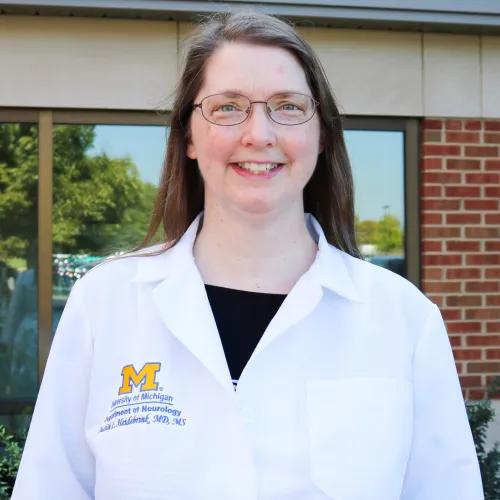
Judith L Heidebrink
Clinical Professor
Related

Is everything you know about Alzheimer's wrong?
Stay Informed
Want top health & research news weekly? Sign up for Health Lab’s newsletters today!
Featured News & Stories
Can Your Voice Reveal Early Signs of Alzheimer’s?

A pediatric epilepsy fundraiser that changes lives

Michigan Alzheimer's Disease Research Center receives $22M to advance efforts statewide
Engineered nanoparticles sensitize gliomas to radiotherapy
The Care Ecosystem: Supporting People Living with Dementia and Their Families