Originally published on Michigan Today.
From an early age, Robert Breakey, remembers hearing captivating stories about the exploits of his illustrious ancestors, the “Breakey Boys.”
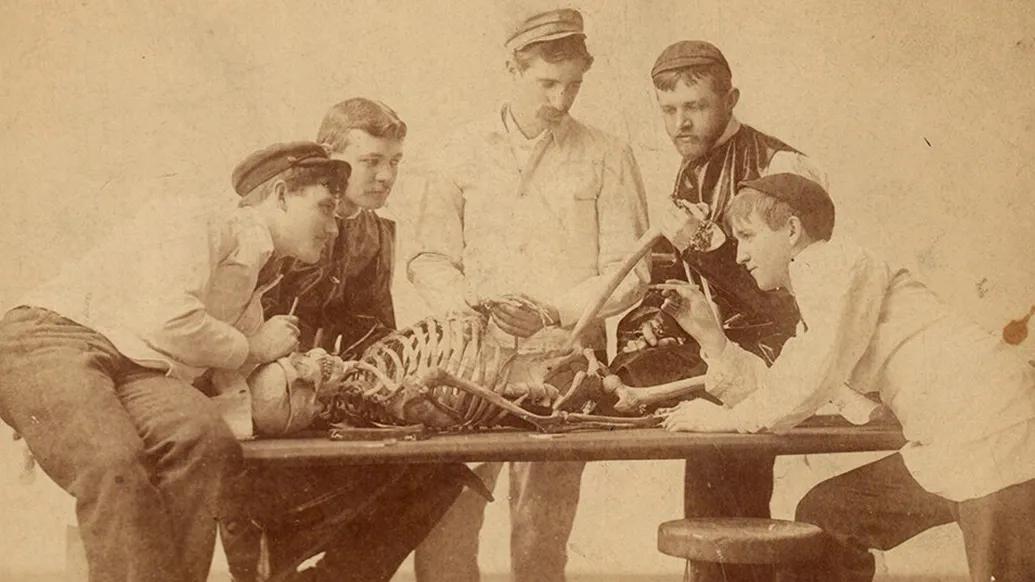
Four successive generations of Breakeys had earned medical degrees from the University of Michigan Medical School over the past century.
The contributions, achievements, and valor of the Breakey dynasty were the stuff of family legend.
In wartime, Breakey doctors risked injury and death to care for the sick and wounded on the battlefields and front lines of the Civil War, Spanish-American War, and World War I.
They also served their country in the military during World War II and the Korean War.
In peacetime, the Breakey Boys ushered the practice and pedagogy of medicine into contemporary times by pioneering new medical specialties and modernizing the curriculum and teaching methods at U-M.
Next in line
“My dad [Barry Austin Breakey] enjoyed being a doctor, and he was proud of being number four in the U-M chain of medical graduates,” Breakey recalled.
“He hoped that one of his four sons would follow in his footsteps to continue the legacy of our ancestors.”
As a budding biology student at Ann Arbor’s Tappan Intermediate School, Breakey assembled the iconic model kit called “The Invisible Man” to better understand the workings of the human body.
That flipped the switch.
“I decided in seventh grade to become a doctor,” he said.
“My dad was so proud.”
After graduating from high school, Breakey entered the six-year Integrated Premedical-Medical Program (Inteflex) at the U-M Medical School, which combined undergraduate and medical school education into a single curriculum.
When he graduated with his medical degree in 1981, he proudly became the fifth member of the Breakey dynasty of doctors.
“It’s very rare to see five generations of graduates all from the same medical school,” Breakey said.
“At the time, we were the only family in the country with that distinction. We were all very proud of our maize-and-blue education.”
Hacksaws on the battlefield
Breakey’s great-great-grandfather, William Fleming Breakey, M.D. 1859, was the family’s patriarch and a larger-than-life figure in the medical field ― and on the battlefield.
A graduate of U-M’s Department of Medicine and Surgery, William practiced medicine for several years in Whitmore Lake, Michigan.
Then he served as assistant surgeon with the 16th Michigan Volunteer Regiment during the Civil War from 1862-64.
In a September 1862 letter written from Halls Hill, Virginia, to his father-in-law, William described mail call in camp, the second Battle of Bull Run (Manassas), the confused and disorganized retreat of the Union forces to Centreville, and the significant loss of life.
Today, Breakey has a replica of a Civil War-era surgeon’s medical kit, similar to the one his great-great-grandfather used to treat the wounds and diseases of Union soldiers. One prominent medical instrument in the kit is a razor-sharp hacksaw.
“In the early days, antibiotics had not yet been developed, so doctors had to saw off the limbs of patients who had gangrene to save their lives,” Breakey said.
“Medical knowledge was sparse, and the U-M Medical School education was only two years long at that time. Doctors did whatever they could with limited resources for people with injuries and illnesses.”
The U-M Medical School was founded in 1850.
After suffering a severe wound to his left thigh at the Battle of Gettysburg, William returned to the U-M Medical School, where he became a lecturer and then a professor of dermatology and syphilology.
In the 1890s, he also started a clinic to treat patients with dermatological ailments and provide demonstrations for medical students.
William’s clinic established dermatology and syphilology as an independent medical specialty at Michigan and launched the first residency training program of its kind in the United States.
Over the ensuing 135 years, this department was destined to become a world-renowned center of excellence for the treatment of melanoma.
During the smallpox epidemic of 1888-89, William served as chairman of the Ann Arbor Board of Health and urged isolation of the sick and disinfection of their bedding to control the spread of the disease.
Casualties of war
Breakey’s great-grandfather, James Fleming Breakey, M.D. 1894, William’s son, decided to follow in his father’s footsteps and become the second in this line of U-M physicians.
Four years after earning his degree, he served in the Spanish-American War.
Military records and a personal wartime journal show that James later served as a U.S. Army Medical Corps captain during World War I.
The horrors of wartime casualties were evident in his lengthy letter, dated Dec. 19, 1917, to the chief surgeon for the American Expeditionary Forces unit at American Base Hospital No. 17 in Dijon, Department Cote D’Or, France.
In his letter, James reported on his observations at the British warfront:
“Our visit occurred at the most opportune time for observing operations at the front under adverse conditions. We arrived during unusual military activities, some 27,000 casualties having just occurred in the sector, with operations still in continuance…
“We were first detailed to a Casualty Clearing Station to take the place of a team, the surgeon of which has been shot. Here they have been through a most strenuous time, having been running seven operating tables day and night for ten days. One of these was turned over to us, and we had ample opportunity to acquaint ourselves with almost every type of military injury and its surgical treatment. It was, of course, impossible to follow cases up, as practically everything other than laparotomies, bad skull cases, and thigh amputations were marked for immediate evacuation to the Base Hospital…”
After the war, James and his wife, Grace Louise Breakey (nee Collins), settled into family life in a house in the Barton Hills area north of Ann Arbor.
James joined the medical staff of St. Joseph’s Mercy Hospital and became a well-respected member of the U-M medical community.
Paying with potatoes
Breakey was named after his grandfather, Robert Stevens Breakey, M.D. 1924, and still cherishes the gold-plated cystoscope presented by the American Urological Association to the elder Breakey in 1939 for his pioneering work in the emerging specialty of urology.
Robert registered for military service at age 19; in 1917, he accompanied his father to France in WWI.
After medical school, he practiced urology in Lansing and raised his family in Spartan country while remaining true blue to his alma mater.
Accounting ledgers from Robert’s medical practice show he charged $2 for an office visit.
During the Great Depression, he gladly accepted a sack of potatoes or a couple of plump chickens in lieu of hard cash since there was no such thing as medical insurance at the time.
In 1933, Robert bought 40 acres of land on the north branch of the Au Sable River, which became a restful retreat for his family.
Breakey has fond memories of sitting around the campfire at Flashlight Bend with his grandfather and grandmother, his parents, and his three younger brothers, enjoying the Michigan wilderness.
“My grandpa was an avid stamp collector, specializing in the 1902-03 series, and a nationally known philatelist who traveled to many national shows in his spare time,” Breakey recalled.
In the 1970s, his grandfather sold his stamp collection for a hefty sum.
He transferred the money to a trust fund to cover his eight grandchildren’s college tuition expenses.
Refocusing on primary care
Breakey’s father, Barry, grew up in Lansing, but he returned to Ann Arbor to earn his medical degree at Michigan in 1953.
The Korean War was still raging, so as an intern, he was swept up in the “doctor’s draft.”
Barry elected to join the U.S. Navy as a flight surgeon and was stationed aboard a U.S. Navy destroyer off the coast of Hawaii.
“I was born in Honolulu in 1955, before Hawaii was a state, and we lived there until I was 15 months old,” said Breakey, the family’s firstborn of four sons.
In 1957, Barry and his wife Myra, moved their growing family back to Ann Arbor.
Barry completed his urology residency at U-M and then practiced as a urologist at St. Joseph Mercy Hospital for 40 years.
“My dad was a prolific artist and a Life Master Bridge player who competed in national tournaments,” said Breakey.
“He was always very engaging and supportive of my career in medicine.”
When Breakey graduated from the U-M Medical School nearly 30 years later, however, he did not follow in the footsteps of his father, grandfather, and great-grandfather who became specialists in urology, surgery and dermatology.
Instead, he chose to specialize in a modern-day field, intent on creating a new wave of innovation with his board certifications in Family Medicine and Lifestyle Medicine.
This brought him full circle to the more generalist approach to primary care medicine used by doctors in his great-great-grandfather’s time.
Breakey is guided by this prophetic quote from a genius contemporary of his distant physician ancestors:
“The doctor of the future will give no medication, but will interest his patients in the care of the human frame, diet and in the cause and prevention of disease.” – Thomas Edison, 1903
Legacy of lifestyle medicine
“My great-grandfather, grandpa, and dad were part of several generations of medical innovators who were intent on defining and managing as many diseases as possible,” Breakey said.
“And here we are in 2025 with a very high-cost healthcare system that is focused on managing a growing epidemic of chronic diseases, with little attention paid to addressing the root causes of these diseases.”
The incidence of type 2 diabetes, cardiovascular disease, and several cancers has risen sharply in the U.S. since 1903, as well as worldwide.
This trend has proven costly to individuals and society, both financially and personally as it relates to avoidable pain and suffering.
Much of this rise has been attributed to unhealthy diet, inadequate sleep, lack of exercise, high stress and poor social connectedness.
“In lifestyle medicine, we recognize the body’s innate healing abilities,” Breakey said.
“When you nourish, support, and enhance a person’s internal healing powers, great things can happen ― ranging from the reversal of type 2 diabetes, coronary artery disease, hypertension, or obesity to the achievement of true vitality and positive wellness rather than just the absence of disease.”
Breakey estimates that more than 80% of the diseases he sees in his lifestyle family medicine practice in Ann Arbor are largely preventable. Many also are commonly reversible by inspiring positive lifestyle behaviors, such as exercising, eating a whole-food, plant-based diet, ceasing tobacco use, and ensuring good-quality sleep.
“In lifestyle medicine, we focus on addressing the root cause of chronic diseases and inspire people to adopt a healthy lifestyle to prevent and, where possible, reverse these conditions and restore their health and vitality,” says Breakey, a nationally known leader in lifestyle medicine.
“On behalf of my maize-and-blue dynasty of healers, supporting this paradigm shift to a truly health-promoting medical care system will be my legacy,” he says.
Dr. Bob’s Eight Keys to Health and Success
Eat for health: Choose abundant vegetables, whole grains, fruits, and all types of beans, along with nuts and seeds (including 1 to 2 TBSP of ground flax seeds) daily. Minimize, and ideally eliminate, animal foods (meat, dairy, and eggs) and minimize refined sugar, salt, oils, and other “processed” foods. Take vitamin B12 — 100 mcg daily or, if over 65, 1000 mcg daily.
Drink water: Water is a natural beverage and thirst quencher, making up about 70% of our bodies. Beverages with alcohol, sugar, fat, and/or a host of artificial ingredients slow you down, interfere with sleep cycles, and increase the risk of obesity. They should be enjoyed only on occasion.
Avoid cow’s milk: Cow’s milk and its associated foods, such as cheese, yogurt, and ice cream, are derived from “nature’s perfect food for baby cows” and are an unnatural component of human nutrition. No other mammal drinks milk after infancy. Cow’s milk is more than half-fat and is high in saturated fat and cholesterol. Most of the rest (70%) is sugar. Milk proteins contribute to allergy, autoimmune disease, chronic kidney disease, mucus production, acne, osteoporosis, and the promotion of breast, colon, and prostate cancers. Cow’s milk always contains bovine estrogen and is nearly always contaminated with antibiotics, growth stimulants, bovine leukemia virus, and environmental toxins. Many other non-dairy alternatives are readily available. Calcium can be sourced elsewhere in greens and beans.
Eat fiber: Health-supporting whole foods contain dietary fiber. Minimize white bread, white rice, and white pasta that metabolize quickly to sugar once they hit your digestive system. Whole grains like oats, brown rice, quinoa, whole grain bread, pasta, and cereals are much more slowly digested, providing consistent energy for your cells and abundant additional nutrients. They also support healthy bowel bacteria that support hormone balance, detoxification of several toxins, overall colon health, and immune function. Think “fiber in every bite” with plenty of vegetables, fruits, beans, and whole grains.
Be active: Walk, run, dance, swim, jump, cycle, skate, ski, lift, or whatever else gets you moving. Aim for at least 150 minutes of moderate exercise per week (average 30 minutes five or more days/week). Choose activities you enjoy that help you stay with your plan. Use stairs instead of elevators, park further away when you drive, and whenever you get the chance, take the “scenic route.”
Your environment matters: Avoid poisons and contaminants in your body by not smoking anything. Also, avoid even second- or third-hand smoke or tobacco exposure of any kind. Choose plant foods low on the food chain and eat organic when practical. Use a good solid carbon water filter for clean drinking water and limit the use of pesticides and other toxins at home.
Sleep well: Plan time for 7-8 hours of quality sleep per night and follow good sleep hygiene habits: Develop a “wind down routine” an hour before bedtime with relaxing activities (no TV or Internet), a regular rising time each day, and avoid caffeine, nicotine, and alcohol. Use your bed for sleeping only, limit naps, and control your sleeping environment.
Make time to relax, play and connect with others: Stress is a part of life, but you can manage it by finding balance, prioritizing your responsibilities, setting and writing down challenging but attainable goals, and making time for whatever form of adventurous play and/or peaceful relaxation will help you optimize your enjoyment. Make time for laughter, love, and being with friends, family, and others who share these goals.
Recommended reading and viewing:
- Documentaries: “Forks Over Knives,” “The Game Changers,” “Food Choices,” “Eating You Alive,” “What the Health,” and “Vegucated.” You should also watch “Code Blue.”
- Books: “How Not to Die,” “How Not to Diet,” and “How Not to Age,” all by Michael Greger, MD. Watch his lecture: “Food as Medicine.” Also, “Why We Sleep” by Matthew Walker and “Atomic Habits” by James Clear.
- YouTube: Watch Robert Breakey’s virtual seminar on healthy eating, The Gift of Health.

Health Lab
Explore thousands of health news & research stories by visiting the Health Lab homepage for more.
Media Contact

Public Relations
Department of Communication at Michigan Medicine
Stay Informed
Want top health & research news weekly? Sign up for Health Lab’s newsletters today!
Featured News & Stories

What’s changing in Medicaid and what can you do?
Study outlines a new framework for direct cell reprogramming

New insight into how lipodystrophy can affect overall health

Is the United States Lagging Behind Europe in Memory Improvement?
Nerf gun accident causes retinal detachment in pediatric patient