Blood-based multi-cancer screening tests: Ready for primetime?
An expert Q&A about how blood-based screening tests could cause unnecessary confusion and stress
5:00 AM
Author |
Unexplained and alarming trends in cancer, such as the increasing incidence of colorectal cancer in young adults, are raising the public’s interest in cancer screening tools.
In recent years, tests claiming to detect the presence of multiple types of cancer have come on the market.
But these blood-based screening tests are not yet ready for primetime and could cause unnecessary confusion and stress when tried-and-true screening methods work for most people, according to Elena Stoffel, M.D., M.P.H.
Stoffel, director of the cancer genetics clinic at the University of Michigan Health Rogel Cancer Center and clinical professor of gastroenterology and internal medicine at Michigan Medicine, focuses on early detection, genetic cancer risk and cancer prevention.
The good news, she says, is that simple practices like talking with your doctor about your family history can help determine the cancer screening tests that are best for you.
Why is there a rise in commercial tests for detecting cancer?
Stoffel: We’re seeing these tests pop up because ultimately, we want to get better at detecting cancers earlier.
There’s a proliferation of commercial companies that have cancer screening tests on the market, and people are always asking me about them.
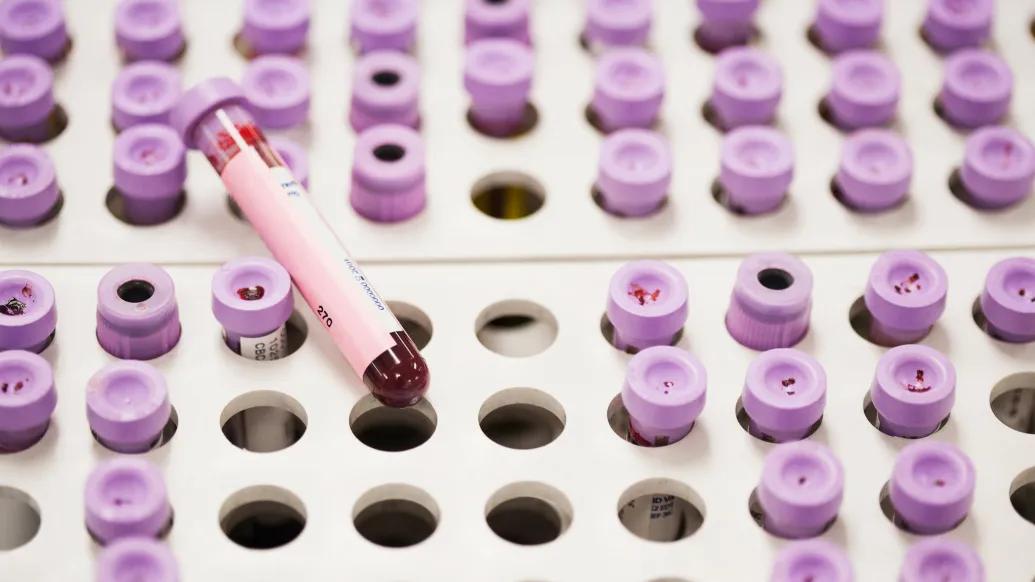
Blood-based tests are trying to detect tumor DNA that’s circulating in the blood.
But these tests have to balance specificity — looking for very precise markers of specific diseases — with sensitivity, to pick up more things.
A good test is in the sweet spot of just enough sensitivity and just enough specificity.
We need tests that are better at detecting aggressive cancers at an earlier stage, rather than flagging things that end up being nothing.
Unfortunately, with the currently available blood-based multi-cancer screening tests, as many as half of the positive results appear to be nothing.
Do multicancer blood screening tests work? Can you trust the results?
Stoffel: The short answer is that, in my clinical opinion, these tests aren't yet ready for primetime.
The United States Preventive Services Task Force, which uses evidence to develop clinical guidelines for preventive care, agrees: they haven’t endorsed the tests.
I take care of a lot of patients who are at very, very high risk for developing cancer, and, personally, I haven't ordered any of these multi-cancer early detection tests for any of my patients.
I think it’s more important for patients to get screened for cancers using tests that have proven benefits, like colonoscopies and mammograms.
I think we need a lot more research to figure out what the best tests are that maximize the true positives and minimize the false positives and how to best follow up the positive tests that we see in multi-cancer early detection screening.
Down the road, these tests might be effective tools used in conjunction with proven cancer screening methods, but right now, they aren’t there.
To get into a little more detail, let’s go back to what these tests can detect.
They might be picking up DNA shed by tumors that are clinically important, but they might be picking up old bits of DNA that are left over after your immune system has done its job and prevented problem cells from becoming a tumor.
They might also be picking up signals that are found in both tumors and normal cells.
Because the tests tend to be non-specific, in many cases when a test is positive, clinicians aren’t sure what follow-up testing is needed.
Consequently, people who have a positive result on their multi-cancer detection blood test may end up getting many additional tests, including scans, endoscopies and sometimes even surgeries.
In many cases, these additional tests do not yield a definitive answer as to why the blood test was positive.
What are the risks of these multicancer blood screening tests?
Stoffel: False positive test results are a big concern.
That’s when the test says there’s a sign that cancer is present but, after weeks or months of expensive and stressful testing, we don’t find a tumor anywhere.
We’ve spent all that time, money, effort, worry and tears chasing a test result that, in as many as half of cases, ends up being nothing.
False negatives are also a problem.
When the test doesn’t show any signs of cancer, this can give you a false sense of security.
My concern is that we’ll have people saying, “I’ll just do the multicancer detection blood test, then I won’t need a mammogram or a colonoscopy.”
That’s absolutely not true.
Those blood tests should not be replacing cancer screening tests that have proven benefits.
Can commercial genetic testing (like 23andMe) reveal cancer risks?
Stoffel: It is very important to be specific about the type of genetic testing, as there are clinical genetic tests and non-clinical genetic tests.
Many non-clinical genetic testing products (like 23andMe) are basically recreational genetics.
They may test for ancestry and a subset of alterations in a few cancer genes, but they aren’t the same quality as comprehensive clinical tests that use clinical-grade genomic analyses.
With costs of clinical genetic testing coming down in recent years, clinical testing is about the same price as the non-clinical tests.
Non-clinical genetic testing products aren’t worth it if your main interest is cancer risk.
Your doctors can determine whether you’d benefit from clinical genetic testing by looking at your family history, so the first step is simply talking with your doctor about that.
Ask if there’s anything about your or your family’s health history that raises concern for a genetic predisposition to cancer.
It’s a simple, direct question to get the conversation started.
Then, if you meet certain criteria, you’re eligible for clinical genetic testing.
If you have a genetic change that increases your risk for cancer, your doctors can recommend the appropriate cancer screenings to keep you healthy.
Unfortunately, even though genetic risk for cancer is common, too few people who are eligible go through with clinical genetic testing.
I’d absolutely love to see more people take advantage of this opportunity to act early to reduce their cancer risk.
What do you tell patients who are concerned about their cancer risk?
Stoffel: Talk to your doctor about your family history and any concerns you might have.
There are many cancer screening tests that have proven benefits for people in general and for people in specific risk groups.
Be good about following standard of care tests recommended based on your age and family history: schedule that mammogram, get screened for colorectal cancer with a stool test or colonoscopy, get screened for cervical cancer.
If you have a history of smoking, please make a plan to quit and ask your doctor whether you’re eligible for lung cancer screening.
This preventive maintenance can be tedious, but it’s so important.
Don’t skip out on the basics.
These are tests that have excellent track records for decreasing cancer mortality, decreasing cancer incidence, or both.
Given the quality of existing multicancer detection blood tests, if you were to get a positive result, it’s more likely to be a false positive than a true positive.
My main caution to patients is that if we do find something on one of these tests, we’re going to spend a lot of time, money and worry on what may end up being a wild goose chase.
And a negative test does not guarantee that you’re in the clear.
So overall, right now, for most people, the potential benefits of multicancer detection tests do not outweigh the potential harms.
And again, I want to emphasize how important it is to talk to your doctor about your family history as this can help us determine the cancer screening plan that is right for you.
Sign up for Health Lab newsletters today. Get medical tips from top experts and learn about new scientific discoveries every week.
Sign up for the Health Lab Podcast. Add us wherever you listen to your favorite shows.

Health Lab
Explore thousands of health news & research stories by visiting the Health Lab homepage for more.
Media Contact

Public Relations
Department of Communication at Michigan Medicine
In This Story

Elena Stoffel, MD, MPH
Clinical Professor
Related
Hitting the mark
Cancer screenings have saved the U.S. at least $6.5 trillion
Stay Informed
Want top health & research news weekly? Sign up for Health Lab’s newsletters today!
Featured News & Stories
Comprehensive DNA sequencing reveals hidden drivers of cancer
4 in 5 parents say having a baby is too expensive

‘Molecular glue’ stabilizes protein that inhibits development of non-small cell lung cancer and uterine cancer

What’s the latest on 7-OH and kratom availability and addiction care?

Exceptional response to immunotherapy gives patient with liver cancer more milestones to celebrate