Assisted Living Care for a Spouse with Dementia: ‘The Right Decision for Both of Us’
Moving a partner with a degenerative disease into assisted living is a heartbreaking decision. One woman explains why the shift brought joy back to her marriage.
7:00 AM
Author |

Almost every family who has a loved one living with dementia faces the heartbreaking decision about whether to continue caring for that individual at home or if it's time to consider an assisted living or nursing facility.
MORE FROM MICHIGAN: Sign up for our weekly newsletter
Many approach the latter option with guilt and often are forced to choose quickly during a crisis.
That guilt is misplaced, says Tamara Real, founder of the Rinne Lewy Body Dementia Initiative in the Michigan Alzheimer's Disease Center.
Real speaks from experience. Her husband, Carl Rinne, was diagnosed with Lewy body dementia in 2010 at age 74, a couple of years after symptoms began. She cared for him at home until he fell and needed to wear a back brace.
LBD is the third most common form of dementia. And while doctors can only offer a clinical diagnosis, they look for telltale signs such as fluctuating alertness, acting out dreams, hallucinations and imbalance or falls.
"I knew at that point, Carl needed more care than I could give him," Real says. "Although it broke my heart and it wasn't an easy decision, moving Carl into assisted living was the right decision for both of us."
Although Real knew that move was the right one, she wasn't expecting the peace of mind that came with knowing her husband was receiving care from trained professionals rather than her own heartfelt yet novice attempts.
No longer exhausted from the physical and emotional burden of caring for her husband at home, Real discovered she could just "be with Carl" and love him.
"I was a better wife when he was in the facility than when he was home," she says. "When Carl was home, I could barely get myself through the day."
'Just being present'
When she let the professionals at Huron Woods in Ann Arbor, Michigan, handle the demands of her spouse's daily routine, Real began to experience moments of true joy in the hours she spent with her husband each day.
SEE ALSO: Coping Strategies for Lewy Body Dementia Caregivers
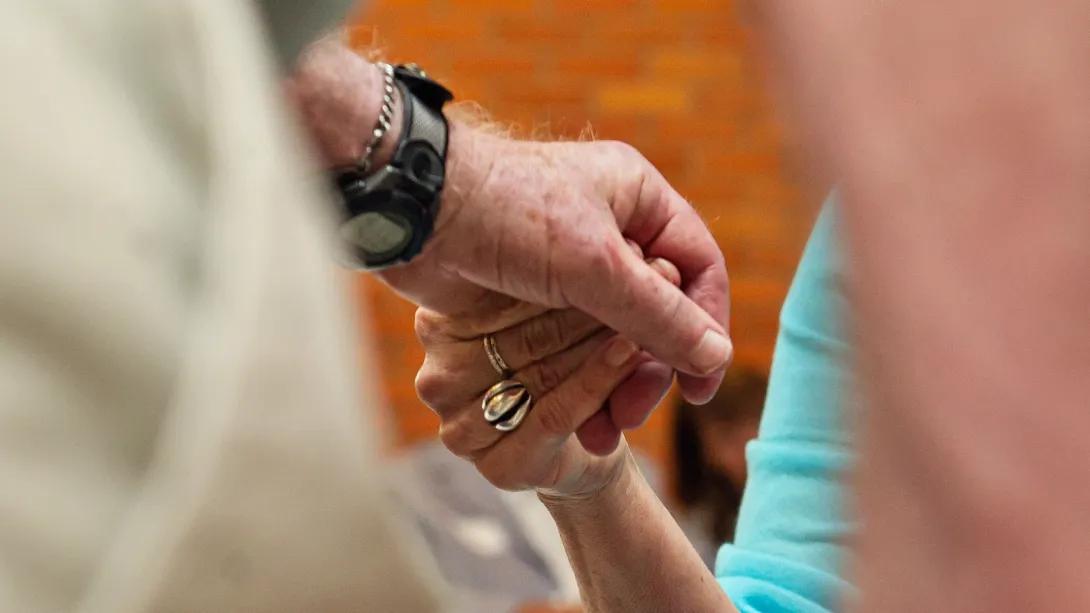
"I discovered what true love is," she says. "Just being present with the love of my life was fulfilling. When I was overwhelmed with his physical care, I wasn't able to appreciate the little moments such as just sitting and holding hands or seeing the sparkle in his eyes when a friend came to visit."
Many caretakers assume they give up control when they place their loved ones into long-term care. Instead, Real points out, it allows them to shift from the role of physical caretaker to advocate.
Without the stress of daily care, a caretaker can focus attention on quality-of-life issues and advocating for the recipient's needs. "I was still Carl's primary caretaker, but I could focus on bigger issues than getting him dressed each day," Real says.
And it allowed the couple more time to enjoy each other and fewer medical issues once his physical needs were handled by others.
Says Real: "We both had more mental and physical energy that could be used to do more enjoyable things — like watching the squirrels out the window or snuggling in bed together."
Their experience isn't atypical.
Renee Gadwa, Michigan Alzheimer's Disease Center outreach and education program manager, has observed this same phenomenon during her 10 years working in memory care.
"Many families feel like moving a loved one into long-term care is giving up, when in fact it enables both partners to be better versions of themselves," Gadwa says. "I've seen it time and time again."
Having a conversation
Rinne died in 2013. Today, Real continues to share her experience to counter the prevailing myth that caretakers are "failing" when they turn to assisted living for help.
"If you are open to it, the decision to turn to professionals to help care for your loved one can bring both you and your loved one peace of mind and quality time together," she says.
Her only regret with the decision is that it was done in a time of crisis — a typical experience for families affected by dementia.
Which is why she encourages families to look at facilities before there is a crisis, to make a decision and start the application process before circumstances dictate.
"It's like insurance," Real says. "You don't have to use it, but if you want to, you won't have to be making decisions and filling out applications while your loved one is experiencing a medical crisis."

Health Lab
Explore thousands of health news & research stories by visiting the Health Lab homepage for more.
Media Contact

Public Relations
Department of Communication at Michigan Medicine
Stay Informed
Want top health & research news weekly? Sign up for Health Lab’s newsletters today!
Featured News & Stories

Choosing Memory Care for a Loved One: 4 Common Questions

Can Your Voice Reveal Early Signs of Alzheimer’s?

A pediatric epilepsy fundraiser that changes lives

Michigan Alzheimer's Disease Research Center receives $22M to advance efforts statewide

Engineered nanoparticles sensitize gliomas to radiotherapy