Are young kids getting enough playtime?
National poll suggests screen time is part of daily play for many toddlers and preschoolers, and some may not be engaging in diverse activities
5:00 AM
Author |
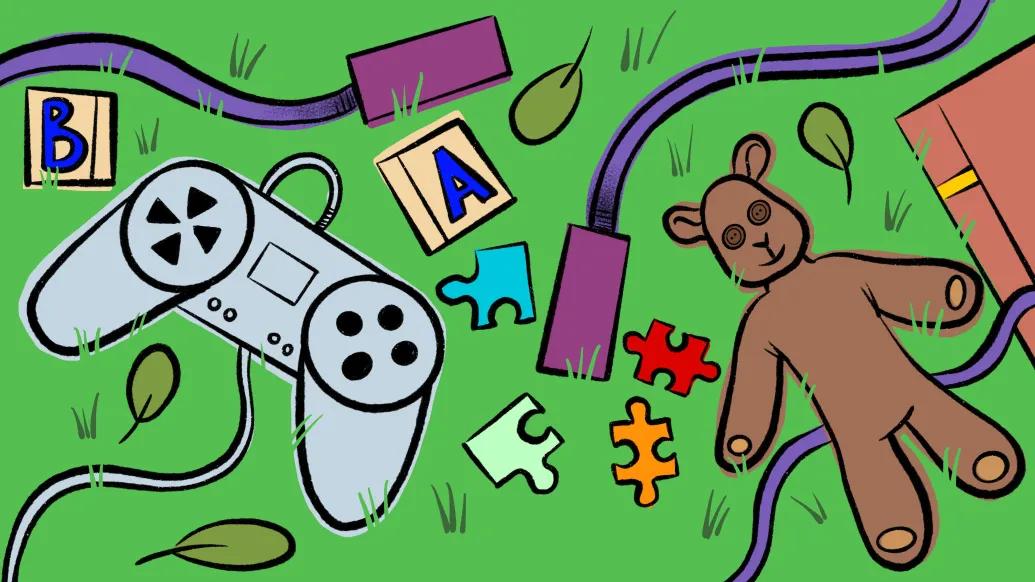
The physical and mental health benefits of outdoor play are well established but one in 10 parents of preschoolers and toddlers say their child plays outside just once a week or less.
Screen time is also increasingly part of the play routine, according to the University of Michigan Health C.S. Mott Children’s Hospital National Poll on Children’s Health: Nearly a third of parents say their child engages in media play, such as video games, while three in five say their child watches TV or videos daily.
“Play is the key to how young children learn and develop. It starts in infancy, with parents playing peekaboo and as children become older, they create their own version of play,” said Mott Poll co-director Sarah Clark, M.P.H.
“Our report suggests that many families could support healthier development by encouraging a wider variety of play experiences.”
Physical and imaginative play still common but screens catching up
The nationally representative poll, conducted in August, includes responses from 710 parents of children ages 1 to 5.
On a typical day at home, the majority of parents report their child engages in physical play like running, jumping or climbing (88%) and pretend or make-believe play (68%).
More than half also say their child regularly plays with puzzles, blocks or other objects that help develop fine motor and problem solving skills.
At the same time, watching TV and videos are a daily part of most children’s routines.
The majority of parents of preschoolers and nearly half of parents of toddlers also admit to handing their child a phone or tablet in the car, in public places or when they need to be occupied.
“Phones and tablets are convenient, and it’s understandable that parents rely on them at times,” Clark said.
“But it’s important to be mindful of how much time is spent in media play and to create opportunities for more active, imaginative and social play.”
Outdoor play encouraged but may be limited by parental concerns
Most parents polled report their child plays outside daily or several times a week.
Still, 9% say outdoor play happens once a week or less—well below expert recommendations for supporting physical and social development.
Parental anxiety may be one barrier to more independent outdoor play, with four in 10 parents admitting they feel nervous when their child goes “too far” or climbs “too high.”
Seventy-five percent of parents of 3- to 5-year-olds say their child uses swings independently while 41% report their child crosses the monkey bars alone.
But nearly half of parents hold their child’s hand or stand right next to them when the child attempts a new physical challenge.
Activities like climbing a tree, riding a bike or sliding down a pole at the playground, Clark notes, are opportunities for growth.
“Parents understandably worry about safety but children need chances to test their limits,” she said. “Climbing, swinging or exploring unfamiliar areas helps build confidence, resilience and problem-solving skills.”
“Risky play isn’t about recklessness but about appropriate challenges that allow young children to explore what they’re capable of. Parents who allow a little more independence often see their child’s confidence flourish.”
She encourages parents to let their children take the lead in play and avoid making them try to play “the correct way,” which may unintentionally limit their child’s creativity and problem solving.
“Play doesn’t need to be perfect or educational to be beneficial,” Clark said.
“Letting children lead their own play encourages curiosity, creativity and independence. Parents just need to create time and space for their children to play freely.”
Sign up for Health Lab newsletters today. Get medical tips from top experts and learn about new scientific discoveries every week.
Sign up for the Health Lab Podcast. Add us wherever you listen to your favorite shows.

Health Lab
Explore thousands of health news & research stories by visiting the Health Lab homepage for more.
Media Contact

Public Relations
Department of Communication at Michigan Medicine
In This Story

Sarah J Clark
Research Scientist
Stay Informed
Want top health & research news weekly? Sign up for Health Lab’s newsletters today!
Featured News & Stories

4 ways to teach your teen safe driving habits

U-M-led consortium to receive up to $52 million in NIH funding to study why viral respiratory infections affect children differently
4 in 5 parents say having a baby is too expensive

What’s the latest on 7-OH and kratom availability and addiction care?

Emergency room intervention pairs smartphone, telehealth counseling to reduce risky firearm behavior