Amino acid glutamine is important for eye health
Maintaining pools of key molecules may help prevent vision loss in retinal degenerative diseases
5:00 AM
Author |
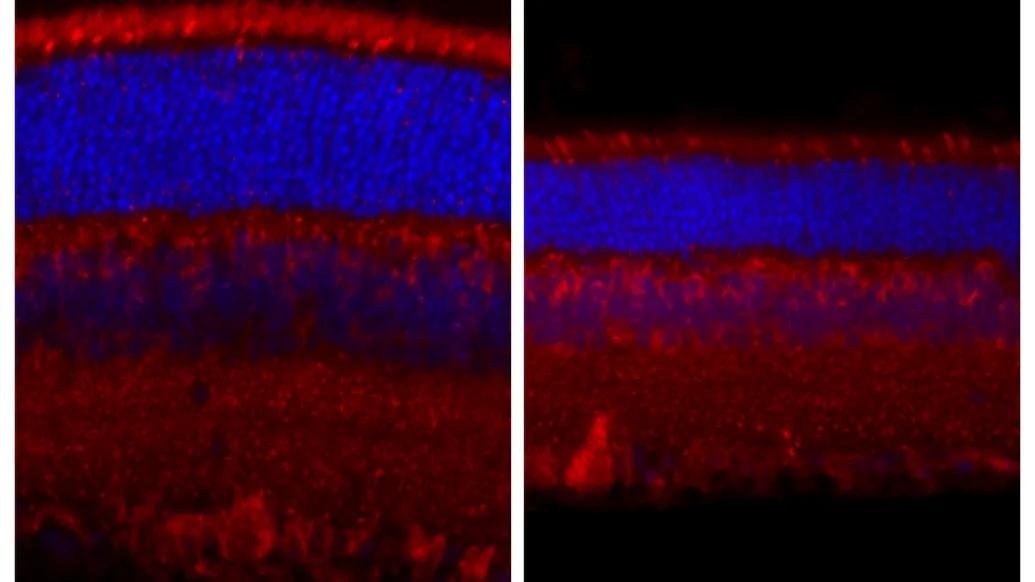
The retina places a large energy demand on the body, in part due to the activity of photoreceptors.
These specialized cells are responsible for receiving light and transmitting visual information to the brain.
Photoreceptor death is the cause of vision loss in many retinal diseases, and there are no effective therapies that improve their survival.
In a paper published in eLife, University of Michigan researchers studied the dependence of photoreceptors on glutamine.
Their results indicate that maintaining the balance of amino acids in these cells is important for photoreceptor health.
The energy requirements of photoreceptors make them vulnerable to small changes in metabolism.
Previous studies focused on glucose as the primary fuel source for these cells.
Currently, therapy that exploits photoreceptor dependence on glucose is being tested in a clinical trial for patients with retinal degeneration.
SEE ALSO: A New Study of Light Sensitivity in Prechter Participants
“Photoreceptors are one of the most metabolically demanding cells in the body, which led us to wonder whether they depend on fuel sources other than glucose for their survival,” said Thomas Wubben, M.D., Ph.D., assistant professor of ophthalmology and visual sciences.
“We looked at glutamine because it is the most abundant amino acid in the blood.”
Glutamine feeds into several pathways, helping cells build other amino acids, including glutamate and aspartate, protein and DNA.
To confirm glutamine’s role in vision, the researchers used mice that lacked the enzyme glutaminase, which breaks down glutamine into glutamate.
They compared these mice to control mice by measuring the thickness of their retinas.
Mice that lacked glutaminase had a rapid reduction in retinal thickness with loss of photoreceptor number and function.
Glutamine plays a role in several cellular processes.
To understand why glutamine is important to photoreceptor survival, the team measured the levels of different molecules in control mice and those that lacked glutaminase.
When mice lacked the enzyme, they had lower levels of glutamate and aspartate.
These amino acids, in turn, help the cells build proteins that are required for photoreceptor function.
The researchers also found that decreased amino acid levels activated the integrated stress response, which is known to trigger cell death if it remains active for too long.
When they inhibited the stress response, the team found that the retinal thickness increased.
“We are now focused on understanding which pathways depend on glutamine and whether they can be targeted by drugs or supplements,” Wubben said.
Glutamine to glutamate conversion pathways are negatively impacted in models of human retinal disease.
“It is possible that resetting metabolism can help prevent vision loss and blindness.”
Additional authors: Moloy T Goswami, Eric Weh, Shubha Subramanya, Katherine M Weh, Hima Bindu Durumutla, Heather Hager, Nicholas Miller, Sraboni Chaudhury, Anthony Andren, Peter Sajjakulnukit, Li Zhang, Cagri Besirli and Costas A Lyssiotis.
Funding/disclosures: This research was supported by a NEI K08EY031757, an RPB Unrestricted Grant, the Retina Society Research and Education grant, and the Global Ophthalmology Awards Program, a Bayer-sponsored initiative committed to supporting ophthalmic research across the world. This work utilized the Vision Research Core funded by P30 EY007003 from the National Eye Institute. Lyssiotis was supported by grants R37CA237421, R01CA248160, R01CA244931, and P01HL149633. Besirli was supported by R01EY029675.
Tech transfer(s)/Conflict(s) of interest: Besirli owns Johnson & Johnson stock and has equity interest in Ocutheia and iRenix Medical. Lyssiotis has consulted for Astellas Pharmaceuticals, Odyssey Therapeutics, Third Rock Ventures, and T-Knife Therapeutics; is an inventor on patents pertaining to Kras regulated metabolic pathways, redox control pathways in pancreatic cancer, and targeting the GOT1-ME1 pathway as a therapeutic approach (US Patent No: 2015126580-A1, 05/07/2015; US Patent No: 20190136238, 05/09/2019; International Patent No: WO2013177426-A2, 04/23/2015). Wubben has equity interest in Ocutheia.
Paper cited: “Glutamine catabolism supports amino acid biosynthesis and suppresses the integrated stress response to promote photoreceptor survival,” eLife. DOI: 10.7554/eLife.100747.3
Sign up for Health Lab newsletters today. Get medical tips from top experts and learn about new scientific discoveries every week.
Sign up for the Health Lab Podcast. Add us wherever you listen to your favorite shows.

Health Lab
Explore thousands of health news & research stories by visiting the Health Lab homepage for more.
Media Contact

Public Relations
Department of Communication at Michigan Medicine
In This Story

Thomas J Wubben, MD, PhD
Assistant Professor
Related

7-Year-Old Receives New FDA-Approved Retina Gene Therapy
Stay Informed
Want top health & research news weekly? Sign up for Health Lab’s newsletters today!
Featured News & Stories

Comprehensive DNA sequencing reveals hidden drivers of cancer
‘Molecular glue’ stabilizes protein that inhibits development of non-small cell lung cancer and uterine cancer

Many older adults make Medicare decisions quickly and most don’t change plans, poll finds
What’s the latest on 7-OH and kratom availability and addiction care?

Depression in OBGYN residents needs more attention, study suggests