Alternatives to Liver Biopsy: When Are Other Tests Appropriate?
Noninvasive tests haven’t replaced liver biopsies, but they have sharply reduced the need for them. Two Michigan Medicine experts examine the debate in a new paper.
5:00 PM
Author |
For decades, physicians have considered biopsies the best method to determine the presence and cause of abnormal cells in the liver. But the invasive procedure can be painful and costly.
MORE FROM THE LAB: Sign up for our weekly newsletter
Meanwhile, developments in new technology and clinical practice over the past 15 years have dramatically redefined the role of liver biopsies — advancements that aren't widely known among some professionals.
"There have been a lot of changes in clinical practice, and these changes have never been completely described and explained to the general medical audience," says Elliot Tapper, M.D., an assistant professor in the Division of Gastroenterology and Hepatology at Michigan Medicine.
"They've happened entirely in the silo of the gastroenterology specialty."
It's why Tapper and a colleague recently evaluated the landscape in an analysis published in the New England Journal of Medicine. The report was co-authored by Anna Lok, M.D., assistant dean for clinical research at the U-M Medical School and the Alice Lohrman Andrews Research Professor of Hepatology.
The review, they hope, leads to a wider discussion of the issue — and encourages practitioners to seek feasible alternatives to liver biopsies when appropriate.
We should use a combination of liver imaging and blood tests to find the few people that continue to benefit from liver biopsy.Elliot Tapper, M.D.
Liver biopsy limitations
Tapper says the interest in noninvasive methods to detect liver disease comes from the risk of complications associated with a liver biopsy as well as technical limitations.
SEE ALSO: Why Too Many Patients Get Liver Tests They Don't Need
"Sampling error is common," he says, "and many liver diseases do not affect the liver uniformly."
For example, Tapper cited studies of patients with nonalcoholic fatty liver disease where two biopsies were obtained from the same patient. Advanced fibrosis was found on one but not the other.
"The data on biopsy sampling error can be startling," Tapper says.
Also key, he notes, is the size of a liver sample in determining the accuracy of the diagnosis and the stage of the disease. A sample should be at least 3 cm in length to obtain the most accurate results.
But such large specimens are rarely obtained in actual practice: "In a clinical trial involving 513 patients, 36 percent of biopsy samples were less than 1.5 cm in length," Tapper says.
Adding even more confusion to the subject, he notes, biopsy interpretations also vary — even among pathologists involved with the development of universal staging criteria.
Benefits of noninvasive liver tests
From a patient's perspective, biopsies are not always desirable because of potential risks such as pain, serious bleeding, injury to other organs and, in rare cases, death.
They can also be expensive. The average direct cost of a percutaneous liver biopsy is $1,558.
Biopsy patients are seen by a gastroenterologist or radiologist and a pathologist. The procedure must also be performed with adequate post-procedural monitoring by nurses.
Notes Tapper: "There are also unmeasured indirect costs, including lost work productivity for patients and their caretakers."
Alternatively, noninvasive tests are becoming more precise in identifying the cause of many cases of liver disease and even the extent of liver injury. Several such methods for assessing liver fibrosis have been developed and are now widely used.
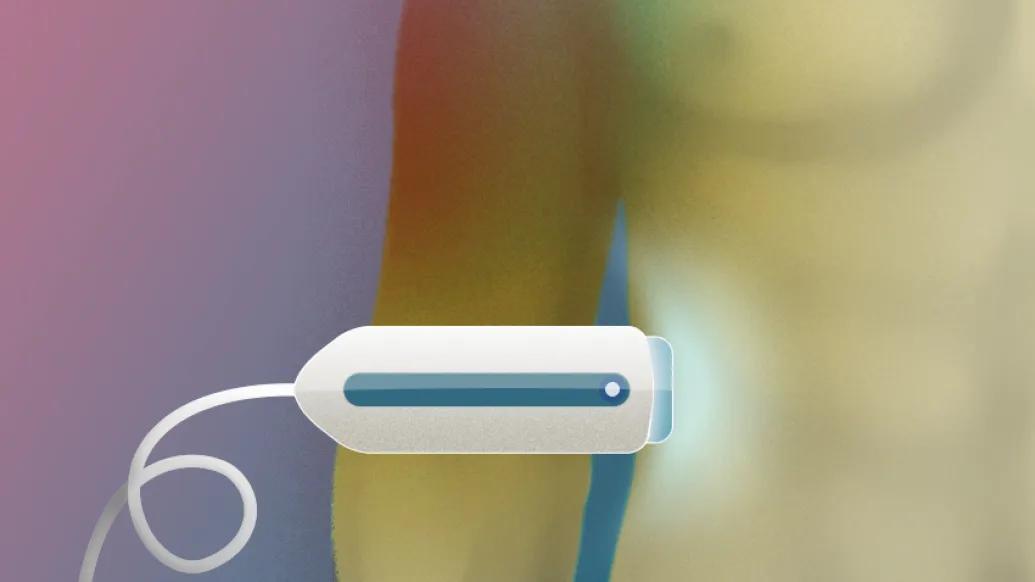
Standard imaging tests may be used to detect specific forms of liver disease or to determine the extent of scarring of the liver. The simplest imaging technique, elastography — commercially known as a FibroScan and similar to an ultrasound — measures the stiffness of a liver. Since the technique's approval by the Food and Drug Administration in 2013, FibroScan tests have gained a lot of attention.
The technique isn't a solution for everyone: Patients who are morbidly obese or have large amounts of chest wall fat are at risk of receiving unreliable results. For those patients, Tapper suggested the use of magnetic resonance elastography, a special form of MRI.
Still, Tapper warns against physicians solely relying on imaging tests, as measuring stiffness of the liver is not enough to make a diagnosis of liver disease. He recommends that those imaging results be used in conjunction with blood tests.
"We look to see if the results from blood and imaging tests agree with each other," says Tapper. "If they don't agree with each other, we may consider doing a traditional liver biopsy."
Why liver biopsies are necessary
Although Tapper and Lok explain the pendulum swing from biopsies to noninvasive liver testing, they also maintain that liver biopsies are still a viable and necessary screening mechanism.
SEE ALSO: Troubling Trends in Drug-Induced Liver Damage
"We should use a combination of liver imaging and blood tests to find the few people that continue to benefit from liver biopsy," says Tapper.
He believes the move away from liver biopsies has stalled researchers' ability to develop a specifically targeted therapy the way other therapies have been developed for diseases like lung cancer and leukemia.
"In order to improve the quality of chemotherapy and treatment that we provide our patients with liver cancer, we're going to have to figure how liver biopsy fits back into practice," he says.
Tapper also emphasizes the need for more analysis on liver scar tissue over an extended period of time.
By sharing their analysis of some noninvasive techniques for liver diagnosis and prognosis, Tapper and Lok want to empower primary care physicians to educate their patients and leverage the appropriate care options for patients with common liver diseases.
"We think that when that knowledge is more widely shared it will dramatically change the way we take care of some of the most common liver diseases," Tapper says.

Health Lab
Explore thousands of health news & research stories by visiting the Health Lab homepage for more.
Media Contact

Public Relations
Department of Communication at Michigan Medicine
Stay Informed
Want top health & research news weekly? Sign up for Health Lab’s newsletters today!
Featured News & Stories

How gastroenterology nutrition therapy has evolved
Evolving causes, diagnosis of drug-induced liver injury

How to improve mental health safety on social media – not just for young people
What’s the latest on 7-OH and kratom availability and addiction care?
Waiting for a bed, but not for care: ED boarding study finds wide variation in handoffs