AI chatbots spark mental health concerns, including psychosis risk
More awareness, caution and early help for those showing troubling signs are needed, experts say
10:08 AM
Author |
Decades ago, computer scientists set out to make programs modeled on the human brain.
But now, some of the products based on that approach may be harming the brains of the humans who use them, according to a panel of University of Michigan experts.
The mental health effects of sophisticated artificial intelligence chatbots have only just begun to be reported and studied, they said during a recent live event hosted by the U-M Department of Psychiatry.
But with hundreds of millions of people using AI chatbots for many purposes, including substitutes for conversations with real people, there’s enough evidence to convince them that more awareness is needed, and action by policymakers too.
The first widely available modern AI chatbot, Chat GPT, only made its debut four years ago.
Since then, many more have come on the market, for free or paid use.
And in that same time, media reports have documented suicides, killings, psychotic behavior, extreme risk-taking or just abandonment of everyday responsibilities by people who conversed with chatbots.
Families of victims or survivors have begun to sue AI companies in court.
Two of the U-M experts, who specialize in the type of mental illness known as psychosis, are especially concerned about the risks of chatbots for people prone to, or already experiencing, this condition.
Even before chatbots were invented, the most common age for the start of psychosis was the late teen years to the early 20s – a time when the brain’s higher functions and social interaction skills are still developing, said Mallory Klaunig, Ph.D., a clinical psychologist who provides diagnosis and therapy to people with psychosis at U-M Health’s Program for Risk Evaluation and Prevention, also known as PREP.
That’s also an age group with a high rate of chatbot use, which offers the chance to converse with an artificial human that doesn’t push back on paranoid ideas, cut off queries asking for “how to” instructions for killing oneself or others, or question delusional claims.
Stephan Taylor, M.D., the U-M psychiatrist who founded the PREP clinic and research program, and chairs the Department of Psychiatry, noted the emotional dependence that heavy users of chatbots develop on the programs.
In the absence of much stronger regulation, we will be in for a bumpy ride with respect to the harms that AI will cause to our collective mental health."
-Kentaro Toyama, Ph.D.
He also pointed to data from Chat GPT’s parent company, which issued public data saying that as many as a million users every week have conversations with its chatbot that include signs that they are planning to take their own life, and a smaller number had emergencies related to mania, delusional or paranoid thinking that could be psychosis.
He offers this advice for anyone who is seeing or suspecting similar situations in someone they know.
“If a loved one is spending too much time with the chatbot, as is the case for anyone developing early psychosis initially, you should be non-judgmental,” he said.
“Ask questions, and listen. You want to find out what the person is doing, you don't want to push them away, because sometimes with a developing psychosis a person does feel like the world is against them, particularly family members, and so they tend to shut people off, so try not to do that. You could begin introducing gentle counterarguments, or suggest they try different chatbots to compare responses, but it’s important to maintain lines of communication in order to get to the point where you can maybe convince the person to give up the chatbot use.”
But, he said, “There still need to be firm red lines around safety. So, if there's a concern about harm to self or others, or poor self-care, then a more forceful intervention may be needed, such as calling 911 or calling a local crisis intervention team, or psychiatric emergency services.”
Calling, texting or chatting online with the human agents at the 988 Suicide and Crisis Lifeline is also an option for individuals experiencing mental health crisis or those concerned about them.
U-M School of Information professor Kentaro Toyama, Ph.D., has a special perspective on AI, because his career began more than 30 years ago in “computer vision” aa key subfield of AI.
But today, seeing the chatbot products that technology companies have brought to the free and paid market, Toyama issues a clear warning.
“Without strong regulation, AI will cause mental health challenges,” he said.
“There are very strong incentives in the way that these systems are set up where AI will have a tendency to want to give unmitigated approval, acceptance, and validation to their users because that’s what users will tend to want themselves. They’ll have a tendency to reinforce beliefs, whether they’re false or unhealthy.”
The business model for AI chatbot companies, like that of social media companies and others, is to keep users on their platforms, Toyama says.
“There will be little incentive to discourage overuse or addiction because increased engagement is what these companies want. And there will be strong incentives for companies to lobby against laws that make them liable for problems that their systems are causing,” he predicted.
“So in the absence of much stronger regulation, we will be in for a bumpy ride with respect to the harms that AI will cause to our collective mental health.”
Taylor agrees.
When it comes to AI chatbots, he said, “We are not going to put the genie back in the bottle. There are lots of positive potentials of AI and I think the responsible use is not only possible but necessary.
“In some of the cases of psychosis risk and AI-induced delusions we've heard about, just taking the person away from the chatbot or telling them to ask a different chatbot results in the delusion diminishing over time,” Taylor said.
“We will need to do more to understand who is at risk from using chatbots, and to study exactly how different chatbots interact with people who express delusional thoughts, and to what extent they reinforce, rather than push back on, mistaken beliefs."
In fact, the U-M team has started to do some of this research, together with Andrew Busch, a recent graduate of the Department of Electrical Engineering and Computer Science at U-M.
Their initial findings, shared during the live event, show wide variation between some of the most common chatbots.
They’re now preparing the data for publication.
With AI chatbot use continuing to expand, and regulation happening at different paces or not at all at the state and federal level, the experts advised caution for anyone using AI chatbots, especially those who might have mental health vulnerabilities.
They also advised that parents concerned about their tweens’ and teens’ use of chatbots talk with them about the concerns that have been raised, and share information with their schools too.
They noted that people who have observed AI-related psychological effects in themselves or others can also submit them for use by researchers through the AI Psychological Research Coalition.
Sign up for Health Lab newsletters today. Get medical tips from top experts and learn about new scientific discoveries every week
Sign up for the Health Lab Podcast. Add us wherever you listen to your favorite shows

Health Lab
Explore thousands of health news & research stories by visiting the Health Lab homepage for more.
Media Contact

Public Relations
Department of Communication at Michigan Medicine
In This Story
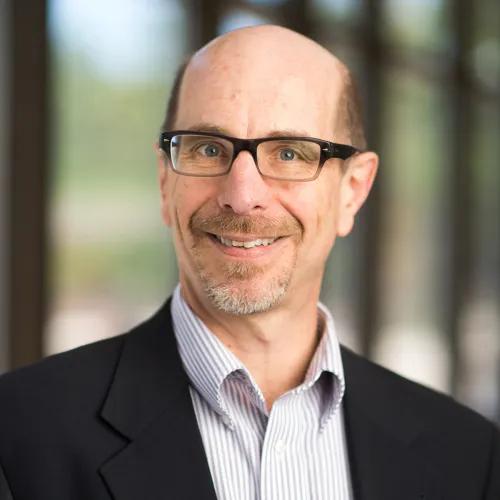
Stephan F Taylor
Professor

Mallory J Klaunig PhD
Clinical Assistant Professor
Related

When reality fails: What to know about psychosis

AI and psychosis: What to know, what to do
Stay Informed
Want top health & research news weekly? Sign up for Health Lab’s newsletters today!
Featured News & Stories
The AI is listening: Implications of machine generated clinical notes on health care

Comprehensive DNA sequencing reveals hidden drivers of cancer

Many older adults make Medicare decisions quickly and most don’t change plans, poll finds
‘Molecular glue’ stabilizes protein that inhibits development of non-small cell lung cancer and uterine cancer
What’s the latest on 7-OH and kratom availability and addiction care?