After near-fatal car crash, singer regains voice at U-M Vocal Health Center
How an intubation almost ended a career
12:22 PM
Author |
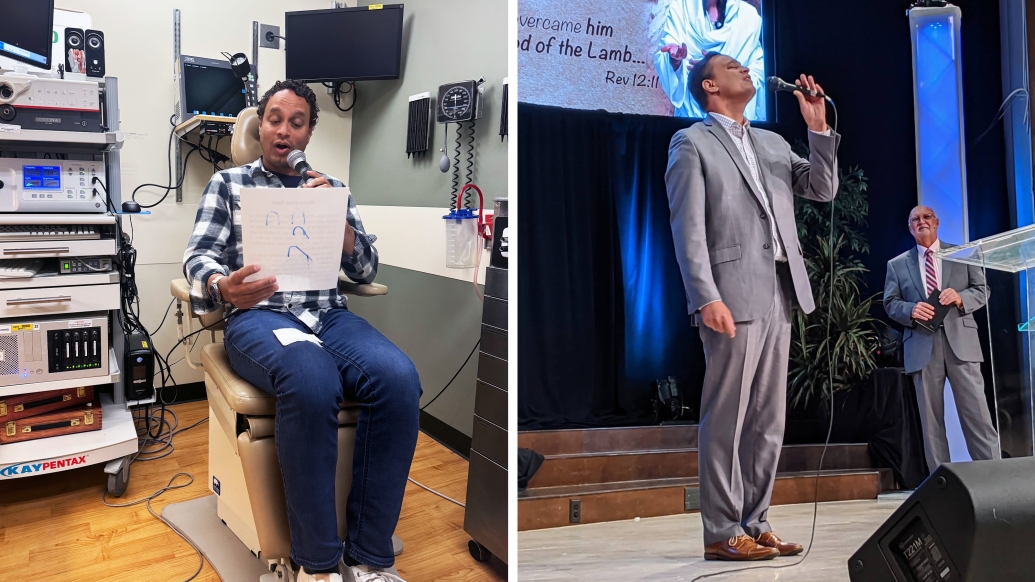
When Scott Michael Bennett took the stage to sing at a New Mexico convention in August 2024, it had all the trappings of a comeback.
Just a year before, following a serious car accident, Bennett had worried that his left leg would need to be amputated.
Now, he was walking again.
Compared to that recovery, some recent vocal irritation seemed minor.
Soon after the performance began, however, he lost his voice completely.
"They were kind enough to pay me,” said Bennett.
“But at that point I realized I've lost my voice, I've lost my career, I've kind of lost my life."
Bennett is a Christian recording artist and musician who travels the country to perform.
He estimates that, at one point, he booked around 170 events per year.
He ended up buying a tour bus so his family could join him during all that traveling.
On January 21, 2023, however, he set off from his home in Berrien Springs, Mich., alone, headed for a concert in Ohio.
Somewhere in Northern Indiana, his car hit black ice, launched over the guardrail and crashed into a tree.
Bennett was extricated from his vehicle and airlifted to a hospital.
There, he spent 16 days in critical care, receiving five blood transfusions and a series of surgeries to repair fractures in both legs.
Amidst this lifesaving medical care, an intubation tube nicked one of his vocal cords.
What was an afterthought at the time, though, eventually became a focus of Bennett’s recovery.

Even as intense physical therapy and more surgeries improved Bennett’s legs, his voice worsened.
The nick on his vocal cords led to a polyp that caused increasing irritation.
Bennett rationalized that his throat problems were a side effect of medication.
Despite his worsening vocal health, he began booking performances on the belief his voice would come back.
Then came that fateful performance in New Mexico.
“It was truly awful,” Bennett said. “I’m not being a diva by any stretch of the imagination. My team said, ‘What’s going on with you?’ I’m like, ‘I have no idea.’”
Bennett canceled all the remaining dates on his schedule, then took to social media to announce to his fans that he might be forced to end his music career of 24 years.
Seeing the polyp made the prospect of retirement even more real.
After a laryngoscopy by his local otolaryngologist, Bennett remained convinced the growth couldn’t be removed without further damaging his vocal cords.
A last-hope investigation into specialists, however, led him to the University of Michigan Health’s Vocal Health Center, specializing in care of occupational and professional voice users.
Scott underwent a thorough evaluation by a multidisciplinary team representing laryngology, speech pathology, and vocal arts.
After an examination, Norman D. Hogikyan, M.D., Director of the Vocal Health Center, wasted no time telling Bennett the damage to his voice could be undone.
“The problems he was experiencing with his speaking and singing voices could be explained by the polyp, and I was very optimistic that through surgery and voice therapy his voice could be restored,” Hogikyan recalled.
“He’s telling me, ‘Hey, this is reversible,’” Bennett said.
“I’m sitting there going, ‘How is that even possible?’ I sound like Joe Cocker! I sound like a smoker.”
Hogikyan explained that he could remove the polyp surgically.
Then, Bennett would be on vocal rest before working to rehabilitate his voice with a specialist.
Even with that plan in mind, Bennett struggled to imagine singing again.
The confidence of his care team, however, convinced him to move forward.
“Honestly, even though I was skeptical, the kind of aura that he gave off was: This is what I do,” Bennett said.
In August 2025, Bennett underwent his procedure with Michigan Medicine.
Voice rest was necessary in the early postoperative period, and the singer remained silent, communicating primarily with phone software and a whiteboard.
When he finally could speak a few single words, he was shocked by how “horrible” his voice sounded.
Hogikyan, however, had cautioned Bennett that his voice would get worse before it got better.
“I take for granted that I can sing,” Bennett said.
“I take for granted that I can vocalize like a normal person because it is so second-nature. It's something you have done since you were a baby. When it's taken away from you, all of a sudden you realize how fragile those two little strips of tissue are in your throat.”
Within a month of surgery, Bennett started voice therapy under the supervision of Marci Rosenberg, M.S., Clinical Singing Voice Rehabilitation Specialist and Senior Speech Pathologist at the Vocal Health Center.
He vacillated between joy that he could sing at all and disappointment when his voice would give out after five minutes.
Rosenberg, however, encouraged him that it was a normal part of building his vocal stamina back up.
Having previously undergone extensive physical therapy for his legs, Bennett was able to commit to the process.
Finally, one day, when singing at his piano at home, he attempted to hit a high note in a song, expecting to fail.
He reached it effortlessly, then immediately began texting his team.
From then on, his recovery progressed rapidly.
Now, Bennett says his voice is back to where it was before the accident.
And he’s back on the road performing.
“Spreading a message of faith, hope and joy through performing are central to Scott’s identity and purpose in life,” said Hogikyan.
“Our Vocal Health Center team is extremely grateful for the opportunity to help him return to what he loves.”
Sign up for Health Lab newsletters today. Get medical tips from top experts and learn about new scientific discoveries every week
Sign up for the Health Lab Podcast. Add us wherever you listen to your favorite shows

Health Lab
Explore a variety of health care news & stories by visiting the Health Lab home page for more articles.
Media Contact

Public Relations
Department of Communication at Michigan Medicine
In This Story
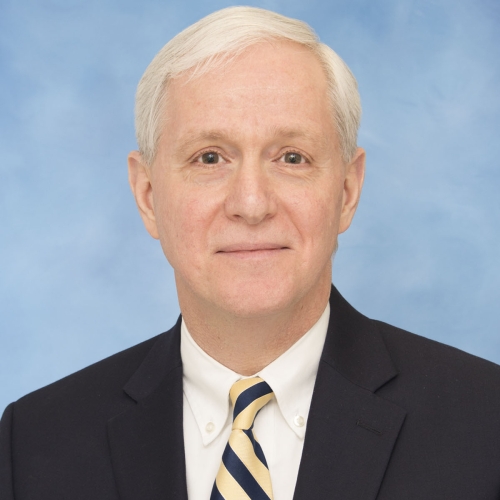
Norman D Hogikyan, MD, FACS, HEC-C
Professor
Stay Informed
Want top health & research news weekly? Sign up for Health Lab’s newsletters today!
Featured News & Stories

Pollen exposure linked to worse quality of life for chronic sinus infection sufferers
Human ability to focus on specific sounds not found to originate in auditory nerve, brainstem

Addressing body-image distress in head and neck cancer patients

First-of-its-kind blood test for head and neck cancer

More clues revealed about the causes of an allergic inflammation of the esophagus