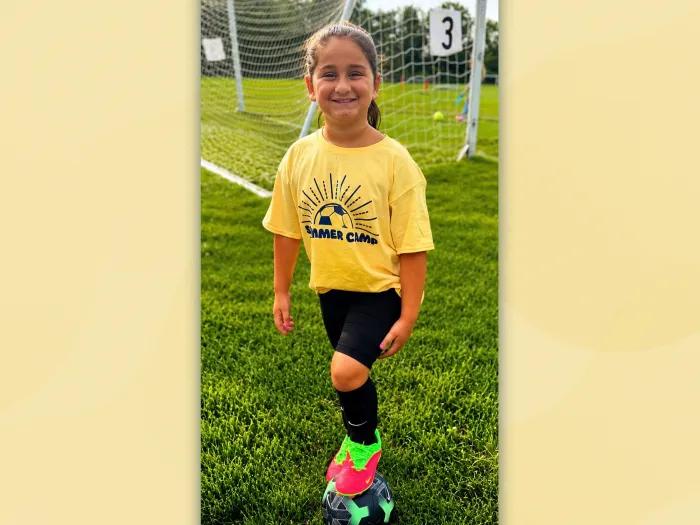
After life threatening pregnancy complication, mom of 4 embraces little moments
One woman’s placenta accreta case was so severe she needed blood transfusions to replace twice her body’s blood volume after childbirth
5:00 AM
Author |

When Andrea Calvaneso delivered her son, Nico, more than 40 University of Michigan Health specialists were in the room.
Calvaneso had given birth to three other children, but this time was different – a rare pregnancy complication put both her and her baby in danger.
Her placenta had grown through her uterus and was attached to other organs, leading to a high risk of life threatening blood loss through hemorrhaging.
Known as placenta accreta spectrum, the condition affects about one in every 300 pregnancies and often requires having a hysterectomy after childbirth.
“It was all hands on deck. I knew they were hoping for the best but preparing for the worst,” she said.
“They didn’t really know the level of severity until they got in there.”
And U-M Health surgeons quickly realized that Calvaneso’s case was extraordinarily complex: her placenta had invaded the walls of her bladder, cervix and surrounding pelvic structures.
After safely delivering Nico and transporting him to the Newborn Intensive Care Unit at U-M Health C.S. Mott Children’s Hospital, the multidisciplinary operating room team proceeded to work on Calvaneso for another nine hours.
Because the placenta had grown into other organs, Calvaneso experienced heavy blood loss, losing twice her body’s blood volume that had to be replaced through blood transfusions.
Her bleeding was so significant that surgeons opted to pause the surgery and complete it the next day to reduce risks of complications like cardiac arrest.
“Her case is probably one of the most severe I’ve seen in my career,” said Aimee Rolston, M.D., a gynecologic oncologist who co-leads the Placenta Accreta Spectrum Program at U-M Health Von Voigtlander Women’s Hospital.
“Given the complexity of her situation, her procedure required strong involvement and teamwork from multiple specialties. Our program has the experience and expertise to always be prepared for the worst-case scenario to ensure the best possible outcome for every patient.”
Fourth pregnancy and a stunning diagnosis
Calvaneso had never heard about placenta accreta until her own diagnosis at her 20-week ultrasound during her fourth pregnancy in 2022.
She learned she likely developed the condition because of scarring from previous cesarean sections, which can disrupt the normal uterine lining and make it easier for the placenta to attach abnormally into the uterine wall.
“It was a moment of complete and utter shock. I didn’t have any different symptoms from my other pregnancies,” she said.
“I remember going through different stages of grief, from complete denial to sadness to relentless worry about all the possible scenarios of what could go wrong.”
She spent the next few days researching the complication and discovered that U-M Health’s Placenta Accreta Spectrum Program was the top referral center in the state for the condition.
After talking to Michigan Medicine teams, she also learned that they had the capability to utilize a specialized balloon that is placed in the aorta (known as REBOA) to help manage excessive bleeding – a tool that ultimately ended up being critical in her case.
The hospital also had an on-site Blood Bank that ensured a readily available blood supply crucial for managing blood loss during procedures.
Her case is probably one of the most severe I’ve seen in my career. Given the complexity of her situation, her procedure required strong involvement and teamwork from multiple specialties.”
-Aimee Rolston, M.D.
“I knew I was at the right place,” she said.
“I felt so strongly about the confidence, care and compassion from everyone who touched my case at U-M.”
Meeting “Little Victor” Nico
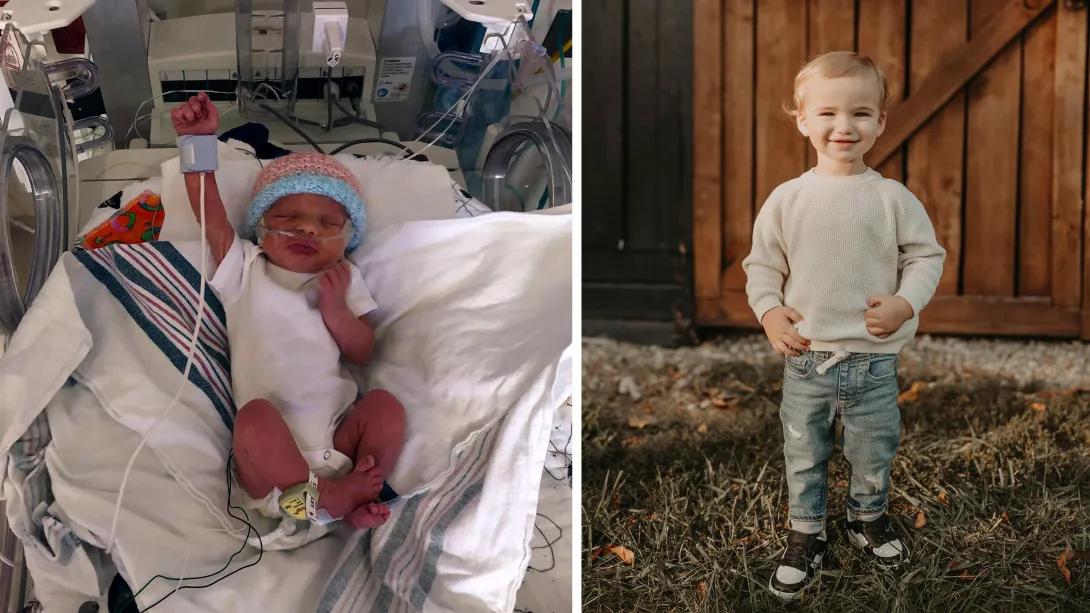
After Nico’s birth in January 2023, it took three days until Calvaneso could finally visit the NICU, one floor below the birth center, to meet him.
“The NICU nurses are incredible. At no point did I ever worry or question his well-being even though I couldn’t be with him,” she said.
“It was so reassuring knowing how much they cared about Nico, me and my family.”
And she’ll never forget the emotional moment she spotted her blonde haired, blue eyed newborn.
“During my pregnancy I tried to not get attached because I wasn’t sure we’d make it to the end,” she said tearfully.
“I was so worried about the greatest loss. When I entered the NICU and saw him there, I felt like I could finally breathe a moment of relief.”
Nico’s name— chosen by his sister Lexi —proved especially meaningful.
In Greek, it means 'victor.'
“He really is a little victor. He’s truly victorious,” she said.
But there was still a long road ahead: Calvaneso remained hospitalized for another two weeks and experienced complications not atypical for cases like hers over the next few months that required follow up surgeries.
“The doctors and nurses are true heroes. They never gave up,” she said.
“I felt so broken for so long. But they were so invested in us, and I felt that.”
Soaking up everyday mom moments
The U-M Health Placenta Accreta Spectrum team, comprised of providers across more than 10 specialty areas, provides specialized delivery care for roughly 35-40 placenta accreta cases a year, Rolston says.
She says placenta accreta may develop in pregnancies following certain uterine surgeries, most commonly cesarean section.
As cesarean section rates have gone up, placenta accreta cases have also increased.
The team continues to explore ways to improve care for patients before, during, and after the surgery, she says, with efforts already making a difference in the need for ICU stays and complication rates.
“Andrea’s experience and journey didn’t end in the operating room. It was months before getting her life back,” she said.
“We continue to evolve and work on initiatives that not only ensure the best outcomes during the surgery but what happens after surgery.”
Calvaneso says she wishes she’d been aware that cesarean sections increase risk for scar tissue in the uterus that can make placenta accreta a risk for future pregnancies.
She shares her story in hopes that it helps raise awareness about what’s considered one of the most dangerous pregnancy complications.
Today, she’s soaking up the little moments with Nico, now 2.
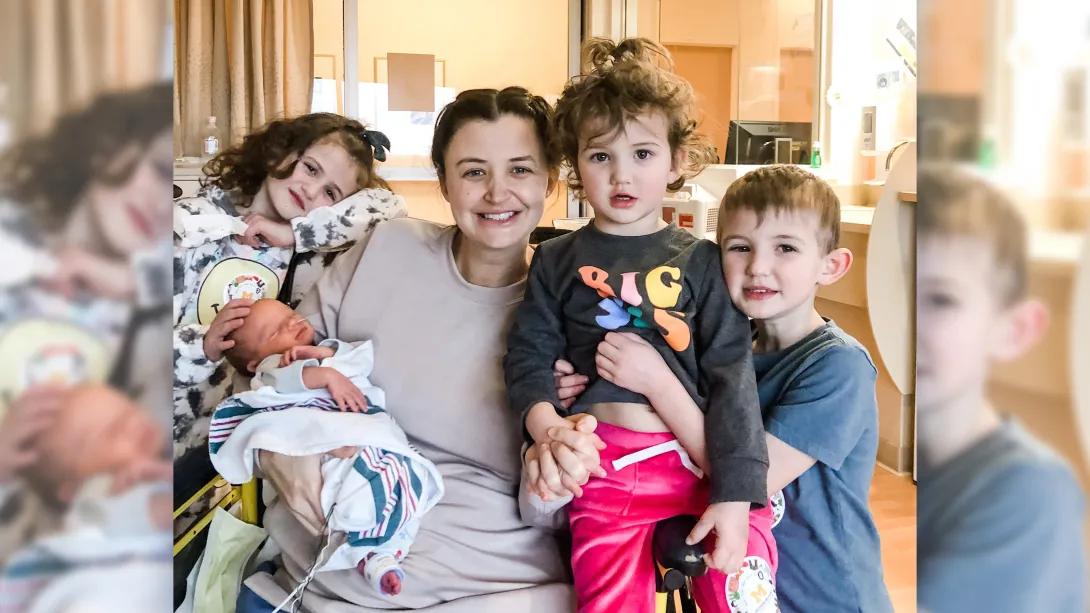
The happy toddler “is the joy of all of our lives,” she said, always entertaining his family, which also includes dad, Joseph, and siblings Lexi, 9; Franco, 7; and Lucia, 5.
After a long period of being physically restricted during recovery, she’s also enjoying other everyday mom moments, including the ability to go on school field trips, take her kids to their extracurricular activities and travel with the family up north.
“The biggest takeaway for me is life is really so precious,” she said. “There’s so much to be grateful for.”
Sign up for Health Lab newsletters today. Get medical tips from top experts and learn about new scientific discoveries every week.
Sign up for the Health Lab Podcast. Add us wherever you listen to your favorite shows.

Health Lab
Explore thousands of health news & research stories by visiting the Health Lab homepage for more.
Media Contact

Public Relations
Department of Communication at Michigan Medicine
In This Story
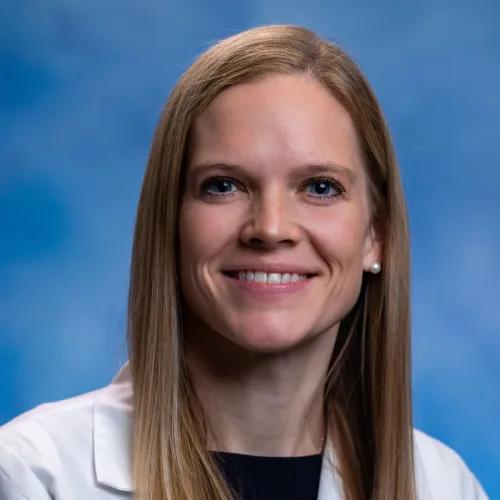
Aimee M Rolston, MD, MS
Clinical Assistant Professor
Related
The dangerous intestinal disease fatal to premature babies and vulnerable infants
What is placenta accreta? An expert explains
Stay Informed
Want top health & research news weekly? Sign up for Health Lab’s newsletters today!
Featured News & Stories
U-M-led consortium to receive up to $52 million in NIH funding to study why viral respiratory infections affect children differently
Depression in OBGYN residents needs more attention, study suggests
Better prenatal care data could help prevent maternal complications, experts say

What’s changing in Medicaid and what can you do?
PMOS is the New PCOS