Adult stem cells show therapeutic promise in treating vision loss from macular degeneration
In a first-in-human phase 1/2a clinical trial, researchers used adult stem cells to improve vision in patients with age-related macular degeneration
5:00 AM
Author |
In the United States, age-related macular degeneration is a leading cause of irreversible vision loss in people who are 60 and older.
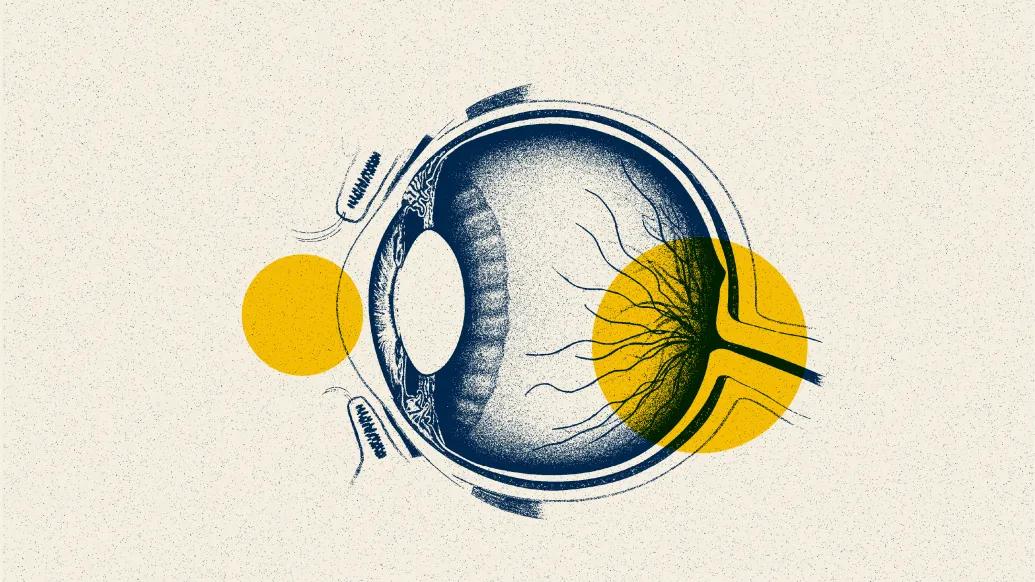
It affects the central portion of the retina, called the macula. This region is packed with cells responsible for high-resolution color vision.
About 20 million U.S. adults are living with some form of AMD. Although they cannot see objects that are directly in front of them, their peripheral vision is unaffected.
Current treatments slow the disease, but none restore vision.
In a study, published in Cell Stem Cell, researchers used retinal pigment epithelial stem cells derived from adult postmortem eye tissue in a phase 1/2a clinical trial. These early phase trials are used to determine whether a therapy intervention is safe.
There are two types of macular degeneration: dry and wet.
More than 90% of people with this condition have the dry form, which is caused by dysfunction and eventual loss of retinal pigment epithelial cells.
In early stages of AMD, these cells do not function properly. In late stages, they die and do not regenerate.
As the disease progresses, several areas inside the central eye lose these cells.
In the current study, patients with advanced dry AMD received transplanted stem cells, originally isolated from eye-bank tissues. These adult stem cells were specialized and could only develop into retinal pigment epithelial cells.
Six patients received the lowest dose of transplanted stem cells (50,000 cells) through a surgical eye procedure.
In all of them, the treatment was safe and did not cause serious inflammation or tumor formation.
The participants also experienced improved vision in the transplanted eye; the non-transplanted eye did not have these improvements, hinting that the approach could provide a new therapeutic avenue.
“Although we were pleased with the safety data, the exciting part was that their vision was also improving,” said Rajesh C. Rao, M.D., Leonard G. Miller Professor of Ophthalmology & Visual Sciences, and an associate professor of pathology and human genetics.
“We were surprised by the magnitude of vision gain in the most severely affected patients who received the adult stem cell-derived RPE transplants. This level of vision gain has not been seen in this group of patients with advanced dry AMD.”
When tested with an eye chart, the participants in the low-dose group were able to see 21 more letters after a year.
The team is currently following patients who received medium and high doses of 150,000 and 250,000 cells.
If no safety concerns arise, the research team will proceed with the next phases of the clinical trial.
“We are grateful to all our participants who are allowing to better understand whether this intervention is safe enough to be a future therapy,” Rao said.
“These kinds of NIH-funded studies can help us offer advanced treatments in the field of regenerative medicine, and we are happy we can offer this first-in-human, cutting-edge clinical trial at the University of Michigan.”
Learn more about clinical trials at the University of Michigan.
Additional authors: Brigitte L. Arduini, Susan Borden, Dhruv Sareen, Clive Svendsen, Paul Lee, Charles Ryan, Shilpa Kodati, Caroline Nyaiburi, Keith Wolseiffer, Eric Oh, Shuna Park, Glenna Ford, Keith Dionne, Sally Temple and Jeffrey Stern.
Funding/disclosures: The work was supported by Luxa Biotechnology and the NIH NEI RMIP cooperative agreements U01 EY030581 and UGEY031810. This trial received a Regenerative Medicine Advanced Therapy designation by the FDA in early 2025.
Tech transfer(s)/Conflict(s) of interest: Stem and Temple co-founded Luxa Biotechnology. They are inventors in RPESC patents licensed to Luxa Biotechnology.
Paper cited: “Safety and tolerability of RPESC-RPE transplantation in patients with dry age-related macular degeneration: Low-dose clinical outcomes,” Cell Stem Cell. DOI: 10.1016/j.stem.2025.08.012
Sign up for Health Lab newsletters today. Get medical tips from top experts and learn about new scientific discoveries every week
Sign up for the Health Lab Podcast. Add us wherever you listen to your favorite shows

Health Lab
Explore thousands of health news & research stories by visiting the Health Lab homepage for more.
Media Contact

Public Relations
Department of Communication at Michigan Medicine
In This Story
Rajesh C Rao, MD
Associate Professor
Related
Treating dry age-related macular degeneration: 6 things to know
Wet vs. Dry AMD: What’s the Difference?
Stay Informed
Want top health & research news weekly? Sign up for Health Lab’s newsletters today!
Featured News & Stories

A metabolic “switch” that could help reset scar-producing cells in scleroderma

Emergency room intervention pairs smartphone, telehealth counseling to reduce risky firearm behavior
Innovative children’s vision research gets a boost from the Knights Templar Eye Foundation

Better prenatal care data could help prevent maternal complications, experts say

Pain, psychological factors and physical function closely linked in people with systemic sclerosis