Adding obesity experts to primary care clinics improves patients’ weight loss outcomes
Study comparing this weight program against usual care for high risk patients shows higher use of evidence-based treatments and more weight lost
3:19 PM
Author |
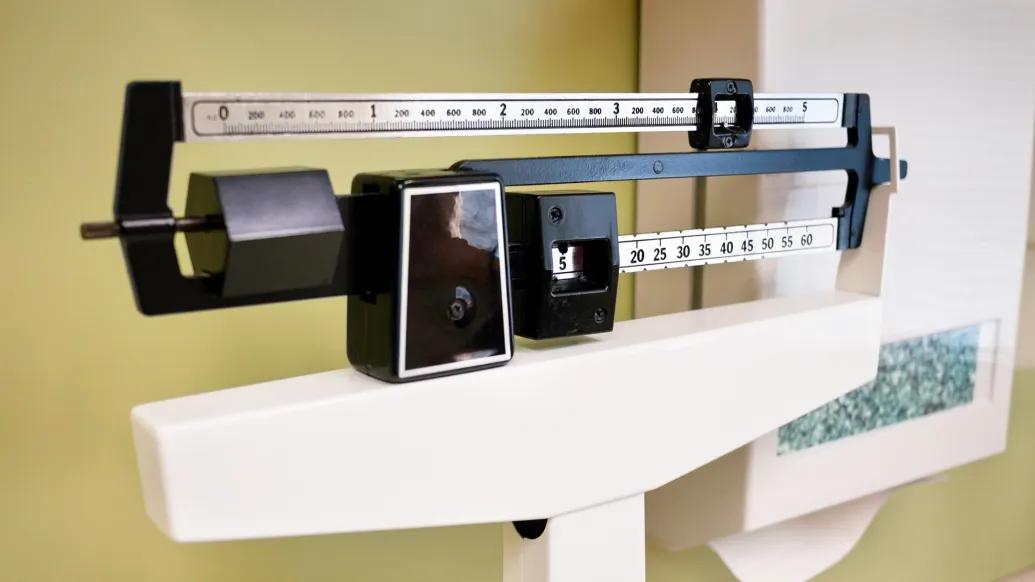
Giving high risk patients access to an obesity specialist through their regular primary care clinic increased their chances of receiving at least one evidence-based weight-management treatment, and led to more weight lost in just a year, a University of Michigan study finds.
Primary care clinicians commonly struggle to help patients develop an individualized weight-management treatment plan during short clinic visits.
Previous U-M research showed that most primary care patients with obesity do not lose at least 5% of their body weight, a goal that’s been shown to reduce obesity-related health risks.
That’s why U-M’s academic medical center, Michigan Medicine, developed the Weight Navigation Program, which teams up patients with obesity and their primary care provider with a board certified obesity specialist.
The study evaluating results from it is published in JAMA Network Open by the multidisciplinary team that launched the WNP in fall 2020.
The study shows that on average, patients who enrolled during the first year of the program lost about 12 pounds, or about 4.4% of their body weight, in the year after they received an individualized obesity treatment plan from an obesity specialist.
That’s compared with very little weight lost by patients similar to the WNP patients who went to a similar U-M primary care clinic that didn’t yet offer the program.
On average, all the patients started with a body mass index around 40 kg/m2.
SEE ALSO: Obesity care can make a big difference, but few get it, study suggests
To qualify for program, patients have to have a BMI above 30 kg/m2 and have at least one weight-related health condition, such as high blood pressure, sleep apnea, type 2 diabetes, or high cholesterol.
Over 40% of those in the WNP lost at least 5% of their body weight, a goal that’s been shown to reduce obesity-related health risks.
In comparison, less than 20% of similar patients not in the WNP lost at least 5% of their body weight.
In addition, 22% of patients in the program lost at least 10% of their body weight compared to less than 4% of similar patients.
The authors say the study suggests that the program’s approach should be tested in a larger clinical trial.
Having an obesity specialist work as part of a collaborative team to evaluate patients, help them understand their options, including potential costs, and act as a gateway to specialized care and primary care follow-up, is a model that we hope others will adopt."
-Dina Hafez Griauzde, M.D., M.Sc.
Meanwhile, the weight navigation program is now available to all eligible adult patients who receive primary care through U-M Health clinics, acting as a gateway to multiple treatment options.
It’s part of a wide range of weight management programs available by referral in multiple areas of U-M Health.
“The WNP is based in the idea that safe and effective obesity care can be integrated into the primary care settings where most Americans with obesity receive the vast majority of their care,” said Dina Hafez Griauzde, M.D., M.Sc., first author of the study and an internal medicine assistant professor at the U-M Medical School.
“Having an obesity specialist work as part of a collaborative team to evaluate patients, help them understand their options, including potential costs, and act as a gateway to specialized care and primary care follow-up, is a model that we hope others will adopt.”
Senior author, Andrew Kraftson, M.D., is an endocrinologist who specializes in obesity medicine But a shortage of such specialists means that programs such as WNP are needed to extend their reach.
The Weight Navigation Program builds on the previous success of other kinds of chronic disease programs that involve closer partnership between specialists and primary care providers.
One key difference: two-thirds of current obesity medicine specialists are also primary care physicians, including Griauzde and several of her co-authors.
More about U-M’s Weight Navigation Program
Patients referred to the program meet with an obesity specialist who has in-depth familiarity with all the obesity treatment options offered at U-M Health as well as community diabetes prevention programs.
The obesity specialists also understand insurance coverage and costs such as copays for the different options.
After meeting with the patient, the obesity specialist provides customized treatment recommendations that address the patient’s medical situation, finances, and preferences.
Treatments can range from specialized dietary plans to anti-obesity medications to weight loss surgery.
The team monitors progress and coordinates ongoing care with the primary care provider.
More about the study
The paper tracks the care of 132 people who went through the Weight Navigation Program at a single primary care clinic during the program’s first year, and 132 people with similar health and demographic characteristics who received usual care at a similar U-M Health primary care clinic in that timeframe.
Both groups’ records were studied for a full year, and nearly all had weight measurements available at the end of the year.
Two-thirds of both groups were female; the average age was 49 and nearly two-thirds had high blood pressure while about 60% had obstructive sleep apnea and just over 20% had type 2 diabetes.
Of all patients at the clinic offering the WNP who qualified for it, 19% of were referred to it by their primary care provider, and 11% enrolled.
SEE ALSO: What will it take to transform obesity care?
This is much higher than the very low percentage of U-M Health primary care patients who received a weight management treatment from their primary care provider or were referred for specialty obesity care in a previous study published by the team based on data from before the WNP launched.
When comparing the WNP patients with the usual care group, program patients were more likely to be directed toward health system obesity care resources, with more than twice as many patients in the program referred for bariatric surgery evaluations (18% vs. 9%).
In all, 4% of the program patients had bariatric surgery within a year of starting the program, compared with none of the comparison group.
Weight Navigation Program patients were also much more likely to receive a referral to a program that treats patients through a low-calorie meal replacement plan, or to a program that counsels patients on following a Mediterranean-style diet, which has been shown to have benefits for weight and health.
The percentages receiving a prescription for any obesity medication were similar, at 14% for the program patients and 10% for the control group patients.
However, the study period was before the United States Food and Drug Administration’s approval of semaglutide and tirzepatide for weight management and may not reflect current prescribing practices.
Therefore, the researchers are doing a follow-up assessment of weight-management treatment use and patients’ weight loss since the availability of these medications.
In addition to Griauzde and Kraftson, the study’s authors are Cassie D. Turner, LMSW; Amal Othman, M.D.; Lauren Oshman, M.D., M.P.H.; Jonathan Gabison, MD; Patricia K. Arizaca-Dileo, M.D.; Eric Walford, M.D.; James Henderson, Ph.D.; Deena Beckius, M.P.H.; Joyce M. Lee, M.D., M.P.H.; Eli W. Carter, M.P.H.; Chris Dallas, BBA; Kathyrn Herrera-Theut, M.D.; Caroline R. Richardson, M.D.; Jeffrey T. Kullgren, M.D., M.S., M.P.H.; Gretchen Piatt, Ph.D., M.P.H.; and Michele Heisler, M.D., M.P.A.
The study was funded by the National Institute of Diabetes and Digestive and Kidney Diseases, part of the National Institutes of Health, through a pilot grant from the Michigan Center for Diabetes and Translational Research (DK092926), and other grants (DK123416, DK089503, DK020572, DK092926) including funds from the Michigan Nutrition Obesity Research Center, the Michigan Diabetes Research Center and the Elizabeth Weiser Caswell Diabetes Institute.
Multiple authors of the paper are members of the Caswell Diabetes Institute and the U-M Institute for Healthcare Policy and Innovation, as well as being current or former faculty and staff in the Department of Internal Medicine and Family Medicine at the U-M Medical School.
Paper cited: “A Primary Care–Based Weight Navigation Program,” JAMA Network Open. DOI:10.1001/jamanetworkopen.2024.12192

Health Lab
Explore thousands of health news & research stories by visiting the Health Lab homepage for more.
Media Contact

Public Relations
Department of Communication at Michigan Medicine
Stay Informed
Want top health & research news weekly? Sign up for Health Lab’s newsletters today!
Featured News & Stories
Better prenatal care data could help prevent maternal complications, experts say
Many hospitals still don’t do enough to prevent UTIs from catheters

Digital alerts support timely treatment decisions of critically ill cardiac patients

What’s changing in Medicaid and what can you do?

AI, Well-Being and the Human Connection