5 hot weather tips that could save an older adult’s life
These five simple tips can help keep you – or your older friends, neighbors and loved ones – safe and cool during a heat wave
4:35 PM
Author |
Originally published in 2019, updated in 2024, 2025 and 2026
"We're having a heat wave, a tropical heat wave…"
"It's too… darn… hot…"
"It's like a heat wave… burning in my heart…"
For people in their 60s, 70s, 80s and beyond, these classic song lyrics may bring back fond memories of hot summer days.
But anyone old enough to remember those tunes playing on the radio should pay special attention to their health in hot weather.
That is because our ability to cope with the effects of high temperatures, high humidity and hot sun goes down as we age. Plus, older people are more likely to have chronic conditions such as diabetes and lung disease, which can reduce their ability to cope with heat waves even further.
At the same time, most older adults have recent experience with at least one extreme heat event: 63% of people age 50 and older have sweltered through one in just the last two years, according to a National Poll on Healthy Aging report from the University of Michigan Institute for Healthcare Policy and Innovation. And 70% of people over 50 are concerned that there will be even more extreme heat events in the future due to climate change.
A recent U-M study also suggested that out-of-hospital cardiac arrests happen more often during times of extreme heat and humidity, as well as extreme cold. These potentially deadly events are most likely to happen in people who are already vulnerable to cardiovascular issues.
So during especially hot times, it is important for older adults and their neighbors, friends, relatives and health care providers to pay attention to heat-related risks, and work to reduce them, said Shannon Etcheverry, LMSW, a social worker specializing in the health of older adults and director of the Turner Senior Wellness Center at U-M Health.
She offers these tips to help older adults stay safe during heat waves:
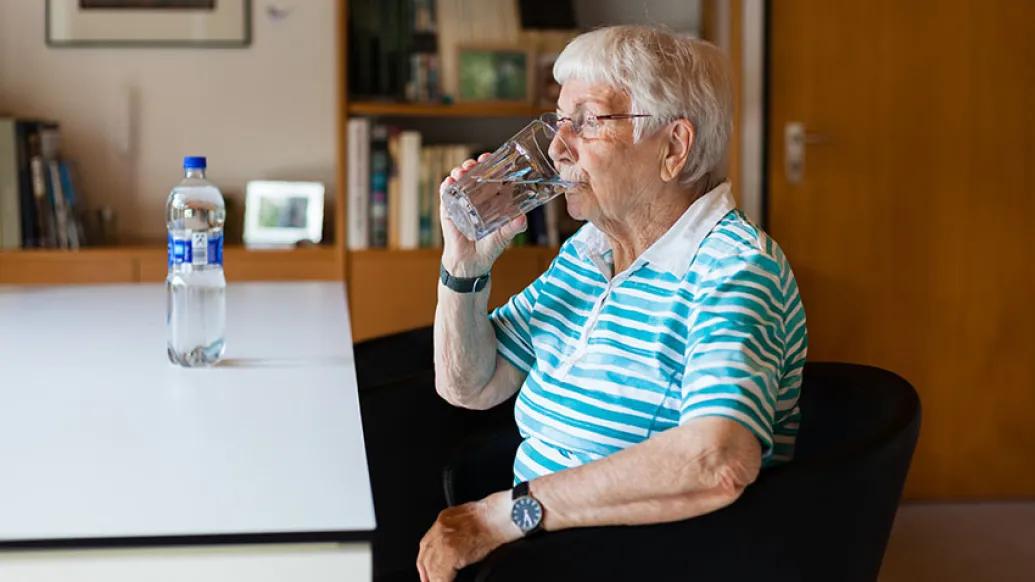
1. Drink more water than you think you need. Then drink some more.
People in their 60s and older already face a higher risk of dehydration in general, and hot weather can make it even worse. Not having enough water in your system can lead to feeling faint and nauseous, which can lead to dizziness and falls.
"Dehydration is a big worry for older adults, because it affects them differently," says Etcheverry. "They may not even know how they're being affected by the heat. So their loved ones, in-home caregivers and neighbors need to not only remind them to drink water but actually bring it to them during heat waves."
She adds that older adults with dementia have special risks, because the changes in their brain may keep them from being able to communicate their distress.
Some people may have fluid restrictions because of certain health conditions; if this applies to you, be sure to ask your doctor how to adjust for hot weather.
2. Make – or find – a cool place for yourself or your loved one
Good old-fashioned practices like running air conditioning and fans, closing curtains and blinds, avoiding using the oven and clothes dryer, and staying out of the sun during the heat of the day, can really help older adults stay safe and cool. So can cool but not cold showers or baths, running cool water over parts of the body or keeping cool, wet cloths handy.
Use fans to create a "wind chill" effect, just like a cold wind does on a winter day.
For those who do not have air conditioning, or are worried about running it too much for financial reasons, many communities offer free cooling centers during the hottest times of the year. Check your local government's website or social media pages to find out what they offer. In Michigan, the new Caregiver Connection site offers an easy way to find the Area Agency on Aging for your area, which will have information on cooling centers in your area.
Public libraries, recreation centers, civic buildings, churches or other places of worship and senior centers all offer free opportunities to get inside a cool building on the hottest days.
Seek help for physical symptoms, before it gets to be an emergency
Etcheverry notes that community senior centers can offer a place to connect with others during heat waves and beyond. "Even if it's not listed as an official cooling station, they're prepared for people to stop in any time they're open, and they're free," she says, noting that her program's air-conditioned location in northern Ann Arbor, Michigan is open 9 a.m. to 5 p.m.
Movie theaters, restaurants and malls also offer refuge. If you know an older person who might need a cool-down, this is a great time to offer to take them shopping, out for a meal or to the movies.
You can also call, email or text the national Eldercare Locator service or the United Way 211 phone and online service to find an agency near you that offers a place to cool down.
If your home is older, you may be eligible for weatherization assistance that can help keep cooled air in and hot air out in the summer, and vice versa in the the winter. You might also qualify for help with utility bills depending on your income. Visit the National Council on Aging's Benefits Checkup website to get started on exploring what programs might be open to you.
3. Skip outdoor activities – or do them early
The garden may need your attention, the dog may need to get exercise, or your regular walking partners may want to keep up their routine.
But ultra-hot weather is not the time to stick to routines.
Give yourself – or your loved ones – permission to skip the weeding, the walking or the workout for a few days. Hire a neighbor to walk the pet or mow the lawn.
It is also probably a good idea to skip alcohol and caffeine, or at least cut back on them, during a heat wave. They can also affect your response to heat and ability to recognize problems.
4. Don't feel well? Act fast
By the time older adults start feeling the worst effects of high heat, they may require emergency treatment. But hospital emergency rooms are not the place anyone wants to spend a hot summer day, and they can hold special risks for older adults.
"Seek help for any physical symptoms you might be feeling, by calling your doctor's office or clinic, before they become an emergency," Etcheverry recommends. "They can give advice over the phone, and also help steer you to resources in your area." Don't use your clinic's patient portal text-based message system for urgent matters, though.
Besides feeling faint or dizzy, other symptoms to watch out for include nausea, headache, feeling overly tired, having a rapid pulse, or feeling muscle cramps. If someone's behavior changes – for instance if they are confused or combative, or delirious – that is a very serious sign.
If you take medications for blood pressure, heart problems or other conditions, they can reduce the amount you sweat and affect circulation, which helps the body cool down.
If you have diabetes, it can affect your blood vessels and sweat glands, and heat can also change your body's ability to use insulin. Some medications for depression can also change your tolerance of hot temperatures.
Talk to your pharmacist or doctor's office to find out any special heat-related factors you need to think about given your health conditions.
If you are especially sensitive to heat for any reason, or you use any medical equipment that requires electricity, or you take a medication that requires refrigeration, have a plan in place for what you will do if hot weather or severe summer storms lead to power outages.
More heat-related health tips are available from the National Institute on Aging.
5. Get together with others – or check on older adults in your life
For other people who live alone, or who are the sole caregiver for a loved one with special health needs, heat waves can bring special risks, says Etcheverry.
If this describes you, now is the time to reach out and take people up on their offer to come visit or go on an outing to a cool location.
If you know an older person who lives alone, whether they live next door or across the country, this is the time to stop by, call or connect electronically.
If you are near enough, offer to drive an older person to an air-conditioned place, or just take a ride in a cooled-down car.
Since heat-related illness can sneak up on people and bring a risk of fainting, checking in is never a bad idea.

Health Lab
Explore thousands of health news & research stories by visiting the Health Lab homepage for more.
Media Contact

Public Relations
Department of Communication at Michigan Medicine
Related

Weather emergencies affect older adults' health views
Heat wave survival tips from an emergency physician
Stay Informed
Want top health & research news weekly? Sign up for Health Lab’s newsletters today!
Featured News & Stories

Top 7 tips for choosing Medicare prescription drug coverage for 2027
4 in 5 parents say having a baby is too expensive
Many older adults make Medicare decisions quickly and most don’t change plans, poll finds
Many hospitals still don’t do enough to prevent UTIs from catheters

E-Bikes are everywhere, but most parents say they don’t know enough about them