2 heartbeats, 1 future: Why pregnancy is a critical window for women’s heart health
How a cardio-obstetrics team is leading research to reduce women’s long term heart disease risk after pregnancy complications like preeclampsia
3:17 PM
Author |
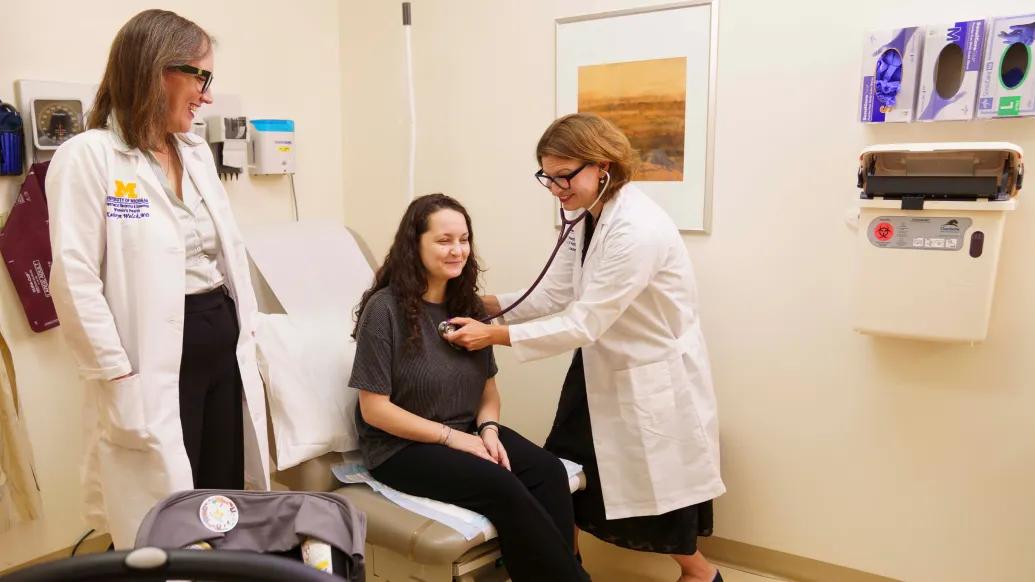
Cardiovascular disease is the number one cause of death in women.
Yet, one of the most important windows to understand a woman’s lifelong heart health may come decades earlier: during pregnancy.
Pregnancy and labor and delivery make the heart and blood vessels work harder.
For many women, the heart recovers over several weeks.
But for others, especially those who experience complications like hypertension, the heart may not heal in an optimal way.
Ashley, Hesson, M.D., Ph.D., Director of Research for the Cardio-Obstetrics Program at Michigan Medicine and high risk maternal fetal specialist at U-M Health Von Voigtlander Women’s Hospital, shares why her team is focused on heart health during pregnancy and how new research could change heart care for women long after delivery.
What drew you to cardio-obstetrics?
Hesson: Like many of us in medicine, I’ve always asked, “Where can I have the most impact?”
For me, it became clear that cardiovascular disease is the number one killer of women and that pregnancy plays a powerful role in shaping that lifelong trajectory.
Pregnancy isn’t just a moment; it can be the start of a path toward long term health or future disease.
It’s a privilege to care for women during that time, but what motivates me most is knowing the conversations and care we provide now could help ensure she’s healthy for her child’s graduation and all the milestones that follow.
On a personal level, I’ve had two pregnancies complicated by preeclampsia.
I understand the fear and frustration and the reality that we still don’t have medications specifically designed to protect women’s hearts after these complications.
This work feels both like my calling and a road I’ve walked myself.
Why is pregnancy such an important and often overlooked moment for long term heart health?
Hesson: Pregnancy is the only time in medicine where you get this incredible gift of a baby at the end.
And understandably, much of the focus is on optimizing outcomes for that baby.
But there are two hearts beating.
Every time a patient hears their baby’s heartbeat and her face lights up, I think about her heart and how these two lives are intertwined.
Traditionally, obstetrics has focused on the period from conception through delivery and early postpartum.
But at Michigan, we’re shifting that mindset. We partner closely with adult cardiologists, pediatric cardiologists and other sub-specialists to take a long-term view of cardio-obstetric care.
People often say pregnancy is a “window” into your future health.
I like to think of what we’re doing as turning pregnancy into a door, where the choices and care we provide now actively shape what comes next.
Preeclampsia and other pregnancy complications are often treated as temporary problems. Why do they deserve lifelong attention?
Hesson: In the moment, when someone is diagnosed with preeclampsia, there’s so much happening.
Birth plans may change; there may be unexpected interventions.
It’s overwhelming.
It can feel less urgent to say, “let’s also talk about your increased risk of heart disease decades from now.”
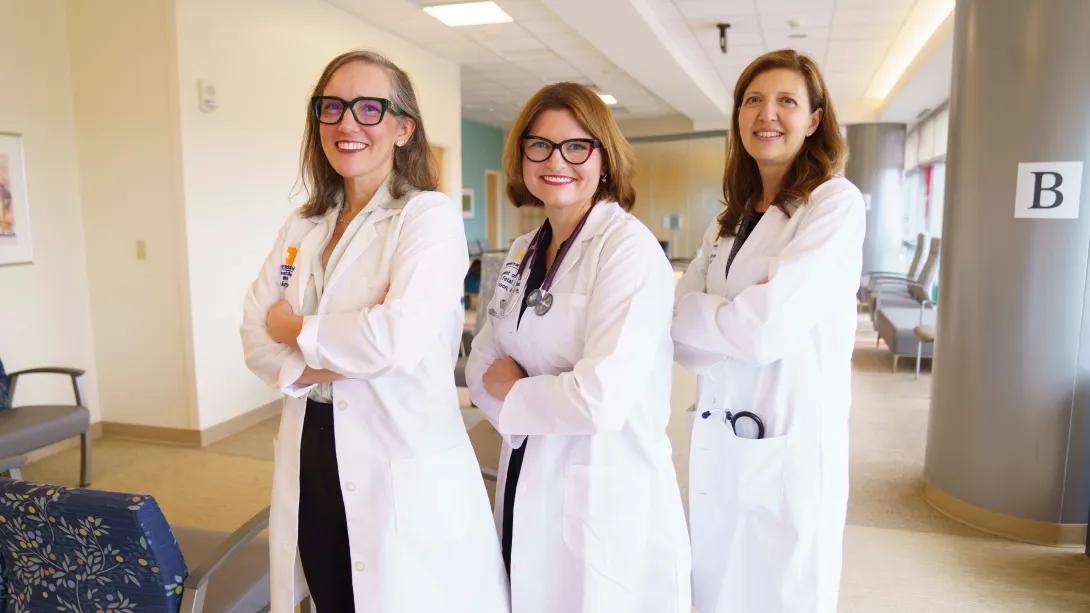
But the evidence is clear: complications like preeclampsia significantly raise the risk of future cardiovascular disease.
Many women have told us they didn’t just want to manage the immediate crisis.
They wanted to understand what it meant long term.
In our clinic, we start those conversations early and revisit them over time.
It’s about empowering women with knowledge, not frightening them.
What research is underway to reduce long term heart risk after complicated pregnancies?
Hesson: We’ve launched a randomized, placebo-controlled trial called Dapagliflozin for Cardiovascular Risk Reduction in the Postpartum Period of Hypertensive Pregnancies.
Dapagliflozin is already used in other high-risk populations to prevent heart failure and reduce cardiovascular death.
Our question is: Can we use it during a critical six-month window after a pregnancy complicated by hypertension to help the heart heal more effectively?
After pregnancy, especially one complicated by preeclampsia, the heart undergoes remodeling.
It can recover in a healthy way or it can heal in a way that leaves lasting vulnerability.
In earlier research, we developed a mouse model of preeclampsia.
When we gave this medication around the time of delivery, those animals had lower rates of heart failure later in life.
Now we’re translating that work from the lab bench to human patients.
We can’t wait 30 years to measure outcomes, so we’re looking at early indicators of whether the heart is healing normally.
This is also groundbreaking because we are not currently offering any approved medications specifically for long term cardiovascular prevention after preeclampsia.
We’re testing not just the science but whether this kind of preventive care is feasible and acceptable during the busy postpartum period.
You’re also studying postpartum weight and cardiometabolic health. Why?
The second study, called Obesity Management with Tirzepatide for Reduction of After-delivery Cardiometabolic Complications, looks at whether optimizing cardiometabolic health in the postpartum period can reduce long term risk.
We know that weight retention between pregnancies and excess weight gain during pregnancy are linked to future cardiovascular disease, especially when combined with complications like preeclampsia.
Cardiovascular disease is the number one killer of women and pregnancy plays a powerful role in shaping that lifelong trajectory. Pregnancy isn’t just a moment. It can be the start of a path toward long-term health or future disease.”
-Ashley Hesson, M.D.
This trial studies tirzepatide, a medication currently used for weight management. It’s about improving inflammation, metabolic health and the environment around the heart during that same six-month healing window.
Similarly to our other research, we designed this trial based on feedback from women who in focus groups told us they’re interested in these medications for both weight loss and to improve future pregnancy outcomes – as long as they can be provided in a way that acknowledges the challenges of the postpartum period.
For me, that’s critical.
Research shouldn’t just be about women’s bodies. It should be designed around their lives.
What have we historically overlooked about women’s heart disease after pregnancy?
Hesson: For decades, women were underrepresented in clinical trials.
The FDA only shifted its policy to actively include women in the 1990s.
When it comes to pregnancy, protective policies for babies, which are incredibly important, have sometimes unintentionally discouraged research aimed at benefiting mothers.
We’re trying to change that.
If someone is currently pregnant or has had a complicated pregnancy, what should they know right now?
Hesson: First: Your voice matters.
Second, know that cardiovascular disease is the biggest threat to women’s longevity.
It’s not acceptable for women’s concerns to be dismissed or minimized.
Don’t be afraid to ask your care team questions about how complications may impact long term heart risk and what you should monitor after delivery.
Most importantly, never worry alone.
Call us. Reach out.
These conversations don’t have to wait. You should be at the center of your own care.
Your heartbeat matters just as much as your baby’s.
It’s your heart that will carry you through all the years of loving and raising your child.
Sign up for Health Lab newsletters today. Get medical tips from top experts and learn about new scientific discoveries every week.
Sign up for the Health Lab Podcast. Add us wherever you listen to your favorite shows.

Health Lab
Explore thousands of health news & research stories by visiting the Health Lab homepage for more.
In This Story
Ashley M Bartell, MD, PhD, FACOG
Assistant Professor
Stay Informed
Want top health & research news weekly? Sign up for Health Lab’s newsletters today!
Featured News & Stories

4 ways to teach your teen safe driving habits

U-M-led consortium to receive up to $52 million in NIH funding to study why viral respiratory infections affect children differently

Depression in OBGYN residents needs more attention, study suggests
Better prenatal care data could help prevent maternal complications, experts say

Digital alerts support timely treatment decisions of critically ill cardiac patients