15 million Americans take supplements that may be toxic to the liver
A study discovers the breadth of consumption of herbal supplements, which were previously shown to be potentially toxic to the liver
1:33 PM
Author |
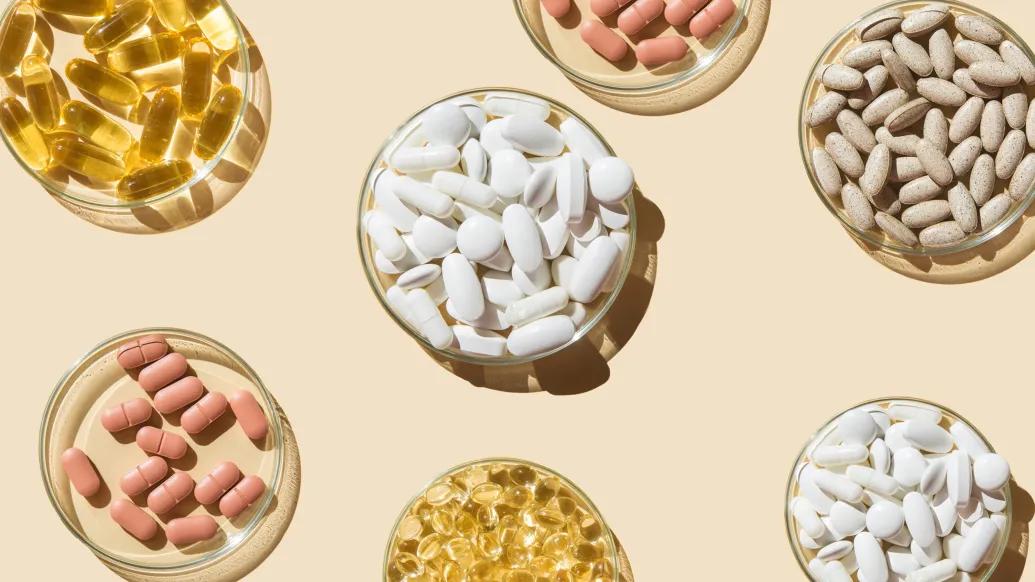
Millions of Americans consume supplements that contain potentially hepatoxic botanical ingredients, according to a study from University of Michigan researchers.
Over a 30-day period, 4.7% of the adults surveyed in the National Health and Nutrition Examination Survey conducted from 2017 to 2020 took herbal and dietary supplements containing at least one of the botanicals of interest: turmeric; green tea; ashwagandha; black cohosh; garcinia cambogia and red yeast rice containing products.
The resulting paper, “Estimated Exposure to 6 Potentially Hepatoxic Botanicals in U.S. Adults,” appeared in JAMA Network Open this month.
“Our interest started when we saw cases of liver toxicity from herbal and dietary supplement use in people enrolled into the ongoing NIH funded DILIN study,” said Alisa Likhitsup, M.D., M.P.H., a clinical assistant professor of medicine at U-M and lead author on the paper.
“But it was difficult to say how many people were using these supplements and why. The major finding here is the large number of Americans taking these products with an estimated 15 million adult Americans taking them on a regular basis.”
Prior research in the field had established the specific botanicals studied as potentially hepatoxic.
Supplements are of particular concern for the researchers for several interrelated reasons: lack of government regulation, insufficient attention in medical screenings, and frequent mislabeling.
“In a previous study, we found that there was a great deal of mislabeling of some of these products,” said Robert Fontana, M.D., Michigan Medicine hepatologist, professor of medicine and the study’s senior author.
“We performed analytical chemistry and found about a 50% mismatch between stated ingredients on the label and what they actually contained, which is quite alarming. If you buy a supplement and it says it has a certain ingredient, it's basically a coin flip if that’s true or not.”
Mislabeling is enabled by lack of regulation. And since their effects are not well understood, clinicians often will not ask patients what supplements they are taking.
“We weren't aware that so many people were taking these supplements,” said Likhitsup, who's also a transplant hepatologist.
“So, when doctors see patients in the office, they don't necessarily ask about supplement use or take into consideration their effects.”
In the studied population, the highest proportion of people consumed turmeric (3.46%), followed by green tea (1.01%), ashwagandha and black cohosh (0.38%), garcinia cambogia (0.27%), and red yeast rice products (0.19%).
Most users reported consuming the botanicals on their own and not on the advice of a doctor.
The most common reason given for taking the botanicals was to improve or maintain health.
Of the turmeric users, 26.8% consumed the products specifically for supposed benefits for joint health or arthritis, while 27.2% of the green tea users were hoping to improve their energy levels.
The majority of the garcinia cambogia users hoped it would help them lose weight.
One impetus for this research is the growth of herbal and dietary supplements industry.
The paper notes that there are more than 80,000 unique supplement products available for purchase worldwide and that supplement sales surpassed $150 billion in the United States in 2023, a figure that rivals the combined sales of prescription drugs.
Another study had found a 70% increase in liver transplants due to injury caused by supplements from 2010-2020, compared to 1994-2009.
The JAMA Network Open-published study was not able to establish any kind of causal relationship between consumption of the six botanicals and liver injury since it was intended to assess supplement exposure in the general U.S. population.
Given the lack of regulation, however, the researchers still hope to make clinicians and patients aware of just how much is still unknown about these supplements.
“We're not trying to create alarm,” Fontana said.
“We're just trying to increase awareness that the over-the-counter supplements people are taking and buying have not been tested nor necessarily proven to be safe.”
Additional authors: Vincent L. Chen, M.D., M.S.
Michigan Research Cores: Informatics, Statistics, and Computation
Paper cited: “Estimated Exposure to 6 Potentially Hepatoxic Botanicals in US Adults,” JAMA Network Open. DOI: 10.1001/jamanetworkopen.2024.25822
Sign up for the Health Lab Podcast: Add us on Spotify, Apple Podcasts or wherever you get you listen to your favorite shows.

Health Lab
Explore thousands of health news & research stories by visiting the Health Lab homepage for more.
Media Contact

Public Relations
Department of Communication at Michigan Medicine
In This Story
Robert John Fontana, MD
Professor
Stay Informed
Want top health & research news weekly? Sign up for Health Lab’s newsletters today!
Featured News & Stories
Study outlines a new framework for direct cell reprogramming

New insight into how lipodystrophy can affect overall health
FDA-approved drug offers hope for patients with polycythemia vera, a rare bone marrow disorder
Engineered nanoparticles sensitize gliomas to radiotherapy

Who’s at risk for painful periods?