10-year-old “Swiftie” makes progress after septic shock
Kennedy was one of “the sickest kids in the hospital”, recovering from a flesh eating bacteria that required eight surgeries. Since then, she's made great strides with the help of her care teams and Taylor Swift’s music
5:00 AM
Author |
When Meghan Mayer’s family came down with influenza B during spring break, she thought the four of them would spend a restful week together on the couch, celebrate Easter and then return to their regular lives.
Instead, her 10-year-old daughter Kennedy would become severely septic—something that occurs in 70,000 to 100,000 children each year in the United States.
After a week of typical flu symptoms, the worst seemed to be in the rearview mirror for the entire family on Easter Sunday.
But that night, Kennedy started experiencing a fever, chills, vomiting and complained of pain and pressure on her eye.
She woke up the next morning with swelling in her eye, prompting a pediatrician visit.
By the time she got to the doctor, Kennedy’s eye had become black and blue and even more swollen, signaling an infection.
She was directed to go straight to the emergency room at a nearby hospital where things would quickly escalate.
“Her blood pressure was around 70 over 40, her heart rate was around 155,” Mayer said.
“I think they realized it wasn’t an issue with the machine, that this was really her stats. They rushed us back to the children's emergency department and there were probably seven or eight nurses and doctors already waiting for us. It was a really scary moment.”
After around 40 minutes of taking labs, the doctors told Mayer that Kennedy was in septic shock and needed to be admitted to the pediatric intensive care unit.
“I had tried to hold it together up until like that point because we didn't know what was going on and it was scary,” Mayer said.
“We were trying to be brave for her but when they said it was sepsis, it was hard to hold it in.”
Erin Carlton, M.D., M.Sc., a pediatric intensivist and sepsis researcher at University of Michigan Health C.S. Mott Children's Hospital, says respiratory illnesses and infections are the most common cause of sepsis in children.
“I think of sepsis as the body’s overwhelming and sometimes life-threatening response to an infection,” Carlton said.
“One of the things we don’t understand is why sepsis happens to some people and doesn’t happen to others.”
Kennedy’s condition was so severe that her medical team worried she may require a life support technology called ECMO.
It was recommended that she be transferred to Mott, where they had an ECMO machine for children.
Once at Mott, her medical team made another discovery, necrotizing fasciitis, a flesh-eating bacterial infection in her eye.
At that time, she was in multiple organ failure as well and required surgical intervention.
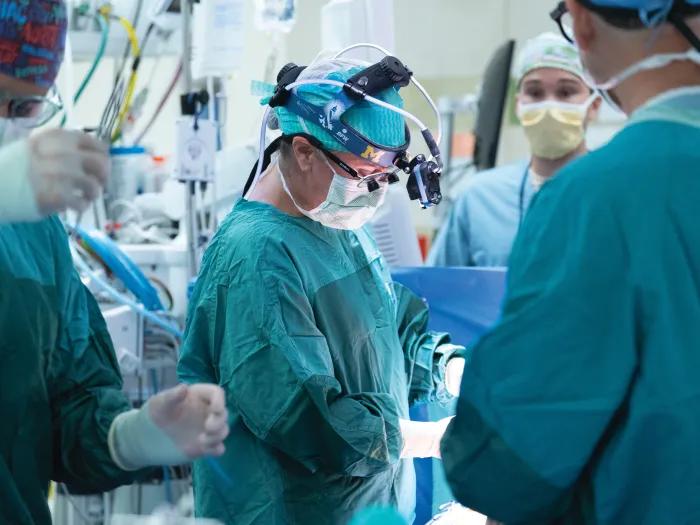
Kristen Ann Smith, MD., M.S., the medical director of the pediatric intensive care unit at Mott, took over her care once she was transferred and described the process as being “second-by-second management.”
“When I began treating her, she was probably the sickest child in the hospital at that time and maybe the sickest kid in the state,” Smith said.
When I began treating her, she was probably the sickest child in the hospital at that time and maybe the sickest kid in the state." Kristen Smith, M.D., M.S., FAAP
“Her fingers and toes were purple because they weren’t getting enough blood flow that had enough oxygen in it because her blood pressure was so low.”
As the team was preparing to take Kennedy back for her first surgery, her mother mentioned to the nurses that her favorite song is Taylor Swift's “Wonderland”.
The team made sure that was playing on their way back to help calm Kennedy’s nerves.
Kennedy takes after her mom and has been a lifelong “Swiftie” and even had the theme of her 10th birthday party based on her favorite album “1989.”
Although she wasn’t sure if she could fully understand her, Mayer told her daughter, “You’ve got to come back to us, and when you do, we’re going to see Taylor (Swift). I don’t care what it takes.”
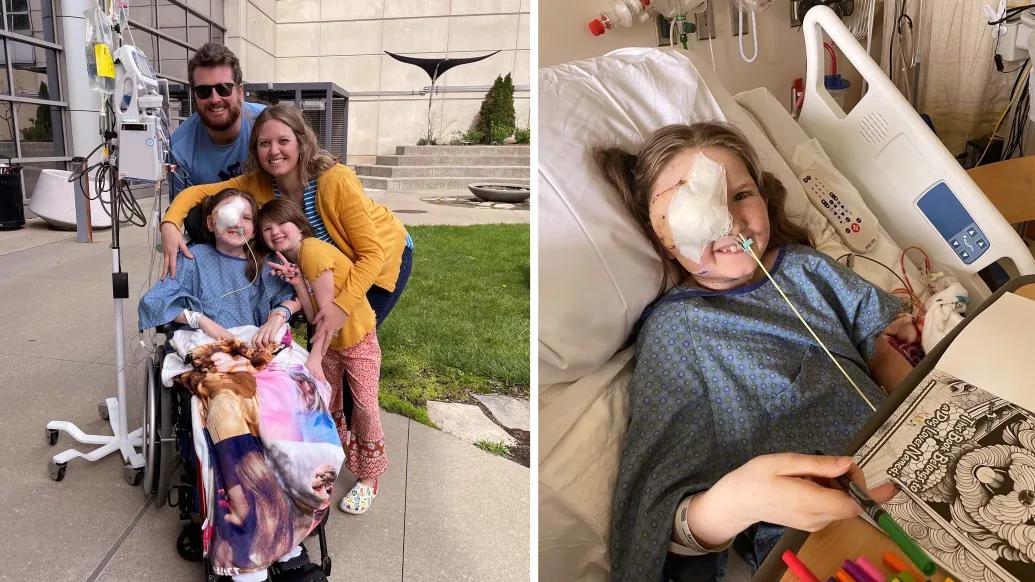
Kennedy pulled through eight surgeries to remove the bacteria and reconstruct the area around her eye affected by the necrotizing fasciitis.
She’s adjusting to her new scar and even included it in a photo she drew for her mom for Mother’s Day.
Now they’re working through Kennedy’s next hurdle.
Because of the lack of blood flow to her lower extremities, she will require the amputation of her toes.
To save as much of the toes and maintain as much mobility as possible, her medical team recommended waiting for an auto amputation, meaning the body will eventually automatically amputate the dead tissue.
“Being a 10-year-old girl who was super active and healthy before this, that was really hard for her to hear,” Mayer said.
“I know she's still trying to process all of that, but I think processing it and knowing it's going to happen is one thing. I think when it starts to happen, that's going to be a whole other experience.”
Still in recovery, Kennedy works hard in physical and occupational therapy to regain her strength and fine motor skills and has already made tremendous progress.
Her therapists have even incorporated Taylor Swift and her music into her sessions.
The Mayers have turned their sights to sepsis awareness advocacy by making Kennedy’s story public in the hopes that if other parents notice similar symptoms in their children, they will also seek immediate help.
Both Smith and Carlton emphasized the importance of monitoring symptoms, and most importantly, having a good relationship with the child’s pediatrician and knowing when it’s time to seek their help.
“Some of the symptoms of sepsis can be really hard to distinguish between a general cold or an infection that is going to run its course without any complications and this is really where a relationship with your pediatrician comes into play,” Smith said.
“As pediatric health care providers we are trained to look for and understand that difference.”
Sign up for Health Lab newsletters today. Get medical tips from top experts and learn about new scientific discoveries every week by subscribing to Health Lab’s two newsletters, Health & Wellness and Research & Innovation.
Sign up for the Health Lab Podcast: Add us on Spotify, Apple Podcasts or wherever you get you listen to your favorite shows.

Health Lab
Explore thousands of health news & research stories by visiting the Health Lab homepage for more.
Media Contact

Public Relations
Department of Communication at Michigan Medicine
In This Story

Erin Carlton, MD, MSc
Clinical Associate Professor
Stay Informed
Want top health & research news weekly? Sign up for Health Lab’s newsletters today!
Featured News & Stories

15 years of data will help uncover how flu spreads—and how to reduce its impact

Rabies is on the rise: Experts offer advice

E-Bikes are everywhere, but most parents say they don’t know enough about them

C.S. Mott Children’s Hospital named No.1 children’s hospital in Michigan by U.S. News & World Report
Talent show brings joy to kids at children’s hospital