10 tips for cancer patients heading into their first infusion treatment
Cancer survivors and nurses explain what to expect
5:00 AM
Author |
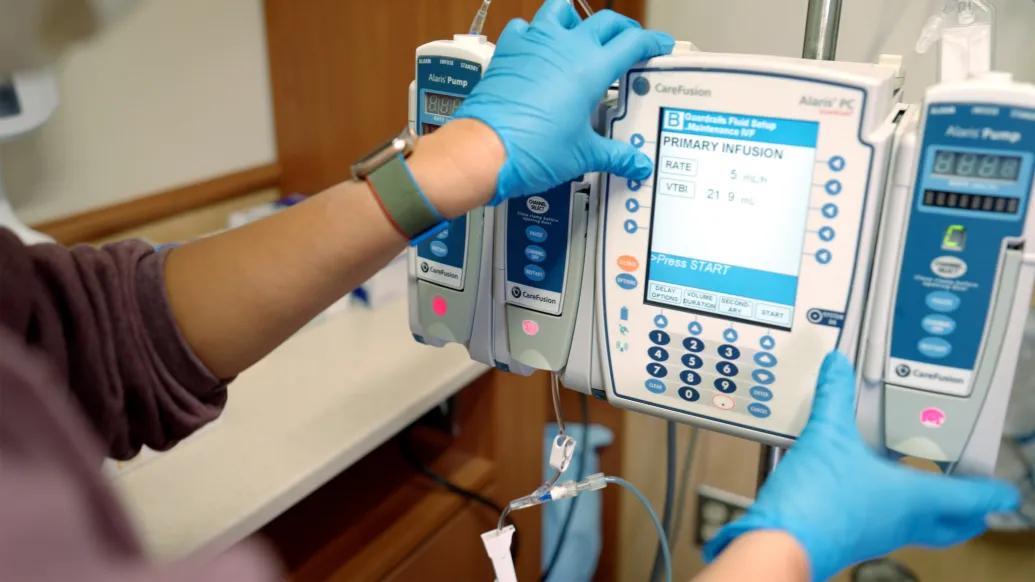
For patients with cancer receiving infusion therapy for the first time, the process may seem daunting.
Cancer survivors who received treatment at the University of Michigan Health Rogel Cancer Center and infusion nurses demystify the experience by providing 10 helpful things to know ahead of time.
10 tips for cancer patients heading into their first infusion treatment
1. Bring a driver
“I would recommend having a driver your first few times. You don’t know how you’re going to feel after. You might be a little nervous going in and you might feel a little rough coming out,” said Steve Keating, an infusion patient at Rogel Cancer Center.
Even after patients adjust to receiving infusions and feel comfortable driving themselves, Kierstyn Bell, R.N., a nurse at Rogel Cancer Center, recommended patients have someone “on call” in case they need a driver that day.
2. Hydration is key
Patients who will receive a peripheral IV, or an IV in their arm, should drink plenty of water the day before.
Hydration increases blood volume, making veins more prominent and easier to access.
Many infusion treatment drugs are also dehydrating and drinking plenty of water can help counteract these effects.
“Drinking at least 64 ounces of water the day before would be helpful and even more if you can tolerate it,” said Erin Bodine, R.N., a nurse at Rogel Cancer Center.
3. Expect a wait time
After labs are processed, there’s often a wait between check-in and beginning infusion.
“It’s all for the matter of safety. We’re making sure the drug is right for you and that you’re able to get it now,” Bodine said.
The length of the infusion itself depends on the drug regimen. Some infusion treatments last only 30 minutes while others can last up to eight to 10 hours.
4. Get your labs done beforehand
Patients can get their blood drawn to run the necessary labs up to 48 hours prior to treatment to speed up the process on the day of infusion.
If labs are drawn the day of infusion, expect about an hour to get labs drawn and an hour minimum for the labs to be processed.
5. Wear loose fitting layers
Wearing loose fitting clothing helps nurses to easily access the port or veins they need during the infusion process.
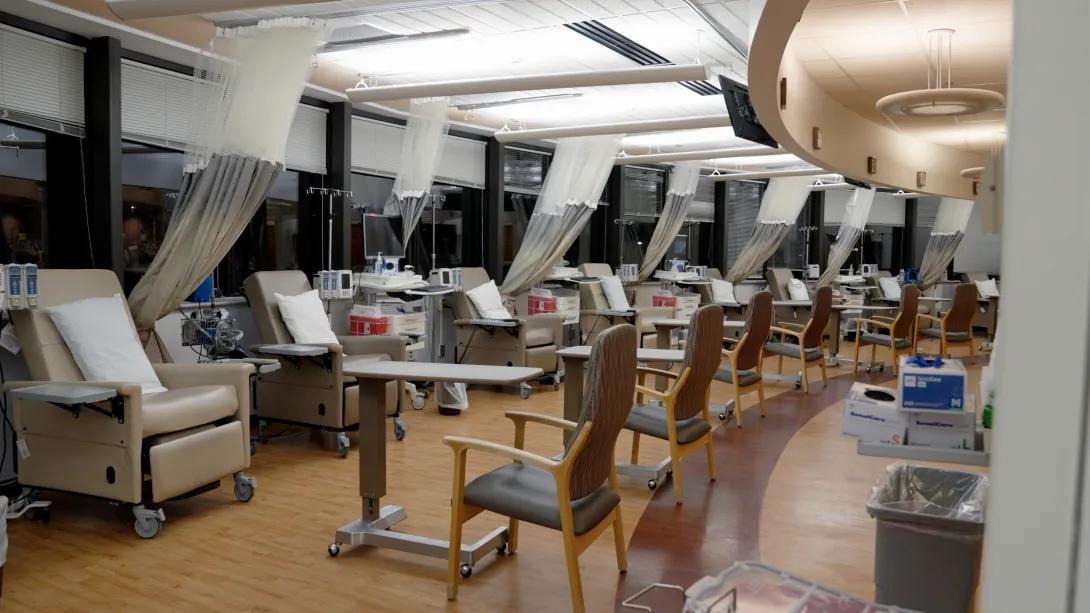
It’s useful to wear layers because the temperature can vary in the infusion area. Nurses can provide warm blankets if you get cold.
6. Come prepared
When preparing for a long day of an infusion treatment, bring snacks, entertainment and any medications needed during the timeframe.
Patients can order meals, but it often takes at least an hour for food to arrive. Individually packaged snacks like a granola bar, chips or trail mix are good to have on hand.
For entertainment, bring a tablets with headphones to watch movies, do crossword puzzles, read a book or even bring board games to play
7. Prepare for chemo brain
“Chemo brain is one thing that you can’t understand until you understand it,” Keating explained.
“Your thoughts get foggy, and that’s only the tip of the iceberg. Your body is just going through a lot, and your brain is going through even more. It’s going to take a toll,” he added.
Trina Daniels, an infusion patient at Rogel Cancer Center, suggests taking notes to cope with brain fog.
“There were times when my husband asked the questions that I needed to ask during appointments because I could not remember them. Just write down anything that comes to mind ahead of time,” Daniels said.
SEE ALSO: 7 Ways to Fight Cancer Fatigue
8. Be honest with family and friends
Although difficult at times, Keating and Daniels urge infusion patients to let their friends and family know what they are going through.
While undergoing infusion therapy, Daniels created a blog. This allowed her to update family and friends at her own pace without having to follow up with each person individually.
“The support from the people around me was tremendous because I let them in, and I did it in a way that I could manage relationships at that time,” Daniels said.
“If you’re not feeling good, you just need to be honest, and say ‘I’m not up to it right now, but can we try it later,’” Keating said.
“When you’re feeling up, go spend time with somebody. It’s a roller coaster and you want to enjoy the parts of it that you can,” he added.
SEE ALSO: 7 Ways to Support a Friend with a New Cancer Diagnosis
9. Balance work with infusions
Once patients understand how their bodies react to treatment, they can balance work with infusions.
“I was able to keep working remotely, and I did that even from the infusion chair. Patients that have work from home jobs should be able to find their rhythm and make this work,” Keating said.
Daniels took off from work on the days she received infusions and worked from home the other four days of the week.
“My job was gracious to me at that time because just going through this entire process, I was tired. The fatigue was real,” said Daniels.
Infusion treatments can be scheduled around work. Shorter treatments can start after 5 p.m. or 6 p.m. and there are appointment slots on Saturdays.
10. Use patient resources
The Rogel Cancer Center provides patient services including art therapy, music therapy, appointments with social workers and spiritual care.
“I’m not an artist. But I did find that process of art therapy extremely rewarding in terms of bringing me peace. It helped me to focus on the moment,” said Daniels.
“Early on, my wife and I realized we didn’t know how to broach the subject with our children. It’s not a discussion we ever really planned to have,” said Keating.
“We were fortunate that they made a counselor available to us. She helped us work through how to manage my diagnosis in my head and how to share it with family and friends,” he added.
Patients can reach out to nursing staff at any time to discuss their treatment plan, clarify questions or help them locate any additional services they may need.
For more information and to view the infusion area space ahead of time, patients can watch the full Rogel Cancer Center Infusion Video Series on YouTube.

Health Lab
Explore thousands of health news & research stories by visiting the Health Lab homepage for more.
Media Contact

Public Relations
Department of Communication at Michigan Medicine
Stay Informed
Want top health & research news weekly? Sign up for Health Lab’s newsletters today!
Featured News & Stories
What’s the latest on 7-OH and kratom availability and addiction care?

Better prenatal care data could help prevent maternal complications, experts say
Many hospitals still don’t do enough to prevent UTIs from catheters
Nerf gun accident causes retinal detachment in pediatric patient

Rabies is on the rise: Experts offer advice