
Let's talk about PrEP
More young adults than ever take HIV-prevention medication, but gaps remain
5:00 AM
This week on Health Lab, we showcase a recent study that examines the trends in use of pre-exposure prophylaxis, or PrEP, HIV-prevention medication. suggest more effort is needed to boost consistent use. Read the full article on our website.
Transcript
Host:
Welcome to Health Lab, your destination for news and stories about the future of healthcare.
Today, more young adults than ever are taking HIV-prevention medication, but gaps remain. Trends in use of pre-exposure prophylaxis medication, also known as PrEP, suggest more efforts are needed to boost consistent use.
PrEP, when taken consistently and as prescribed, can reduce the chances of acquiring HIV through sex by 99%.
Currently, eight times more young adults in America take medication to protect them from contracting HIV than they did a decade ago, according to a recent study.
But even with this positive news about increasing use of PrEP, the study also suggests that health care providers and public health agencies could do more to promote the consistent use of these medications.
The study, done by a team at the University of Michigan Medical School, uses national pharmacy data to look at prescriptions for oral PrEP from 2016 to 2023 among people ages 18 to 25.
The study is published in the Journal of General Internal Medicine.
At the start of the study period, 26 of every 100,000 young adults in the United States filled a prescription for PrEP, and that number rose to more than 208 of every 100,000 by the end of 2023.
Prescription dispensing was lower for those ages 18 to 21 than it was for those ages 22 to 25.
However, the length of time that a person kept refilling their prescription dropped by more than two weeks during this same time frame.
This could suggest inconsistent use of PrEP, or trouble keeping up with the regular appointments and testing needed to continue the medication.
This is the first large study to focus only on this age group, which has an especially high risk of HIV transmission. It’s also an age group that doesn’t see the doctor often, notes Nina Hill, M.D., the lead author of the study.
Dr. Hill is a general internist and pediatrician at U-M, a National Clinician Scholar at the U-M Institute for Healthcare Policy and Innovation, and a postdoctoral fellow in the Susan B. Meister Child Health Evaluation and Research Center.
“This is a patient population we often neglect in health care, because we we don’t think about them belonging to pediatric care or adult care, and their stage of cognitive development means they underestimate their STI risk in general -- yet they’re one of the highest risk groups for a new diagnosis of HIV,” she said.
She goes on, “We’re encouraged to see more prescribing over time, but the question remains: are we getting it to the highest risk patients?”
Dr. Hill notes the number of steps needed for a patient to get to consistent use of PrEP:
- Getting screened by a provider or online screening tool to determine if PrEP is appropriate
- Seeing a provider for the initial exam and tests for HIV and other STIs
- Receiving and filling a prescription for PrEP
- Keeping up with regular tests for kidney function, HIV and other STIs every three to six months
Even patients who decide to take their PrEP pills on an episodic rather than a daily basis – such as before time periods when they will be sexually active with new partners, for example – those patients still need to have consistent access to the medication.
Either way, she says, it’s important for young adults, their health care providers, and the adults they trust most to discuss their sexual health with, to be aware of the availability of PrEP and its power to prevent HIV.
In all, Dr. Hill and her colleagues looked at 1.45 million prescriptions dispensed to nearly 240,000 young adults who had an average age of 22. 87% of young adults in the study were male, but Dr. Hill notes that women are also at risk for HIV and might be eligible for PrEP.
Just over a third of the young adults taking PrEP lived in the southern United States, an area where HIV transmission is particularly high.
The rate of PrEP being dispensed in the American south started at the lowest volume, but rose the fastest in this same region during the study period.
The study covers a period when the first PrEP medication, introduced in 2012 under the brand name Truvada, also became available as a generic drug in 2020, and a second oral PrEP option called Descovy went on the market in 2019.
Though an injectable form of PrEP received approval in 2021, few young adults received this treatment, so they were excluded from the study.
More than 70% of the prescriptions given during the study period were for Truvada or its generic equivalent.
Dr. Hill and her colleagues also looked at what kind of health care provider prescribed PrEP to each person who filled a prescription.
The findings show that nurse practitioners accounted for 39% of prescriptions, family medicine or general practitioners accounted for 22%, and internal medicine physicians and physician assistants accounted for 14% and 11%, respectively.
Although emergency medicine physicians accounted for a very small percentage of prescriptions overall, the number of prescriptions written by them increased tenfold during the study period.
PrEP has been recommended since 2019 by the U.S. Preventive Services Task Force for adolescents and adults who have an increased risk of acquiring HIV.
All individuals should be screened for HIV at least once in their lifetime between the ages of 15 and 65.
Under the Affordable Care Act, most insurance programs must make PrEP and HIV screening available to patients at no cost if they meet U.S. Preventive Services Task Force criteria.
However, the status of HIV screening and prevention coverage under the Affordable Care Act is the subject of a case called Braidwood v. Kennedy that was recently heard before the U.S. Supreme Court. A ruling in this case is expected soon.
You can learn more about PrEP and HIV prevention at HIV.gov, and a link will be included in the show notes for this episode.
A quick reminder that all Health Lab content including health news, best practices and research insights are for informational purposes only and are not a substitute for professional medical guidance. Always seek the advice of a health care provider for questions about your health and treatment options.
For more on this story and for others like it, visit michiganmedicine.org/health-lab where you can also subscribe to our Health Lab newsletters to receive the latest in health, wellness and medical research information to your inbox each week. Health Lab is a part of the Michigan Medicine Podcast Network, and is produced by the Michigan Medicine Department of Communication. You can subscribe to Health Lab wherever you listen to podcasts.

Health Lab Podcast
Listen to more Health Lab podcasts - a part of the Michigan Medicine Podcast Network.
Featured News & Stories
AI, Well-Being and the Human Connection

The Care Ecosystem: Supporting People Living with Dementia and Their Families
Beyond the White Coat: The Med Student Tradition Behind Michigan’s Smoker
Caregiver Resources: Reduce the Risk of Burnout
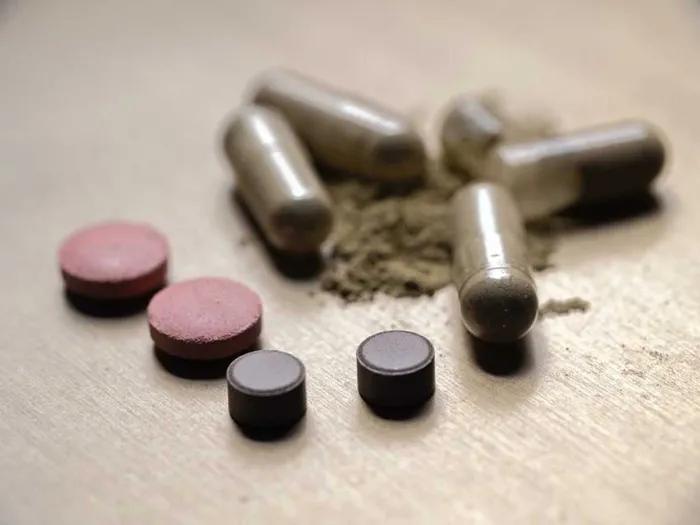
What’s the latest on 7-OH and kratom availability and addiction care?
