“Eggsplosions” Are Not All They're Cracked Up to Be on TikTok
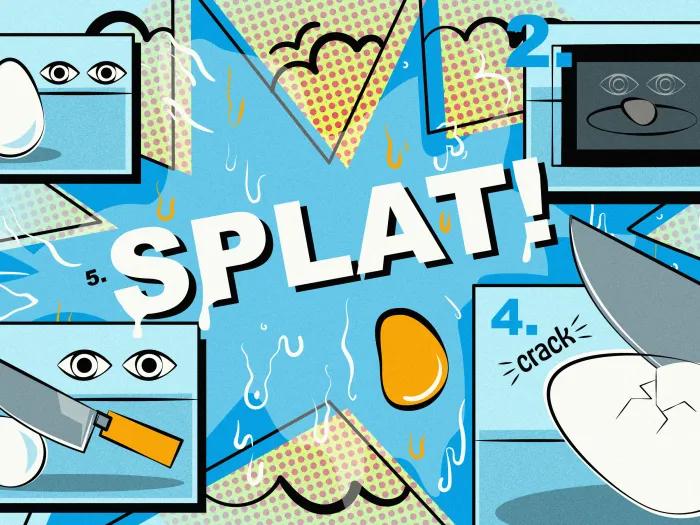
“Eggsplosions” and eyes don’t mix
Microwaving hard-boiled eggs is one of the latest TikTok trends that can harm your eyes.
Transcript
Host:
Welcome to Health Lab, your destination for news and stories about the future of healthcare. Today: “Eggsplosions” Are Not All They're Cracked Up to Be on TikTok. “Eggsplosions” and eyes don’t mix. Microwaving hard-boiled eggs is one of the latest TikTok trends that can harm your eyes.
Putting a hard-boiled egg in the microwave is making users popular on TikTok, but that fame could come with a hefty price.
The trend on the social media app involves microwaving hard boiled eggs, then slicing them so they explode.
Grace Wang, M.D., P.h.D, an ophthalmologist at Michigan Medicine, says it can be dangerous when this explosion happens.
The flying egg debris and steam can impact a large area, and possibly injure people in its vicinity.
“The hot steam and the hot egg along with the force of the explosion can really hit you in the face and cause burns, and not just to your skin. It can burn your eyes and cause injuries,” Wang said.
These explosions typically cause thermal injury to the eyes, Wang says. This means damaged tissue, peeling skin and scars on the eyes, all of which can cause a lot of pain. It can also harm the cells that assist in repairing tissue on the front of the eye.
Sometimes, injuries can be severe enough to require medical treatments or put people at risk of further infection. In the worst cases, people can experience long term vision issues from scarring.
These “eggsplosions” have been well documented even before TikTok. It’s not clear why the trend became popular on the app, but Wang says social media fame may be part of the allure.
“I think a reason for doing it is partly curiosity about the sound it makes, plus it’s something you can challenge your friends to do,” Wang said.
“These videos can get a lot of views or clicks online because the explosion is an exciting thing that happens.”
Wang says anyone who tries the trend, or those who accidentally microwave a hard-boiled egg without knowing it can explode, should seek medical attention if they are injured.
However, Wang recommends steering clear of this or any other trend that can cause injuries, regardless of any potential social media clout.
“Don't try it, because it's not worth it. You can get a lot of painful injuries that could alter your face, your appearance and your vision,” she said.
“I think it's good for families, if they find out about these trends, to talk about them with their children. Kids are often seeing these videos and how much attention they can get, but they're not necessarily seeing the consequences.”
For more on this story and others like it, visit michiganmedicine.org/health-lab. Health Lab is a part of the Michigan Medicine Podcast Network, and is produced by the Michigan Medicine Department of Communication. You can subscribe to Health Lab wherever you listen to podcasts.

Health Lab Podcast
Listen to more Health Lab podcasts - a part of the Michigan Medicine Podcast Network.
Related
“Eggsplosions” and eyes don’t mix
Featured News & Stories
Beyond the White Coat: The Med Student Tradition Behind Michigan’s Smoker

Patient with retinitis pigmentosa receives new hope at Kellogg’s low vision clinic
How to improve mental health safety on social media – not just for young people
Beyond the White Coat: Global & Local Health Experiences
A new clue for aging eyes