Well Aware with Michigan Medicine

Well Aware: Artificial Intelligence in Medicine

Artificial intelligence (AI) has the potential to revolutionize health care and will be a part of many future Well Aware topics. Learn more about AI and how Michigan Medicine is integrating these powerful, new tools safely, ethically, and equitably.

For More Information

Start here
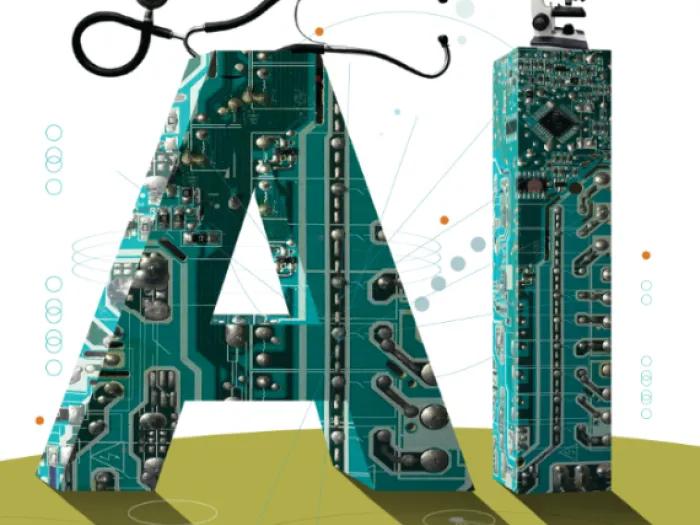
Illustration of giant block letters spelling AI. On top of the letters sit a stethoscope and a microscope. The letters are covered with computer parts and cast a long shadow.

A crash course in AI

Here, you’ll find a broad overview of AI, including a glossary of terms, the highest priorities for the use of AI at Michigan Medicine right now, our response to ethical dilemmas, a handful of exciting projects our researchers are working on, and faculty perspectives on what AI is not good at yet.

Read full story

Deep Dive

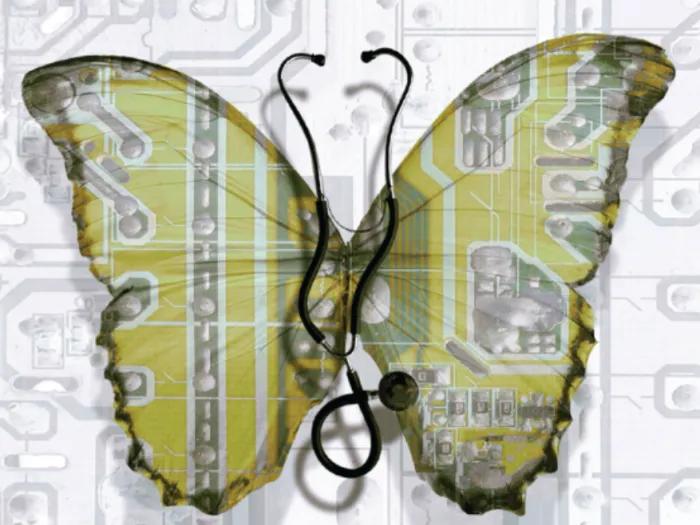
Illustration of a butterfly with green wings overlaid on abstract computer parts. Where the butterfly's body and antennae would be, there is a stethoscope.

How data can revolutionize medicine — and the world

In this podcast, Geoffrey Siwo, Ph.D., assistant professor of learning health sciences, talks about AI in the arc of human history and touches on everything from the challenges of safety in self-driving cars to the exciting possibility of building digital models of patients that would allow us to test the efficacy of various treatments.

Listen to podcast

AI will serve as our future personalized digital assistant. It won’t replace clinicians and researchers; if used responsibly, it will enhance our work as well as our ability to teach and learn.
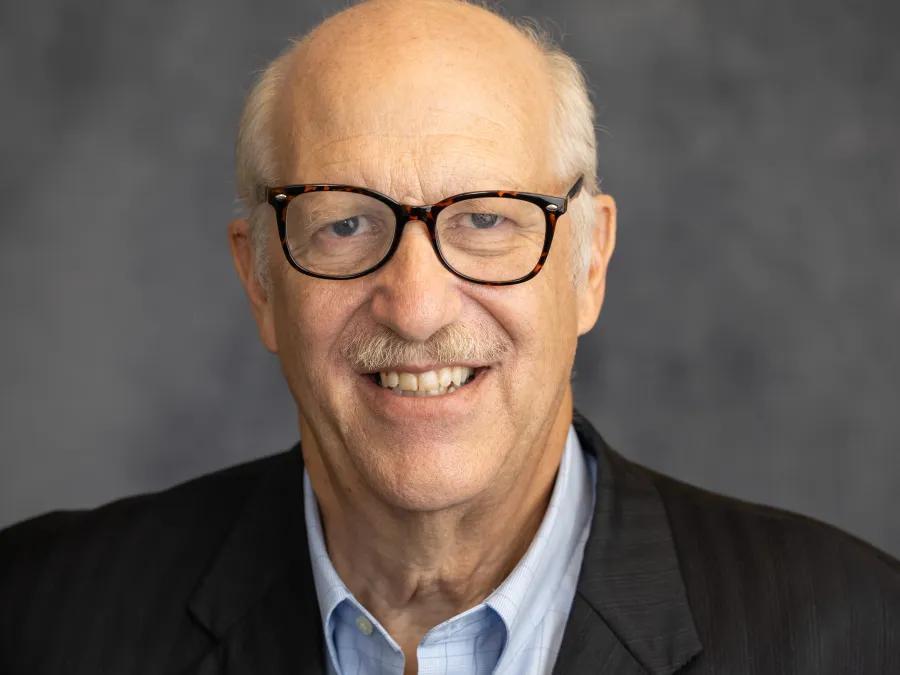
Brian Athey, Ph.D.
Michael Savageau Collegiate Professor, Chair of the Department of Computational Medicine and Bioinformatics
Brian Athey
Minding Memory with a microphone and a shadow of a microphone on a blue background
Minding Memory

Identifying Dementia from EHR Data

In 2009, the Health Information Technology for Economic and Clinical Health Act, wow, that's a mouthful, more commonly known as the HITECH Act, spent billions to promote the uptake of electronic health records by US hospitals. Fast forward more than a decade later, and now approximately four out of five healthcare institutions have electronic health record systems in place that integrate clinical notes, test results, medications, diagnostic images, et cetera. The adoption of EHR systems into healthcare introduces new and exciting opportunities to extract information that can be used to augment other types of data for research. As you might imagine though, it can be tricky to pull out meaningful information from the text of clinical notes. In this episode, we'll speak with a University of Michigan researcher, Dr. Vinod Vydiswaran, who's been developing methods to identify dementia from EHR data.
Hand Finger Pointing Gears Machine
Health Lab

AI can predict certain forms of esophageal and stomach cancer
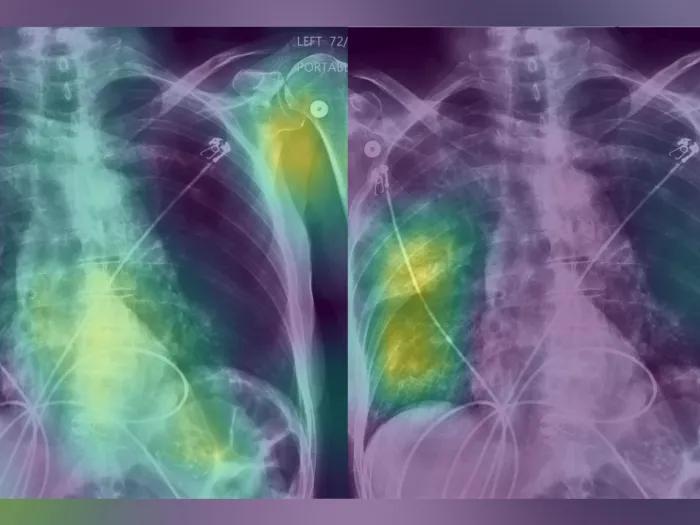
AI can predict certain forms of esophageal and stomach cancer Michigan Medicine study says.
x-ray rib lung purple
Health Lab

Clinicians could be fooled by biased AI, despite explanations

U-M study shows accurate AI models improved diagnostic decisions, but biased models led to serious declines
red hair woman looking at screen of computer in white coat
Health Lab

What's the impact of predictive AI in the health care setting?
Models built on machine learning in health care can be victims of their own success, according to researchers at the Icahn School of Medicine and the University of Michigan.
cancer cell
Health Lab

Artificial intelligence predicts genetics of cancerous brain tumors in under 90 seconds

A new study finds AI-based diagnostic screening system, DeepGlioma, detects genetic mutations in brain tumors in under 90 seconds. Streamlining glioma diagnosis and treatment.
cells in pink and teal
Health Lab

Using the power of artificial intelligence

A new software tool, called LabGym, helps researchers across the life sciences more efficiently analyze animal behaviors.

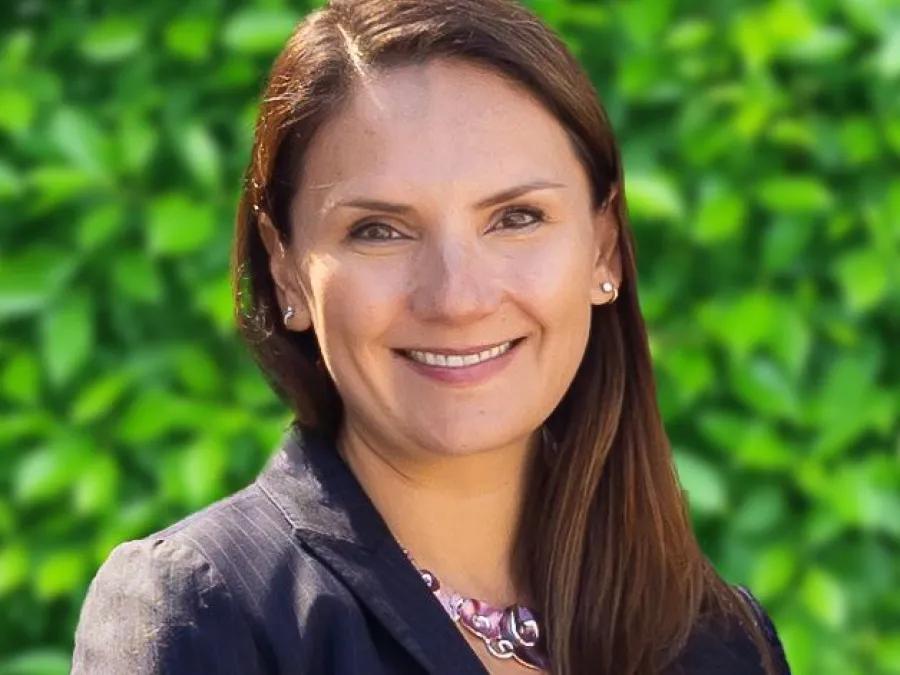
AI is not going to cure the ills of our society. Any bigotry, biases, and blind spots will only be reflected and compounded, and hid beneath the guise of ‘algorithmic neutrality’.
Kayte Spector-Bagdady, J.D., M.B.E.
Interim Co-director of the Center for Bioethics and Social Sciences in Medicine, Assistant Professor of Obstetrics and Gynecology
Kayte Spector-Bagdady

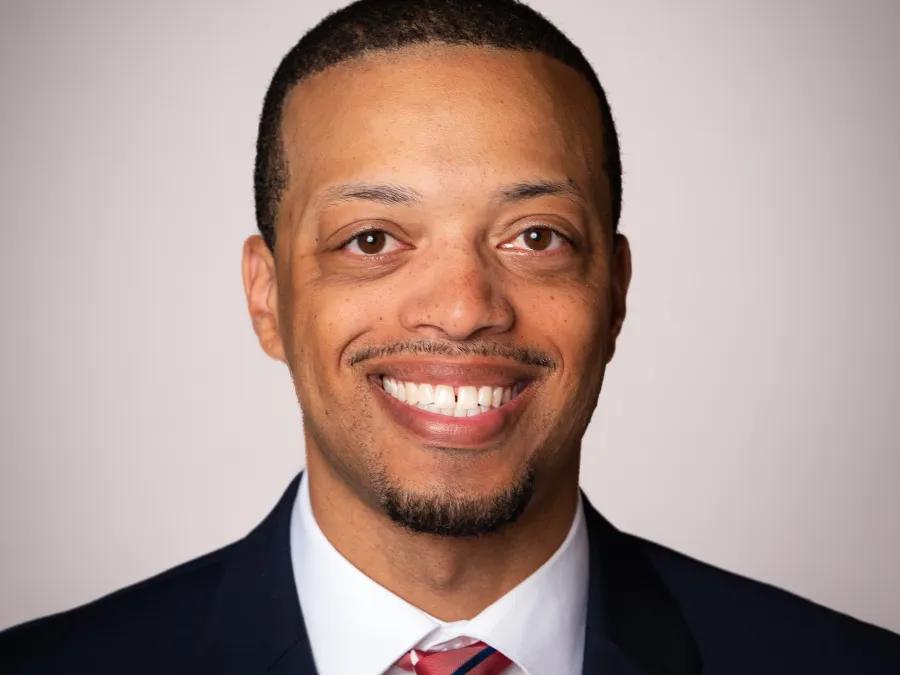
The end goal is not for every clinician to be a computer programmer. Instead, clinicians should be able to apply outputs of AI models in an effective way. They need to be able to use AI as a tool and, in some cases, as a teammate.
Cornelius James, M.D.
Assistant Professor of Learning Health Sciences, Internal Medicine, and Pediatrics
Cornelius James
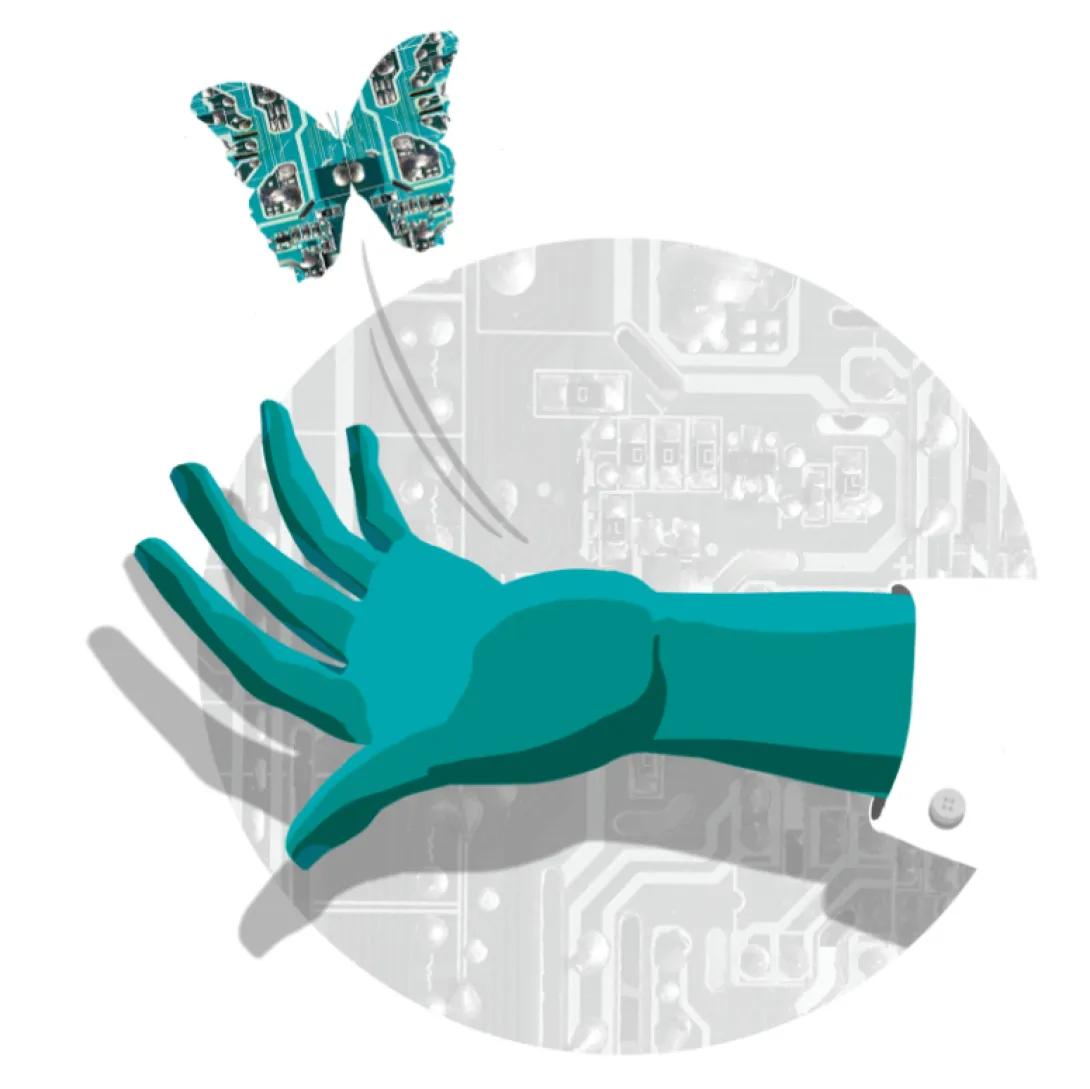
Illustration of a hand releasing a butterfly. The hand is teal and set against a gray backdrop of old computer parts. The butterfly is teal and overlaid with images of computer parts.

If you are interested in fueling the next generation of medical advancements, contact Melissa Lynch at [email protected] to learn about opportunities at Michigan Medicine.

Questions

We appreciate your interest in this topic. You can send questions and suggestions for new topics with this submission form. Although we can’t respond to every message, we do read each one. Thank you!