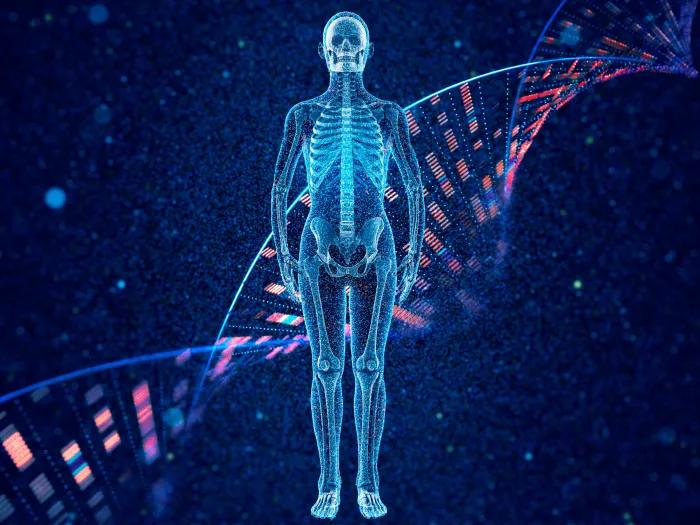
The Bioethics of Data and A.I. in Healthcare
An Interview with Professor Kayte Spector-Bagdady
10:30 AM
Season four of The Fundamentals is here, and we're celebrating by doing a special two-episode release to launch the season!
On this episode of the Fundamentals, we talked to Professor Kayte Spector-Bagdady, the George E. Wantz Professor of Bioethics, about the use of massive amounts of data, artificial intelligence, and more.
Be sure to check out our second launch episode and our entire back catalog on The Fundamentals website, or on your favorite podcast player.
Transcript
Kelly Malcom:
Welcome to The Fundamentals, a podcast where we explore biomedical research here at Michigan Medicine. Research is fundamental to University of Michigan's mission to improve the world. On each episode, we'll meet the people behind the research, learn more about their fields and the fundamental questions they are trying to answer. I'm Kelly Malcolm, a science writer and communication strategist for the University of Michigan Medical School. This season we'll start by explaining a little bit of the history behind the questions our experts are asking and get a glimpse into the future of healthcare.
If you're listening to this in 2026, you know artificial intelligence or AI has an image problem. With the explosion of generative AI tools like Claude and ChatGPT also comes a flood of skepticism. One of the original AI skeptics was born way back in 1815 and made incredible contributions to the field of computer science before her untimely death at age 36 from cancer. Ada Lovelace, daughter of the renowned poet, Lord Byron, was a mathematician who wrote the first algorithm for the so called analytical engine and in doing so became known as the first computer programmer. She also offered one of the most famous objections about computers stating that they are incapable of originality and of autonomous thinking. She said, "The analytical engine has no pretensions to originate anything. It can do whatever we know how to order it to perform." While the sheer computational power of today's algorithms might bring her objection into question, many people wonder about the ethics of applying AI to everyday life. In no arena is that more salient than healthcare, where AI-driven decisions can literally mean life and death.
On this episode of the Fundamentals, we talked to Professor Kayte Spector-Bagdady, the George E. Wantz Professor of Bioethics, and an associate professor of obstetrics and gynecology at the University of Michigan Medical School about the use of massive amounts of data, artificial intelligence, and more in her field of bioethics. Today on the show we have Professor Kayte Spector-Bagdady. Welcome and thanks for joining us.
Kayte Spector-Bagdady:
Yeah. It's great to be here.
Kelly Malcom:
So you are definitely the first ... I think you're the first lawyer that we've had on The Fundamentals. And so my question starts there. How did you get as a lawyer into examining ethics in healthcare?
Kayte Spector-Bagdady:
Sure. It's a great question and one I get a lot, as you can imagine, especially being in the med school. When I got my law degree, I was really interested in the intersection not just of law and justice issues, but in the healthcare field specifically. And I was very lucky to be at the University of Pennsylvania where they actually offered a concurrent master's in bioethics and that wasn't something that I had come to Penn knowing that I wanted to do, but when I saw that opportunity to bring those things together, that was really exciting for me. And so I actually practiced law for a year after I graduated, but then had the opportunity to work with the Obama administration and I was the associate director for his bioethics commission and that's where I really got to bring a lot of the regulatory policy work together, so wanted to hold onto that in my career.
Kelly Malcom:
That's really interesting. So for the uninitiated, what is a simple explanation of what bioethics means?
Kayte Spector-Bagdady:
Yeah. So I see bioethics as an umbrella term for lots of different kinds of applied ethics in health sciences. So traditionally it's defined as clinical ethics, which is the interaction between clinicians and patients, research ethics, which is my area of expertise, which is things that involve data or research participants. And then often there's public health ethics, which I think everybody got a crash course in in 2020 and 2021, but like the difference of balancing what's best for the community as opposed to a patient or a research protocol.
Kelly Malcom:
Okay. So research ethics. I know people think about informed consent and participating in clinical trials. What is informed consent and how has it changed, I guess maybe over the past 10 years? I feel like it had to have evolved some.
Kayte Spector-Bagdady:
When there were some of the most exciting changes actually to informed consent was more after the civil rights movement in the '70s. Everybody just became more aware of autonomy and respect and a step back from paternalism and just doing what people in power were telling them to do just because they were in power. Everybody was questioning everything. So that was really a moment particularly in medical ethics that the field moved from the doctor telling you what to do and you doing it to actually working with patients and shared decision making in what do you want? What values do you bring to the table and what procedures are going to help you achieve those values? And that also happened in research. The big ... You asked me about history. I love history, so I'm probably going to go too long on this.
Kelly Malcom:
No, that's great.
Kayte Spector-Bagdady:
But also in the 1970s was when the public discovered the US Public Health Service STD research in Tuskegee, Alabama, which wasn't stopped until 1972. And that was another huge moment for research ethics and the importance of not only informed consent because while the subjects in that experiment did not give informed consent, really even if they had consented, it wouldn't have been okay. But like this justice considerations of not using one group of research participants to benefit another group and the importance of that kind of thing.
Kelly Malcom:
Right. I know a lot of that came up during COVID as maybe an explanation for why people weren't participating in research or getting vaccinated. I know the US has a checkered past to put it mildly.
Kayte Spector-Bagdady:
Yeah. I was going to say the that's nice.
Kelly Malcom:
In doing biomedical research with certain populations. So what particular checks and balances are in place now to protect people?
Kayte Spector-Bagdady:
Yeah. So one of the big things that came out of The Belmont Report, which was written by the National Commission, which is another bioethics commission. It was a previous iteration of the one I worked on for the Obama administration, was this idea that again, it is about informed consent, but we shouldn't even ask people to do things that don't have the right risk benefit analysis to begin with. And that's where the institutional review board structure originated from. So that's a group of people including scientists and ethicists and community members who actually review all of the human subjects research at the University of Michigan and anywhere in the country before patients can even be asked whether they're willing to enroll to make sure that those potential benefits of the research far outweigh the risks that the participant is going to undertake by being enrolled in the research.
Kelly Malcom:
Right. So that's IRB.
Kayte Spector-Bagdady:
Yes. That's the IRB. Exactly.
Kelly Malcom:
Okay. So I think people think of trials and they think of, "Oh, I'm going to maybe give a little blood," or something like that. What does the advent of research that uses your health data, how is that different than maybe giving like a specimen?
Kayte Spector-Bagdady:
Yeah. I love that question because that's my area of expertise actually. Because when people think of research ethics, they think of people, which makes perfect sense. But I actually just focus on data and specimens from people and how we can ethically use those. And it's interesting because I've been at U of M for 11 years now and when I was on the market and interviewing, I was interviewing at some schools that were like, "You can't build a career on data governance and data ethics that's so esoteric nobody's going to care." And now-
Kelly Malcom:
They were very wrong.
Kayte Spector-Bagdady:
Yeah. Now people are like, "Can you train more fellows faster, please, because we need more people in this space?" And it's interesting because the balance is totally different. So I'm a lawyer by training, as we mentioned, and the laws are written to protect people and often do a really good job protecting people from harm, from physical harm. But when we're talking about how to use people's data, the laws actually fall quite short in that they're too protective in some ways because I'm not actually going to hurt anybody using their data physically, but then they're not protective enough in other ways because people do feel strongly about how data or specimens from them are used and if those data and specimens aren't affiliated with the person's name or other identifying information about them, then there's actually no legal protections.
Kelly Malcom:
Interesting. I was thinking about when I was reading some of your publications, the idea that genetic data is de identified. It feels like maybe it's not really anymore with AI being able to pull together data points and create a very coherent picture. I feel like if you had my genetic data, you could eventually get back to me. So is that just me being paranoid or is there some truth to that?
Kayte Spector-Bagdady:
No. You and everybody else in the field, because everybody has been debating whether genetic or genomic data, so when you have a lot of it can ever be de identified. Because on one hand, I need more than just your actual raw genetic code to figure out it belongs to you, but then on the other hand, if I have enough of your DNA, it can only be you. You are uniquely identifiable So whether that means that your genomic information can ever be de identified or identified is actually something they're still trying to figure out in the law and have been debating for almost 20 years now and under some laws genetic data is considered always identifiable and under other laws it's not, which is crazy that we have these two different sets of protections for the same kind of data.
Kelly Malcom:
Right. Let's talk about direct to consumer tests. I did Ancestry and I wanted to find out who all of my relatives were, but now they have my genetic information. Is there a risk to doing those types of tests? I know other people maybe want to find out if they're like intolerant to certain food ingredients or whatever. Are those things risky?
Kayte Spector-Bagdady:
Great question. So I did 23andMe and have followed the ups and downs of 23andMe specifically. I think the benefit you already highlighted is you can get access to some information that could be helpful to you. One thing that some people look for is whether they carry the three variants on the BRCA gene that are often associated with an increased risk in breast and ovarian cancer. I think one challenge is to make sure people fully understand that the only parts of genes that places like 23andMe test for are the ones that we've identified through Ashkenazi Jewish women. So for me, as an Ashkenazi Jewish woman, taking the test meant a lot for my family history. We know way less about what it means for African American women, for example, because they're not as well represented in our database. And so you might take the test and think that you're not at increased risk, but really you're just not at increased risk like an Ashkenazi Jewish woman is. And that kind of translation can be complicated for people.
And then the other thing that people worry about is the risk of privacy and a lot of people deleted their information when 23andMe went bankrupt and was going to be acquired. I also deleted my information. And it's a really interesting policy question for us all to think about is whether our data or health information should be a commodification, whether it's a property that should go to bankruptcy court and get distributed to whoever will pay the most money or whether we should treat it differently because it's health information about us.
Kelly Malcom:
Yeah. I was wondering the difference between the protections that are in place when you're in a healthcare setting. I feel safer within the healthcare system dealing with a doctor than I do with a random tech company. Are there different laws in those scenarios?
Kayte Spector-Bagdady:
Exactly. There are totally different laws. So when we collect data in a health environment like at a hospital or with your doctor, it's protected by HIPAA, which has some very specific rules about what data need to be taken off to be considered de identified and that's really the most protective area. Then if we collect data in research, it's protected by the common rule. So that's like the IRB and informed consent and those are slightly different protections, which really doesn't make sense when I'm a patient at the University of Michigan Hospital. To be clear, this is what happens everywhere, but I go in as a patient and then I get recruited as a research participant and I have different levels of protection for my data. So actually at the University of Michigan we just re-updated our clinical consent form to make sure everybody was getting the same amount of information no matter what the law said. But then to your point about private industry, there really are almost no laws that protect people in that space and it's really more down to contracts. What contract did you understand the contract when you signed it? What does the contract say? And then again, this is a big policy question, but should people be able to contract away their privacy rights? Do people really understand that when they do?
Kelly Malcom:
I don't.
Kayte Spector-Bagdady:
Yeah. So it's a great question.
Kelly Malcom:
So what is a shadow health record? I saw that come up in some of the literature.
Kayte Spector-Bagdady:
Yeah. It's a scary term for a scary concept. So the idea behind that article we wrote is that because of these differences in the law, there are actually private companies that go out and they pull your data from different sources. It's called data mosaicing. They bring it together and they can paint a really robust picture of you and who you are outside the protections of any of this other kind of law. And sometimes that's health data. Sometimes you post to Facebook something about your health. Other times it's what we call health proxy data, which means you're not actually saying, "I have diabetes," but you might be going to CVS and buying insulin.
Kelly Malcom:
Right.
Kayte Spector-Bagdady:
Right. And so I know about your health and I think a lot of times people think about sharing data in different venues and having the data stay there. So people might put on Tinder like the kind of person they want to date. They might put on Twitter their work schedule. They might put on Facebook, their kids, but they're not really thinking about the private companies that the entire business model is to bring all that data together and then sell it back to researchers outside the protection of the law. And for example, if I left work every day and I went to the bar, that's health information about me. Right? If I take my phone and I drive to a clinic that provides reproductive health services, that's health information about me and people aren't thinking about all of that proxy data.
Kelly Malcom:
Yeah. It's like if you're not on Facebook, you still are on Facebook because of your network.
Kayte Spector-Bagdady:
Yeah. I got off of Facebook, but I'm still on Facebook.
Kelly Malcom:
I understand that it probably has some potentially scary legal repercussions. I know when Roe v. Wade was overturned, people were like, "Well, get your data out of the period apps that you use to track your cycle" and all of this stuff. And I was just like, "Who's going to look at that?" But is there like maybe a real concern there?
Kayte Spector-Bagdady:
So we haven't had any cases that I know of specific to that kind of period application data, but there have been cases where people posted on Facebook that they were going, if they were in a state where termination was illegal, that they were going out of state and that kind of data have been introduced into evidence. The concern with the period apps was real and it's because people, they track their cycle, but the old saying, "If you're not paying, you're the product." It's because that data has value and Facebook specifically has worked with some of those apps to target advertising to people depending on where they are in their cycle or what kind of hormonal reactions they're experiencing. So for example, not just Facebook but other players, if you report to your period app that you're feeling grumpy and unhappy about yourself, they might somewhere else advertise makeup or antidepressants.
Kelly Malcom:
So depressing.
Kayte Spector-Bagdady:
Right? And so people aren't thinking ... Whenever you get that weird feeling that maybe your phone was listening to you because then you get the advertisement, it's probably true in some way. They know a lot about us.
Kelly Malcom:
Oh God, okay. What are people actually using this data to do in a beneficial way?
Kayte Spector-Bagdady:
Yeah. So actually under the Obama administration, President Obama launched something called the Precision Medicine Initiative and it went along with then Vice President Biden's Cancer Moonshot Initiative and the idea was to centralize and bring together tons of health data from across the country and specifically from people who were underrepresented in research historically so that we could find out many more things about the interactions between the environment we live in, our health behaviors, like whether we exercise and our genetic information to try to better predict for people what might happen in the future. And so usually you go to the doctor and the doctor hands you a medication and says, this has 20% risk of stroke, say. That would be terrible. Don't take that medication, but let's just say for ease. In the future, we continue to build towards places where they can say something like, as a person of your age with your genetic ancestry, with where you live and the fact that you exercise, you are actually down to a 2% risk of this thing. And so it helps people make more tailored decisions for themselves. So there's been a lot of progress in that area, which is really positive.
Kelly Malcom:
No. That sounds great. Are we doing a better job or have you seen an indication that people are doing a better job of including people from other backgrounds so that we can get to that point for someone like me?
Kayte Spector-Bagdady:
Yeah. Of course. And so that is where a lot of my research has focused on ways to diversify research with data. To your point, that requires diversifying research with people because that's how we get the data. So people who do human subjects research focus on different ways of enrolling people to recruit them. So we actually did a deep dive into the Michigan Genomics Initiative here at U of M because we knew that we weren't even representative of our patient population. And so we were trying to figure out how better to design recruitment. And what we found was that people who enrolled in MGI were much more likely to be older white men. But then we also realized that because recruitment was mainly happening in the preoperative area that the people actually sitting in that room were more likely to be older white men and you can't expect the data to reflect anything other than the people you're recruiting.
And so people make different decisions about whether they want to enroll in research and often we find that here at U of M specifically, our black and Asian patients are often more likely to decline secondary research than our white or Hispanic patients and that's okay. We want people to have the information. But that means that we should be asking more people who self-identify as black or African American and Asian, not fewer. And so that was one opportunity to expand the measure of recruitment so that we expanded representation in the database.
Kelly Malcom:
Okay. And that's not just about DEI, it's about being scientifically rigorous, right?
Kayte Spector-Bagdady:
And that's a great point. And I do want to highlight that obviously there's a difference between self-identified race and ethnicity and genetic ancestry. Often they overlap, often they don't. And so what we're really looking for, at least in genetics, is that ancestral diversity, because people have different kinds of variants in their genetic code that can be associated with that ancestral diversity. So that's really important. So not only do we need people of diverse ancestry and also diverse access to healthcare, diverse socioeconomic status, diverse where they live, urban versus rural populations, because we want to help people who live in those situations, but also because it's important for everybody. And it's not just important from everybody from like a justice perspective and we are all better off to live in a just world, which I believe, but also genetically it's important because people of African ancestry are more likely to be genetically diverse from each other than people of European ancestry, which means there's more to learn.
And so actually what we find in the genetic databases is people of African ancestry ... So for example, in one genetic database, there's only about 2% of the population is of African ancestry, but they actually contribute to 7% of the findings. So not only is it just better for us all to live in a society that takes care of people, but it's also better for everybody because that's how we discover more things is having this kind of genomic diversity in these databases.
Kelly Malcom:
So why U of M? Why is this a great place to do this type of research?
Kayte Spector-Bagdady:
Yeah. So as I mentioned before, it was one of the first places that recognize the value of the future of this, whereas some other places were like, "Oh, we don't know where you're going to go with that." I think one thing in particular that ... So I'm from the East Coast and one thing I love about U of M is I have never reached out to anyone and asked them for a cup of coffee and had them say no. And just this idea that we all benefit from interdisciplinary engagement and actually teams are stronger when they have more diverse kinds of people on it in all the different kinds of ways is I think a central tenant at U of M. The other thing that I really love about being in a med school as opposed to a law school is that I do research on how to improve medical systems and then the med school sometimes lets us roll it out and see whether it works and like measure the impact. So that research that we did with the Michigan Genomics Initiative database, that's a lot for Michigan to say, "Sure, come in and the leaders of that program to say, sure, come in and look and see how we could do better." Not everybody's willing to do that and that's something that Michigan really brings to the table.
Kelly Malcom:
Are there any particular collaborators or people that you'd like to mention that you maybe work with a lot or have helped your success to date?
Kayte Spector-Bagdady:
Yeah. So there's so many people obviously. I will give a particular shout out to the Michigan Bioethics team because a lot of people don't know about us and what we do is actually provide services to people who are grappling with ethical issues either in patient care or in research. And so we actually offer 24/7 365 consultation on mostly clinical ethics, but also research. Research ethics is just me and I don't always answer my pager 24/7, but we can always get you somebody to help in an emergency. And Dr. Christian Vercler and Dr. Andy Schumann and Dr. Janice Firn helped me lead that and that's an amazing resource for people facing big and small ethical issues in their everyday patient care and research that I just want to make sure people know about.
Kelly Malcom:
Okay. So why don't we wrap up with, what are you most excited about the potential for that intersection between data and healthcare and improvement?
Kayte Spector-Bagdady:
So the advent of generative AI has allowed us to analyze big data in ways that we never could before. So big data was great because we knew there were lots of answers. There were big answers and big data, but it still required the same old-fashioned approaches to analyzing it. I think one of the really exciting things about AI and machine learning and generative AI is our ability to analyze this kind of data like we never have before. And this is still a promise. A lot of people are talking about it and there aren't a lot of concrete outcomes of this really making people's lives better yet. And in fact, we've hit some road bumps and learned how to not make people's lives more complicated with the AI, but I'm even using it in my own research just to better understand the literature around topics and people are using it in genomics.
If you think about like the millions of variants in someone's genetic code and how that might be impacted by the way they live their life, it allows us to then take that and analyze it in the context of what diseases they're diagnosed with and what medicines help them and analyze it faster and more thoroughly than we ever could before with our old approaches.
Kelly Malcom:
And not that I want to end on anything negative, but do you have any wishes that you would like to see addressed? I know there's a lot of enthusiasm about AI, but what are maybe some of the things that you want people to really remember as we realize the promise of it?
Kayte Spector-Bagdady:
So I think people are really excited about the potential for AI to do away with some of the biases and health disparities that we see in health. And I think it's important to remember that all generative AI and AI does is replicate the world and it then can replicate the world in ways that we don't fully understand anymore. And so people sometimes see AI as this neutral third party observer who's going to tell us things free of biases and that's not the way it works at all.
For example, there was this case about a national database system that put AI in to predict what people needed advanced management of their healthcare and somebody finally said, "Gee, it seems to be recommending white patients more often than black patients. I wonder why." And what they went in and found out was that the AI was learning from patients that came back to the hospital for more care and was assuming that that meant that they needed more care as opposed to learning that what it meant was that they had more access to care. And so the AI learned that white patients, it thought they needed more care after because they were more likely to get care after. And so unless we're pushing back and saying, "What is it learning on and what kinds of lessons is it learning?" I think we could replicate a lot of our problems and I want to make sure we use the technology to better them.
Kelly Malcom:
Right. Just keep the human involved.
Kayte Spector-Bagdady:
Exactly.
Kelly Malcom:
Okay. Well, thank you, professor. This has been incredibly illuminating and it was great having you on the show.
Kayte Spector-Bagdady:
Thanks. This was fun.
Kelly Malcom:
The Fundamentals is produced by the Michigan Medicine Department of Communication in partnership with the University of Michigan Medical School. Find us and subscribe wherever you listen to podcasts.
The Fundamentals
Listen to more The Fundamentals podcasts - a part of the Michigan Medicine Podcast Network.
In This Story
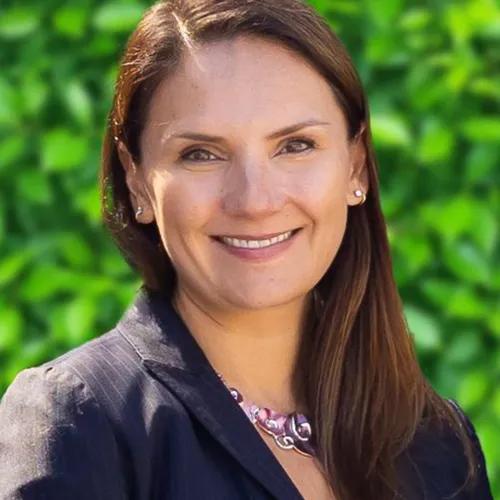
Kayte Spector-Bagdady, JD, MBE
Associate Professor
Featured News & Stories

Top 7 tips for choosing Medicare prescription drug coverage for 2027
Learning Together: Making Space for Growth at Work

The AI is listening: Implications of machine generated clinical notes on health care

What’s the latest on 7-OH and kratom availability and addiction care?

Can Your Voice Reveal Early Signs of Alzheimer’s?