Full-Court Press

Photos 4, 5, and 6 by Cassie McNulty and Seong-Hee Yoon. All others by Leisa Thompson Photography

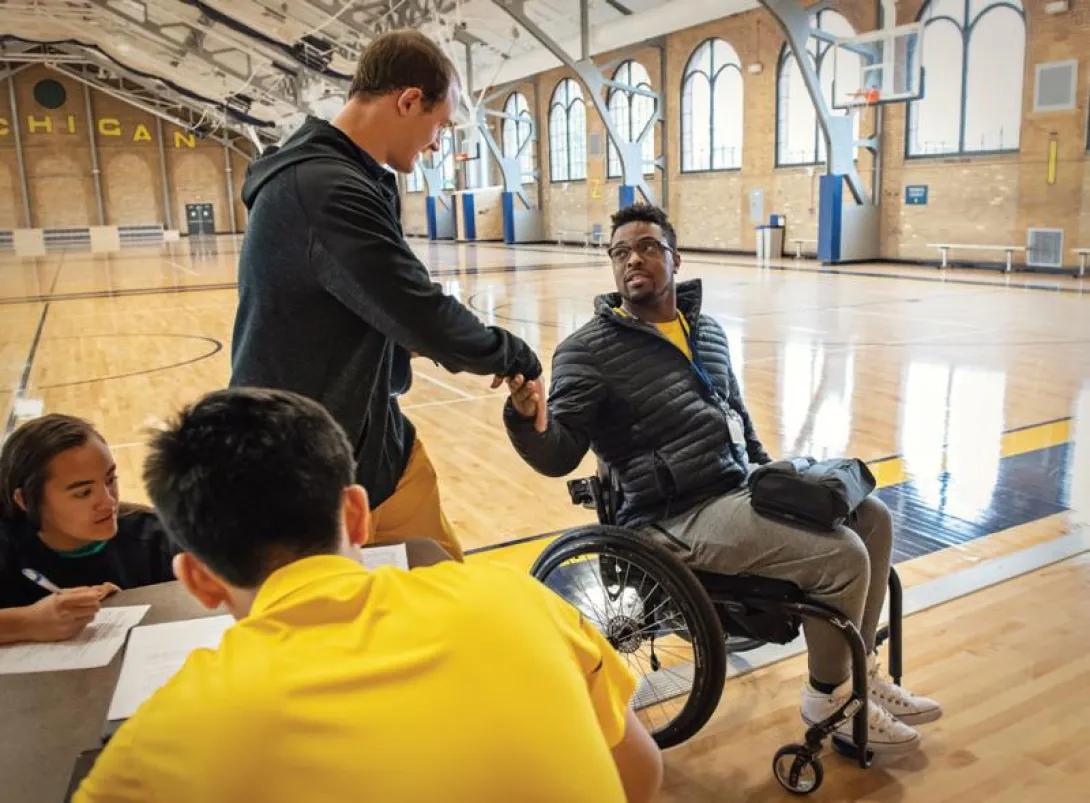
Feranmi Okanlami (M.D. 2011) played basketball with his 7-year-old son recently. Just a small, sweet moment between a father and son — or that's what it would have been, if it weren't something so much bigger.

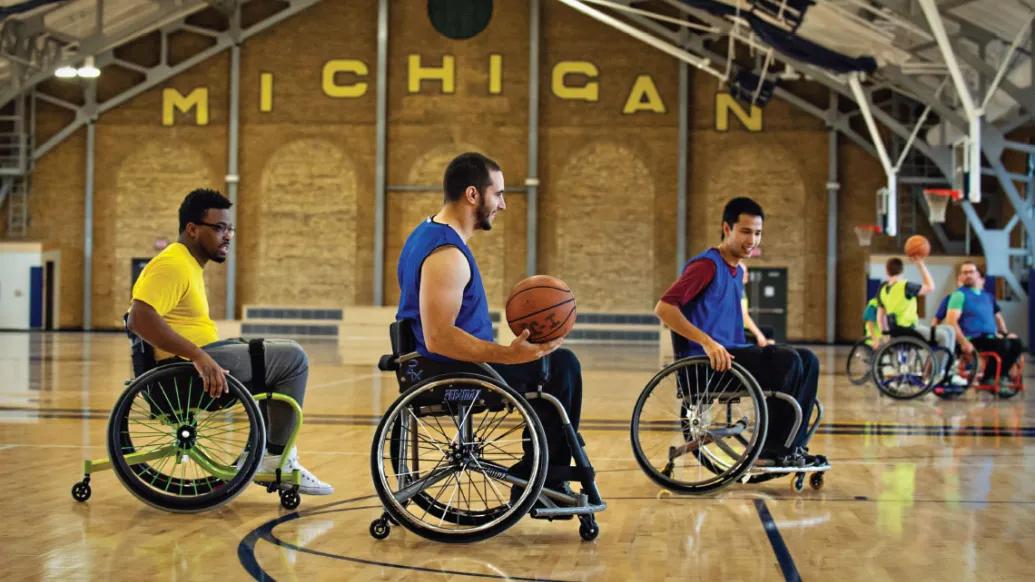
Okanlami, paralyzed from the chest down during a 2013 pool accident, has regained some mobility and function since then, but still uses a wheelchair most of the time. So sharing some moments on the court with his son was particularly meaningful to him. "My son said, 'Dad, now we can play together,'" Okanlami recalls.

That moment reminded Okanlami of why it is so important to him to try to get an adaptive sports program started at the university.

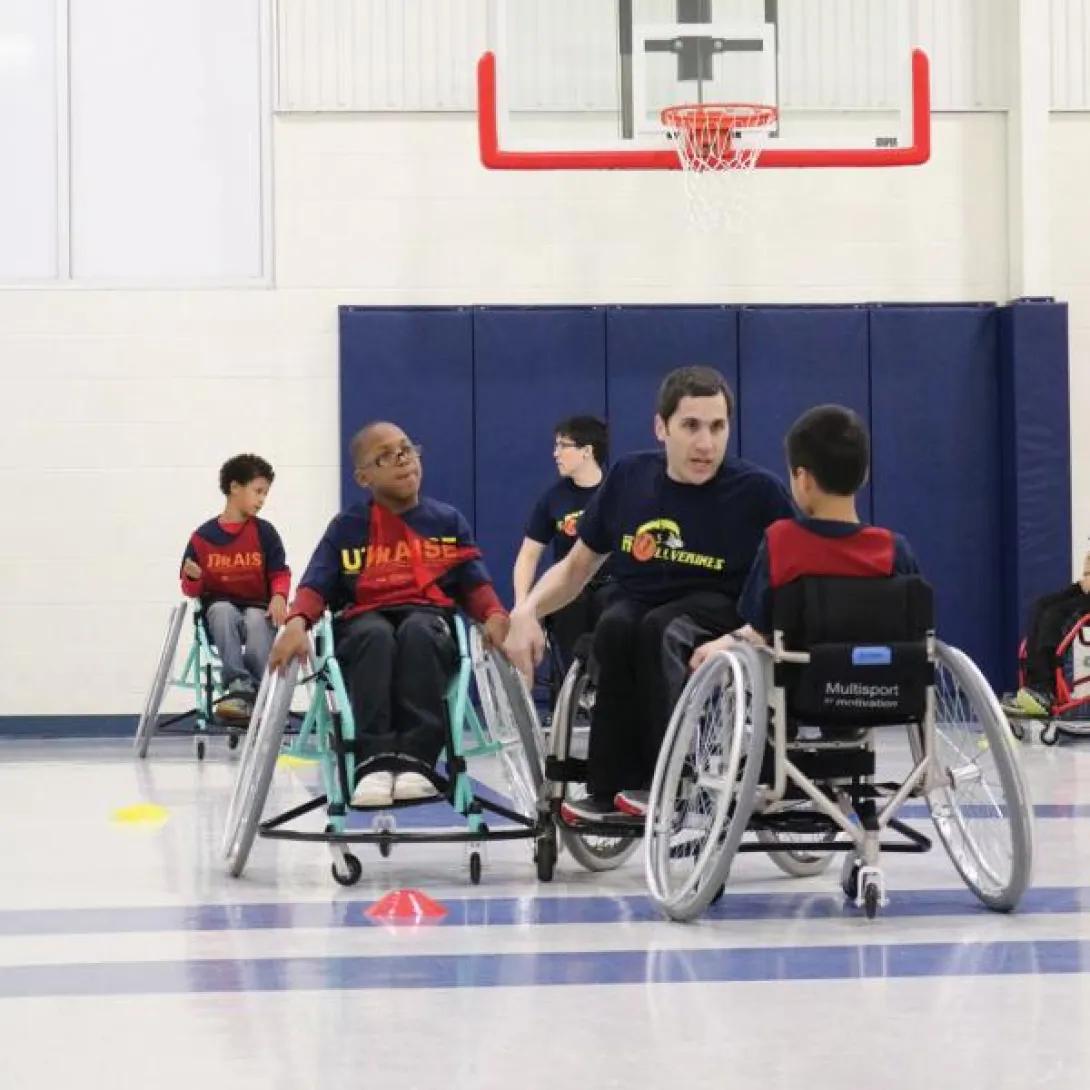
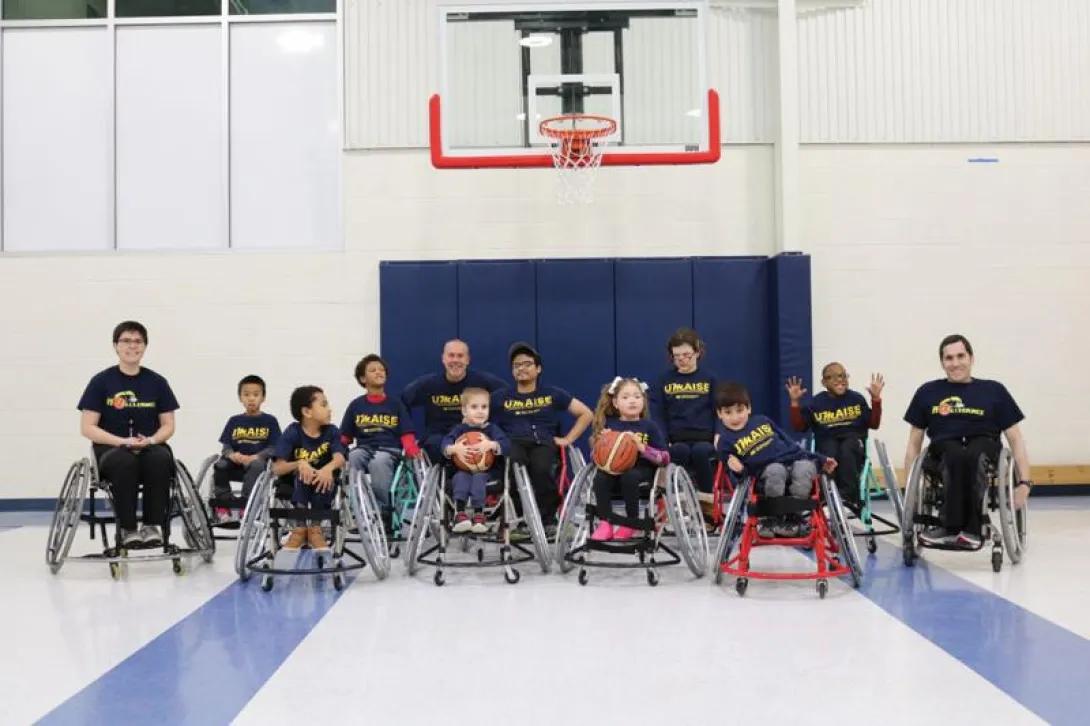
While he is pushing for the creation of an adaptive sports program for U-M students, Michigan Medicine already has a competitive wheelchair basketball team for kids. The Michigan Rollverines, run by the U-M Adaptive and Inclusive Sports Experience (UMAISE), a joint effort of the Department of Physical Medicine and Rehabilitation and the Department of Family Medicine, competed in its first tournament earlier this year. The team received new sports wheelchairs in 2018, thanks to support from Dance Marathon, a nonprofit led by U-M undergraduates.
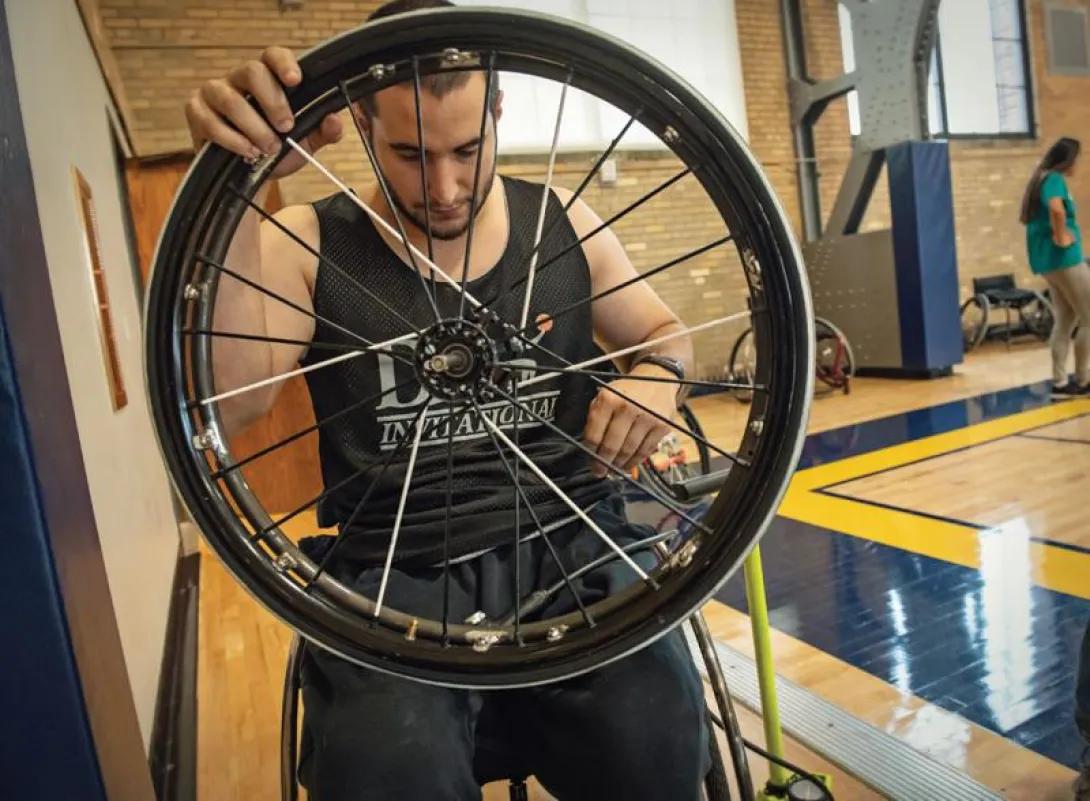
 

1. Jimmy Moceri, a wheelchair basketball star, fixes a wheel before hitting the court. 
2. "It's bigger than sports. It's bigger than disability," Okanlami says. "It's about diversity, equity, and inclusion. It's about being able to participate in sports with your friends, or your classmates, or your son." 
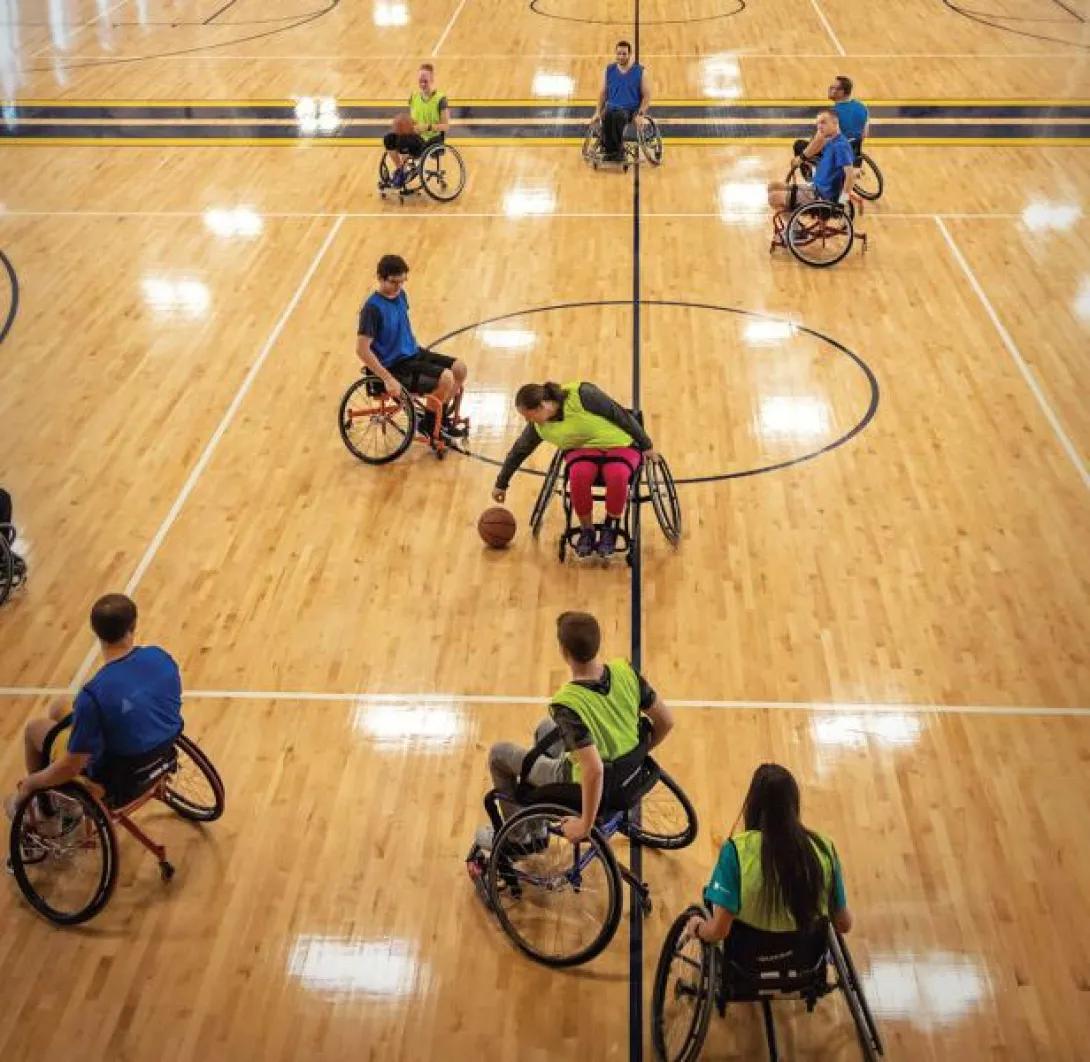
3. Okanlami (in chair) has led several wheelchair basketball outings, during which able-bodied and disabled students, faculty, staff, and members of the community have played together. 
4. "When you give kids the opportunity to use their chair to play a sport and have fun, it's eye-opening for them and also for their parents, who get to interact with their kids in a different way and see their kids in a different light," says Daniel Ellman, a Michigan Medicine communication specialist who is the head coach of the Rollverines. The team has grown quickly since it formed in September 2018. 
5. "We started with about five or six regular participants. Since then, we've grown to around 15 kids, aged from 4 to 16, and we come together every week to improve skills and to help our kids learn how to work together and have fun as a team," says Meghan Veiga, program coordinator and an assistant coach for the team, as well as a recreational therapist in the Department of Physical Medicine and Rehabilitation. 
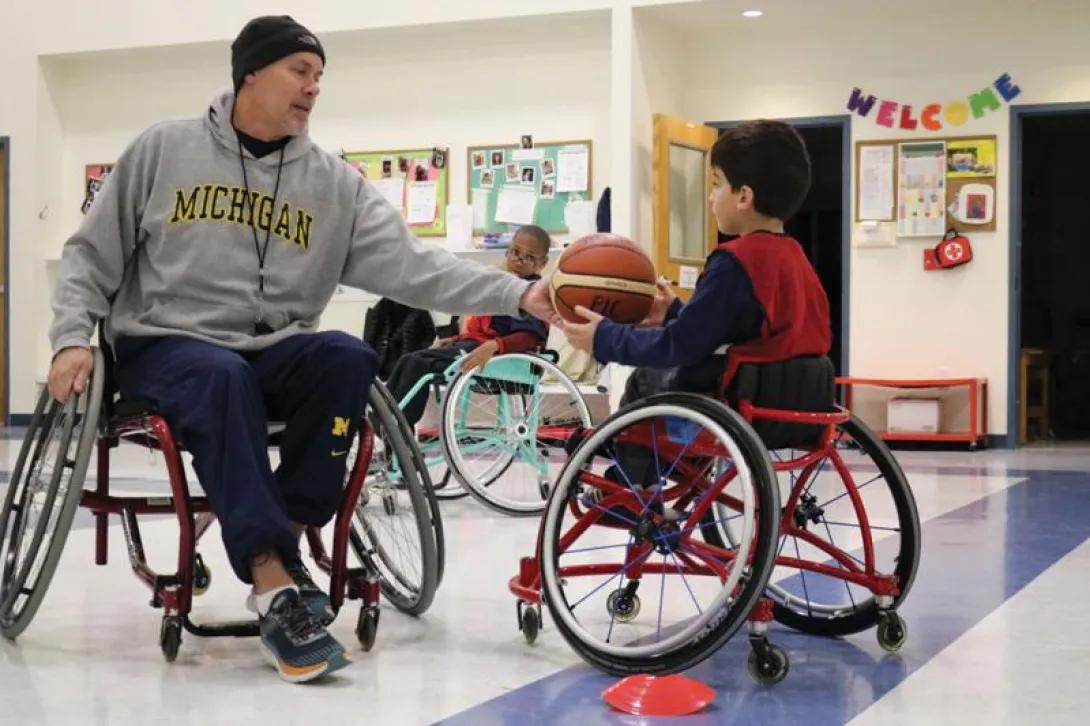
6. Volunteer coach Mark Bacon, a senior manager in Management Information Systems at U-M, helps a young player. 


More Articles About:

basketball disability gallery Rollverines wheelchair basketball UMAISE adaptive sports

Featured News & Stories

Health Lab Podcast in brackets with a background with a dark blue translucent layers over cells
Health Lab Podcast

Major Changes to Medicaid

With eligibility rules for people with lower incomes changing in every state, it’s important to stay up to date, seek trustworthy sources and not fall for misinformation. Read the full article here. The article this episode showcases was originally published Sept. 30 and updated Nov. 6 of 2026. The article will be kept up to date as more details become available, and the link to the full article will be included in the episode description.
Minding memory above a microphone on a blue background
Minding Memory

Giving Voice to Lived Experience in Dementia Research

In this episode, Lauren & Matt talk to Brenda Roberts and Steven Barbieri from the National Council of Dementia Minds. The National Council of Dementia Minds is the first national not-for-profit organization founded and governed by people living with dementia. Its work focuses on education, advocacy, peer support, and changing public perception of what it means to live with dementia. Brenda and Steven talk about the National Council of Dementia Minds, the importance of peer support and education for people living with dementia. They focus on how better understanding the lived experiences of people living with dementia can help shape research, policy, and advocacy.
UMich Med Mosaic on blue background with colorful geometric shapes
UMich Med Mosaic

Beyond the White Coat: Disability, Neurodiversity and Advocacy in Medical School

In this episode of UMich Med Mosaic, host Mackenzie Kay sits down with medical students Jill Maudlin, Sarah Renberg and Bella Johnson to discuss their experiences as disabled and neurodivergent trainees at the University of Michigan Medical School. They reflect on the personal journeys that led them to medicine, the challenges and strengths that accompany living with disabilities and chronic health conditions and the importance of representation within the medical profession. The conversation explores how disability shapes their approaches to patient care, advocacy and teamwork, as well as the role of the Medical Students for Disability Health Advocacy (MSDHA) organization in creating community and advancing accessibility initiatives. They also discuss Michigan’s accommodations in medical education, efforts to improve disability-related curriculum content and the importance of building a culture where disabled and neurodivergent students can thrive.
Minding memory above a microphone on a blue background
Minding Memory

Is the United States Lagging Behind Europe in Memory Improvement?
In this episode, Lauren & Matt speak with Neil Mehta, PhD who is the associate dean for research and a professor in the Department of Epidemiology at the University of Texas Medical Branch in Galveston. Dr. Mehta’s research focuses on US life expectancy trends, the effects of obesity on disability and mortality, the sources of socioeconomic status disparities in mortality, and patterns of health in the United States and Europe. Dr. Mehta talks about a recent manuscript from the NIA-funded TRENDS study called “Trends in Memory Function and Memory Impairment Among Older Adults in the United States and Europe, 1996 to 2018.”, which looks at data from several sources to compare trends in memory function across 13 different countries.
woman on phone taking notes
Health Lab

7 things every family caregiver should know – but many don’t

A guide to many community resource, and state and federal programs, that University of Michigan polls show caregivers to older adults and people with disabilities often don’t know about.
girl going in canoe with instructor in water
Health Lab

Expanding camp adventure for all

A doctor works with Camp Michigania on making accessibility updates that are expanding and improving camper experiences.