Unlocking the Secrets of Stuttering

Seeking treatments for a speech disorder.

Author | Lilli Khatibi
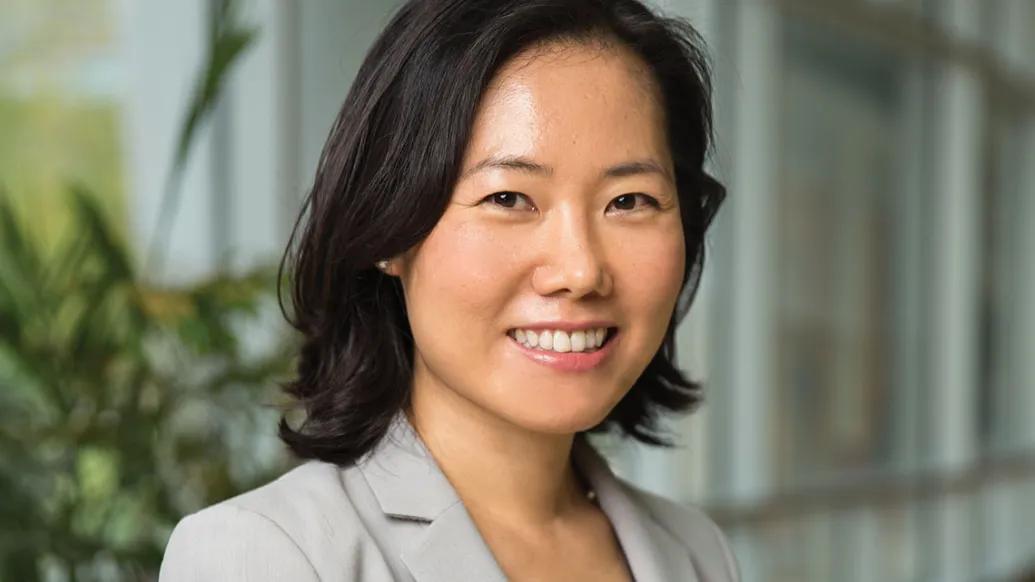
Photo Courtesy of Soo-Eun Chang

Soo-Eun Chang, Ph.D., moved with her family to the U.S. from Seoul, South Korea, when she was a child. Although she picked up English quickly, she watched her parents struggle to speak the language. 

"It really intrigued me that absorbing it came so naturally to me, while my parents never fully acquired the language," recalls Chang. 

The experience ignited her curiosity about the development of language, which led to her undergraduate study of psychology at Seoul National University, and advanced degrees in the U.S. 

Her personal and scholarly background built a base for her current work: the study of stuttering, which fascinated her because the understanding of and treatments for the disorder remain limited. Chang, the Rosa Casco Solano-Lopez Research Professor of Child and Adolescent Psychiatry, is principal investigator and director of the Speech Neurophysiology Lab, a joint effort between Michigan Medicine and Michigan State University. Collaborating with investigators from two leading institutions puts Chang in a unique position to pave the way for advancements in the field, she says. 

"Stuttering is extremely interesting to me because it affects the most fundamental human ability: communicating through fluent speech production," says Chang, also an assistant professor of psychiatry. "It's a disorder that is quite common, but to this date, we know very little about its etiology and why some people recover from it while others persist." 

U-M alumnus and donor Matt Smith decided to make a gift to Chang's lab because of his own experience with stuttering. With his support, researchers are testing a form of noninvasive brain stimulation called Transcranial Direct Current Stimulation (tDCS), and early successes have led to a grant to conduct clinical trials. This will be one of the first studies of stuttering that could have direct implications for intervention-related research. 

"My goal is to have our research illuminate what we could do to develop effective treatments in people who stutter," says Chang. "Our ultimate goal would be to develop novel treatments that can be applied very early on in childhood to prevent children from having a lifelong speech disorder that can have significant psychosocial consequences." 


More Articles About:

stuttering Research speech neurophysiology

Featured News & Stories

Health Lab Podcast in brackets with a background with a dark blue translucent layers over cells
Health Lab Podcast

The gap in dental care for children with sickle cell disease

A study finds that fewer than half of children with sickle cell disease covered by Michigan Medicaid received dental services.
Well-Being at Michigan Medicine with Dr. Elizabeth Harry
Well-Being at Michigan Medicine

Who are we? Meet the Office of Well-Being team
This special installment of Well-Being at Michigan Medicine coincides with celebrating Health Workforce Well-Being Day on March 18, 2025. As such, this episode brings together Chief Well-Being Officer Elizabeth Harry, M.D., and Jeffrey Patterson, M.H.S.A., M.P.H., the senior director for well-being operations and strategy. The duo discusses the evolution of the Office of Well-Being from its past iteration and how it brings a broader focus on creating environments where individuals and teams thrive, emphasizing well-being and addressing upstream factors that lead to burnout. Additionally, Dr. Harry and Patterson chat about key tenants of their work: operational well-being, culture of well-being and personal resilience. Recently, the team has grown, and new members have brought greater expertise to the organization. Learn more about how the Office of Well-Being aids it team members and brings a culture of belonging, resilience and support.
The Fundamentals Podcast Hero Card Final 1800 x 1350
The Fundamentals

Epigenetics, Inflammation and the Human Immune System

People with diabetes often have a host of other conditions including cardiovascular disease and kidney disease driven by inflammation. On today's episode, we talk with Dr. Katherine Gallagher, professor of surgery, professor of microbiology and immunology, and the Leland Ira Doan Research Professor of Vascular Surgery at U of M, who is looking at how epigenetics - the influence of environmental factors and behaviors impact on gene expression - might explain changes in the immune system in people with cardiovascular disease, diabetes, and other conditions related to inflammation.
The Fundamentals Podcast Hero Card Final 1800 x 1350
The Fundamentals

Psoriasis, Diabetes and Other Inflammatory Conditions

Today on The Fundamentals, we have a conversation with Dr. Sonya Wolf-Fortune, Assistant Professor of Pharmacology, whose work focuses on investigating the underlying mechanisms of psoriasis, diabetes, and other inflammatory conditions. Dr. Wolf-Fortune is trying to uncover what sets off the cascades of inflammation related to these conditions and related diseases.
Minding Memory with a microphone and a shadow of a microphone on a blue background
Minding Memory

Exposure to a Natural Disaster and Long-term Cognition

In this episode, Matt and Lauren speak with Drs. Elizabeth Frankenberg at the University of North Carolina at Chapel Hill and Duncan Thomas at Duke University about their research which focuses on understanding how survival and physical health evolve after exposure to large scale shocks like the 2004 Indian Ocean Earthquake and Tsunami. They will specifically speak about the STAR Study and what they’re learning about long-term effects on cognitive outcomes.
Well-Being at Michigan Medicine with Dr. Elizabeth Harry
Well-Being at Michigan Medicine

Technology and Well-Being

In this episode, Dr. Elizabeth Harry is joined by Michigan Medicine’s Chief Information Officer Dr. Andrew Rosenberg. Harry and Rosenburg discuss how technology has aided and created hurdles to positive well-being in the medical setting. The two talk about the human focus, and ways data and innovation can be helpful in creating better relationships to reduce burnout.