MedSciWriters Features Dr. Feldman in Scientist Spotlight
Written by: Isha Verma
Edited by: Jennifer Baker
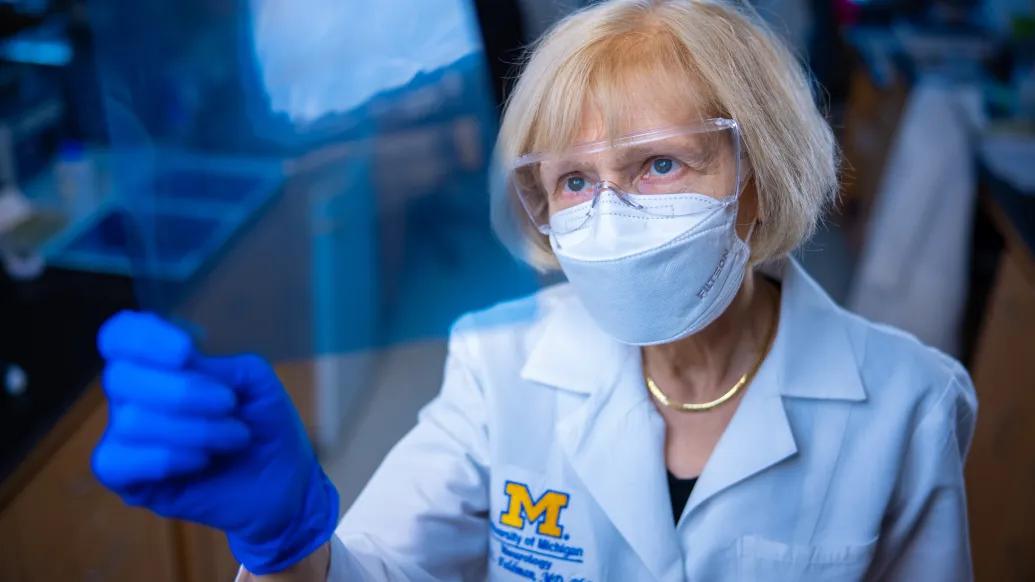
For ALS Awareness Month (May), the University of Michigan student organization chose Eva Feldman, M.D., Ph.D., to appear in their “Scientist Spotlight” feature to talk about the disease.
Amyotrophic lateral sclerosis (ALS), also called Lou Gehrig’s disease, is a neurological disease that causes the degeneration and death of the nerves controlling the muscles, called motor neurons. This results in gradual muscle wasting and loss of the ability to walk, talk, eat, and, eventually, breathe. The typical survival is 3 to 5 years from the onset of symptoms. ALS occurs in approximately 1 to 4 of every 100,000 individuals, and over 30,000 individuals in the United States are estimated to be living with ALS.
The cause of ALS remains unknown. About 90% of the individuals suffer from the ‘sporadic’ form of ALS, with no family history and no single gene mutation underlying the disorder. Sporadic ALS is believed to be related to the complex interplay of genetics and environmental exposures, which makes a person more susceptible to a neurological disease. In about 10% of the patients, the disease is inherited and called ‘familial’ ALS. Mutations in more than 20 genes, including chromosome 9 open reading frame 72 (C9orf72) and copper-zinc superoxide dismutase 1 (SOD1), have been linked with ALS. Whether ALS is sporadic or familial, there are currently no effective treatments.
In honor of ALS Awareness Month (May), we focus on Dr. Eva Feldman, an internationally acclaimed clinician-scientist working on developing new cures and treatments for ALS.
Dr. Eva Feldman is the James W. Albers Distinguished Professor of Neurology at the University of Michigan Medical School. She is the Director of the ALS Center of Excellence and the NeuroNetwork for Emerging Therapies and the Past President of the American Neurological Association and the Peripheral Nerve Society. Dr. Feldman has received many honors, including induction into the prestigious National Academy of Medicine. In addition, she was elected to the Honorary Association of American Physicians, the Johns Hopkins Society of Scholars, and was named as one of the country’s top physicians by Castle-Connolly in 2016.
Dr. Feldman’s research in ALS spans a broad range of topics, including gene discovery, stem cell therapeutics, the role of environmental toxins on disease progression, and the repurposing of existing drugs as new therapies in ALS. The main focus of Dr. Feldman’s lab is to understand the environmental contribution to the pathogenesis of ALS. Her research group showed that persistent organic pollutants are found in high concentrations in the plasma of ALS patients and negatively impact ALS survival, emphasizing the effect of environmental exposure on ALS pathogenesis. Dr. Feldman’s team has also found that ALS patients have high occupational exposure to particulate matter, volatile organic compounds, metals, pesticides, and combustion and diesel exhaust. The same study showed that people working in production occupations had a higher risk of ALS. This may help explain why the Midwest, which has the largest number of individuals in production occupations, has the highest prevalence of ALS in the United States.
Another important focus of research in the Feldman lab is understanding the specific immune signatures in ALS patients to identify novel targets for drug therapy. For example, Dr. Feldman’s team has identified differences between the immune systems of male and female ALS patients, which could have important clinical implications. The team is also working on developing drugs against natural killer cells. Under normal conditions, natural killer cells are essential for attacking cancerous and infected cells in the body. However, in ALS, natural killer cells mistakenly target motor neurons and activate other immune cells, resulting in disease progression. To shut down natural killer cells’ harmful attack on motor neurons, Dr. Feldman’s team is trying to repurpose tofacitinib, a drug used for rheumatoid arthritis treatment, for ALS. Tofacitinib blocks natural killer cell activity, reducing their killing potential and ability to produce destructive signals. If successful, this drug could delay the progression of nerve cell degeneration in ALS. Dr. Feldman’s group has also submitted a patent to repurpose FDA-approved drugs known as Jak kinase inhibitors for ALS patients to block natural killer cell activity and potentially slow ALS progression.
The ALS Center of Excellence, of which Dr. Feldman is Director, is also working on understanding the role of abnormalities in the metabolism, processing, and recycling of ribonucleic acid (RNA) in ALS-associated nerve cell degeneration. The team is studying the role of exosomes that may travel between nerve cells and transport the damaged molecules required for the progression of some forms of ALS. Dr. Feldman is also the principal investigator and director of the first-ever FDA-approved human clinical trial in which stem cells are injected directly into the spinal cords of ALS patients. More than 30 patients have received stem cells in two FDA-approved clinical trials, and the preliminary results are promising: the injected cells seem to have either improved or slowed disease progression in several patients.
Dr. Feldman is a great mentor and one of her accomplishments is the training of scientists and neurologists. She has mentored 9 Ph.D. students and more than 100 postdoctoral fellows and neurologists to specialize in the understanding and treatment of neuromuscular diseases, with an emphasis on ALS. Hopefully, Dr. Feldman’s research will help to create a future free of ALS.
Keep up with the latest research from the Feldman lab here.
Featured News & Stories
University of Michigan implants first-in-human Paradromics wireless brain-computer interface, designed to restore communication

Six U-M medical research teams picked for virtual science tournament
Researchers develop models to help diagnose ALS earlier through blood biomarkers
How virus-like proteins shape a cell’s stress response

ALS diagnosis and survival linked to metals in blood, urine