Protecting children from firework-related injuries, burns
1 in 5 parents would allow kids to help set off fireworks; some don’t consistently enforce sparkler safety rules, or keep a safe distance.
10:20 AM
Author |

As communities prepare for Fourth of July festivities, some parents may be overlooking burn and injury risks for children, a national poll suggests.
Fireworks and sparklers are often part of the season's celebrations, with over half of parents polled reporting that someone in their family or neighborhood have set off fireworks in the past two years.
But parents don't consistently cover all safety precautions, according to the University of Michigan Health C.S. Mott Children's Hospital National Poll on Children's Health. One major mistake? Only one in five said children sat at least 100 feet away from where aerial fireworks were being set off.
"For many families, setting off fireworks is a favorite summer tradition, but fireworks are unpredictable. It's essential that parents keep children far away from where those fireworks are set off," said Mott Poll co-director Sarah Clark, M.P.H.
"Our poll suggests that some parents may need to be more diligent to ensure a safe environment that minimizes these risks and protects children from firework injuries."
Over a third of parents say that their children or teens helped set off fireworks in the past two years, with one in five parents saying they'd allow their child aged 10 or younger to help.
Another third said they'd let kids ages 11-15 help set off fireworks while more than a quarter said they'd let older teens get involved.
"Parents differ on what age they would allow their child to be part of setting off fireworks," Clark said. "But parents need to ensure children are at the right age and maturity level to understand the dangers involved and importance of carefully following all safety rules. If the child is not ready to do these things, their risk of burns, eye injuries and other accidents is increased."
About 15,600 people went to emergency rooms because of fireworks injuries in 2020, a 56% increase from the 10,000 injured in 2019, according to a report from the U.S. Consumer Product Safety Commission.
Sparklers, which some parents may perceive as a safe option for kids and which are often twirled around in fun, burn at over 1000 degrees. These can lead to serious burn injuries if not handled properly, Clark notes.
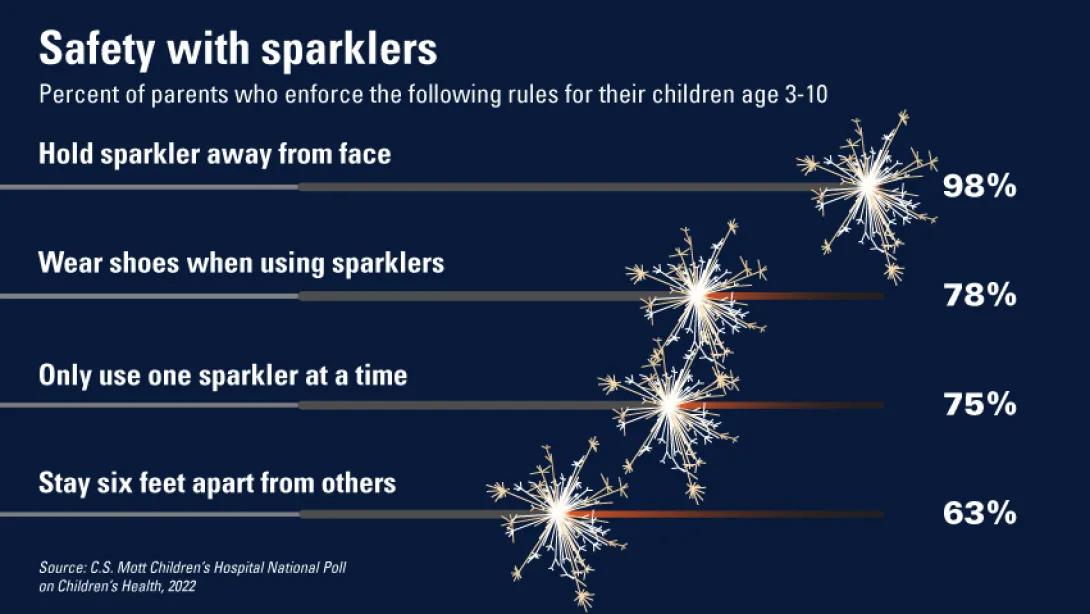
Two in in three parents say their child always follows the rules when using sparklers and the majority of parents say they enforce safety rules: ensuring that their child holds the sparkler away from their face, wears shoes, uses only one sparkler at a time and stays at least six feet apart from other children. But just half of parents say they have sand or water nearby to put used sparklers in.
The majority of parents also say they talk with their child about safety rules related to fireworks, with more mothers than fathers believing they are always careful about supervision.
"Parents may believe that sparklers are a safe way for younger children to enjoy summer celebrations. But these are handheld fireworks that can reach temperatures hot enough to burn some metals," Clark said.
"Sparklers are only safe if parents enforce all safety measures and children follow them."
Fireworks safety tips for Fourth of July celebrations
-
Stay at least 100 feet away from where any fireworks are set off.
-
If setting off your own fireworks, purchase legal ones that are clearly labeled for consumer use and follow directions and safety guidelines carefully.
-
Never point or throw fireworks, including sparklers, at anyone.
-
Wear safety goggles or other eye protection if setting off fireworks yourself.
-
Keep a bucket of water or a garden hose nearby in case of a fire.
-
Only light one firework at a time and don't try to relight the duds.
-
Wait until fireworks cool before picking them up, possibly even the next day.
-
Consider your child's age and maturity level, including their ability and willingness to follow rules, before allowing them to use sparklers.
-
If using sparklers, teach children how to hold them below the point where they will burn down and to put the sparkler in a bucket of water after use.
-
Check the area for rocks, toys or other objects to prevent children from tripping when it's dark. The space should also be far from trees, homes and fire hazards.
-
Ensure children wear shoes to prevent burns if they accidentally step on a used sparkler.
-
Be prepared to use first aid. For a minor burn, place a towel soaked in cool water over the area for about five minutes. Then cover with a clean bandage and give your child acetaminophen to reduce pain and swelling.
-
For a major burn, or if the burn involves eyes, bring the child to the emergency room promptly.

Health Lab
Explore thousands of health news & research stories by visiting the Health Lab homepage for more.
Media Contact

Public Relations
Department of Communication at Michigan Medicine
Related

Keeping Kids & Teens Safe Around Fireworks
Stay Informed
Want top health & research news weekly? Sign up for Health Lab’s newsletters today!
Featured News & Stories
A gift for Michigan’s most vulnerable babies

After 13 years of IV nutrition, teen finds freedom to just be a kid
FDA approved drug slows type 1 diabetes progression in 5-year-old patient

Galens Tag Days celebrates 100 years of helping kids
From 20 seizures a day to more time for play: How personalized epilepsy care helped young patient