Preparing for Puberty in Girls with Disabilities
Developing is confusing enough without the added complexities of physical and intellectual disabilities. Here’s what parents need to know.
7:00 AM
Author |
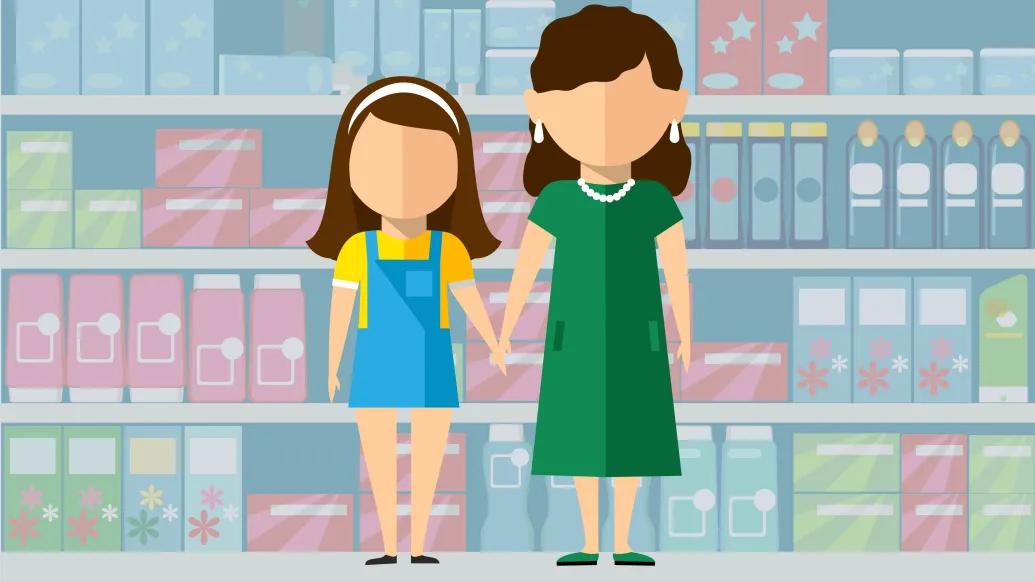
Puberty can be a challenging and confusing time in any young woman's life. If she has physical or intellectual disabilities, it can be even more challenging for the young woman and her family and caregivers.
SEE ALSO: How Dads Can Cope When a Child Is Sick
The American Academy of Pediatrics and the North American Society for Pediatric and Adolescent Gynecology recently released a new guide for pediatricians to help support adolescent females with intellectual and physical disabilities and their families in successfully navigating puberty, and their periods, in particular.
Here are some of the takeaways for families:
Preparing for periods
For a young woman, the most outward sign of puberty will initially be breast development. Since the start of breast development and the onset of periods are separated by about two to three years, providers and parents have some time to work with the girl.
Depending on the individual, preparing for menstruation can take many forms. Start with the basics of menstrual flow and proper hygiene. For someone with special needs, that might mean using picture books to explain the bleeding, or practicing with pads.
Even if you've prepared your child as best as possible for puberty and menstruation, some adolescents may not have the capacity to understand or cope with it. Alternatively, some girls with physical disabilities may not be able to manage the hygiene of menstruation.
After the young woman experiences a few periods, and the effect on the girl and her life is observed, some families find it appropriate to consider a form of hormonal treatment (e.g., birth control pills) to minimize heavy periods or eliminate them.
It is important to discuss options with your health care provider and your child, to the extent she is able to participate in the conversation. In addition to your pediatrician, you may also benefit from seeing a specialist in pediatric and adolescent gynecology or a gynecologist who specializes in treating individuals with special needs.
Confidential conversations
The AAP recommends confidential discussions between the young woman and her pediatrician, starting around age 12 or 13. This is an important part of empowering your child with her health, as much as possible with respect to her abilities. Although it makes some parents uncomfortable, the private time between the girl and her health care provider allows open and honest conversations. Be sure to encourage your daughter and pediatrician to take that private time, if appropriate.
Sexual abuse and vulnerability
Girls with disabilities experience a higher incidence of sexual abuse, so it's critical that your daughter understands what's appropriate, what is not and how to handle a situation where she might feel uncomfortable. Parents often are understandably very worried about this vulnerability, so teaming up with your health care provider to address this difficult issue can be helpful.
Talk about safety, appropriate stranger behavior and how each person has the power to say yes or no to sexual experiences. Tools are available to help families educate most teens about this at their developmental level.
Teens with special needs are sexual, too
It is important to remember that all teenagers, including those with physical and intellectual disabilities, have normal sexual desires and curiosities. Discussing healthy sexual activities and relationships, including pregnancy and disease risks, in the context of your family's values and your daughter's abilities is important, even if it's uncomfortable. Just as you would with any teenager, prepare your daughter as much as possible for how to handle situations in which she may feel desire or curiosity.
Enlist the support of your team
Health care providers, caregivers, support groups and other resources can be invaluable for parents of young women with special needs, and for the young women themselves. Hearing how other families and their daughters handle these sometimes challenging situations can be helpful and affirming.
With planning and proper support, parents and health care providers can help teens navigate their changing bodies.

Health Lab
Explore thousands of health news & research stories by visiting the Health Lab homepage for more.
Media Contact

Public Relations
Department of Communication at Michigan Medicine
Stay Informed
Want top health & research news weekly? Sign up for Health Lab’s newsletters today!
Featured News & Stories

Depression in OBGYN residents needs more attention, study suggests

Better prenatal care data could help prevent maternal complications, experts say
PCOS has a new name

E-Bikes are everywhere, but most parents say they don’t know enough about them
Who’s at risk for painful periods?