Couple Fulfills Dream to Become Dads Through Surrogacy
After welcoming their son, couple helps Michigan Medicine launch first peer mentor program for same sex couples expecting babies through surrogacy.
5:00 AM
Author |
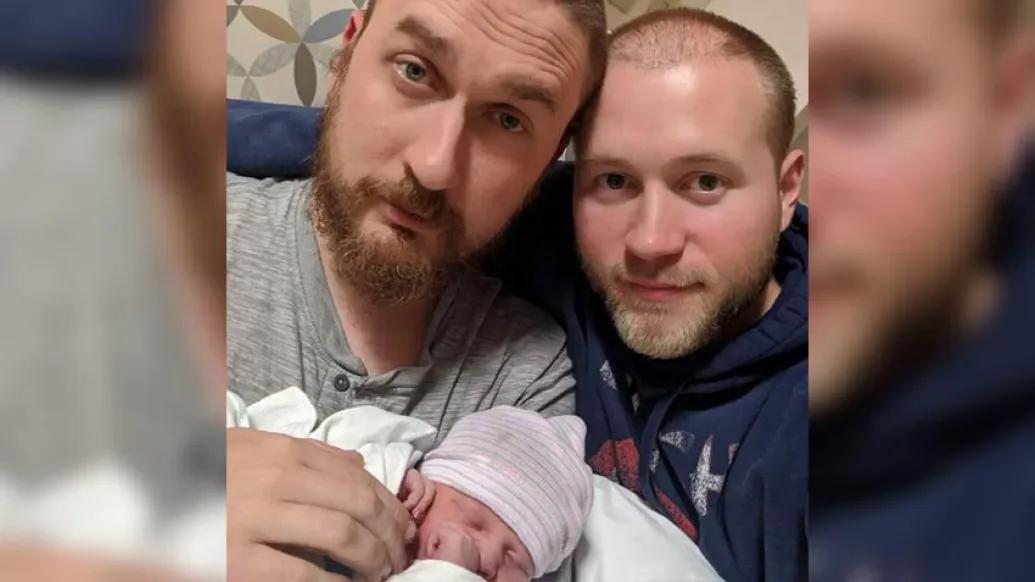
These days, Adam Taylor describes his days as sleepless, chaotic and blurry.
Another word comes to mind too: joy.
"I've always wanted to be a dad," says Adam while rocking his six-month-old son to sleep.
But for Adam and husband Doug, starting a family meant a three-year journey full of setbacks, numerous court procedures and major expenses.
LISTEN UP: Add the new Michigan Medicine News Break to your Alexa-enabled device, or subscribe to our daily updates on iTunes, Google Play and Stitcher.
After a childhood friend offered to carry their baby through surrogacy, the couple were finally able to fulfill their dream.
In June, they welcomed their blonde, blue-eyed son, Jeremy, at Michigan Medicine.
"He makes it all worth it," Adam says. "People keep asking us what we want for Christmas. I just tell them this is it. We already have it."
And today, Adam is the first mentor for a new patient support group launched through Michigan Medicine's patient experience program for same sex couples expecting babies through surrogacy.
"When we started sharing our story, people began reaching out to ask us about the process and how we did it. We want to bring visibility to families like ours," Adam says. "It's hard to imagine being a gay father when you have no models or examples to look to."
Stops and starts in pursuing a family
Adam and Doug, who both work in manufacturing, got married in 2017 and moved into a home they built in Holly. It wasn't too long before they were ready to have children, something they had talked about since their first date.
But as a same sex couple, it meant overcoming multiple nonconventional barriers.
After more than a year involving devastating disappointments, they finally had viable embryos through an anonymous egg donor at a Michigan fertility clinic.
But they were faced with another monster challenge: finding someone to carry their baby. Michigan law prohibits paid surrogacy so it would need to be altruistic in nature and uncompensated – or else they would have to go out of state.
Adam had been sharing updates about the couple's quest on social media, and had posted that they were at a standstill.
Rebecca "Becky" Fritz, who grew up attending the same elementary school as Doug in Fenton, had been following the couple's journey. When she saw the post, she felt compelled to reach out.
"I was very lucky to have a healthy, easy pregnancy with my son, so I didn't mind being pregnant again. I wanted to help if I could," says Fritz, whose son Owen is four.
"At first when I told my husband, he wasn't so sure," she laughs. "I told him I was just going to learn more."
So she called Adam and Doug and told them she'd consider it.
"The more I talked to them and the more I understood all of the details, I just couldn't think of a reason to say no," she says. "We think our son, Owen, is the best thing that ever happened to both of us. He's the most awesome thing in the world. Why wouldn't we want to help someone else have that too?"
After ironing out numerous details like how to handle insurance coverage, doctor visits and necessary legal steps – and with her husband's blessing – Fritz told the couple she'd do it.
"It was the best gift," Adam says.
But there were even more hurdles.
Adam was the baby's biological father, but without court approval, Doug wouldn't have any legal parental rights unless he adopted Jeremy after birth.
MORE FROM MICHIGAN: Sign up for our weekly newsletter
Thanks to his experience as a former lobbyist, Adam was familiar with navigating legal and legislative channels. The couple enlisted the help of an attorney, and after what seemed like endless research, paperwork and legal fees, they obtained a court order to ensure both Adam and Doug's names were on Jeremy's birth certificate.
"We were extremely lucky that we finalized everything through the courts before the pandemic," Adam says. "It allowed both of us to be present during all appointments and at the birth, have full parental status and ensure security in our family trust. We were able to skip a long second parental adoption process for Doug."
Von Voigtlander's clinical care coordinator, Gail Blakely, also worked with hospital teams, including social work, to help the couple plan for smooth transitions between labor and discharge, make accommodations for both Fritz and the Taylors, collect necessary paperwork and birth plans, and support the couple along the way.
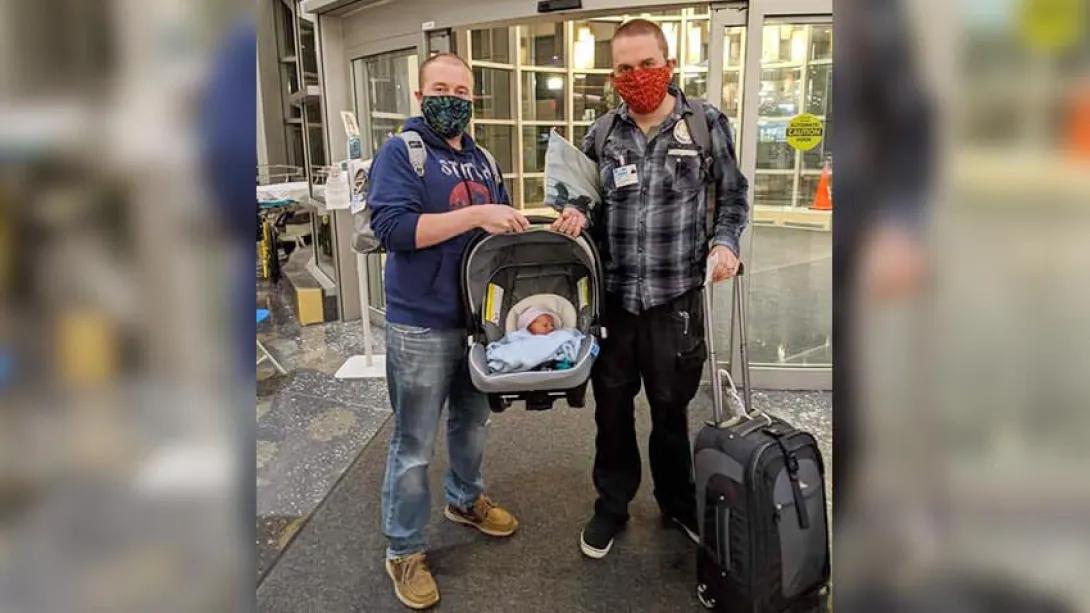
Paving the path for others
The Taylors shared in many of the pregnancy milestones right alongside Fritz, accompanying her to doctor visits and even having a Mario-themed gender reveal party with friends after the 20-week ultrasound.
"We almost felt guilty about how excited we were," Adam says of learning they were having a boy. "We would have been excited either way, but it just would have been a little more of a learning curve to have a girl first."
And then, three months later, with both Adam and Doug in the delivery room, Michigan Medicine midwife Emily Affeldt, C.N.M., delivered Jeremy.
"It was such a surreal experience," Fritz says. "You're going through all of the emotions and adrenaline and hormones. I remember them putting Jeremy on my chest and watching Adam and Doug. They were in complete awe. You could tell right away they were just head over heels. And that was what it was all for. It just made everything worth it."
Melissa Cunningham, volunteer coordinator for the Office of Patient Experience at Michigan Medicine, had been partnering with several teams working to combat stigma in health care when she heard about the Taylors. She asked them if they'd consider being mentors for a new same sex surrogacy birth peer mentor program.
They agreed, and the program was recently added to a list of more than 30 peer mentor programs at the institution that connect families with similar journeys.
"I'm thrilled that this new program will provide support to families in our LGBTQ+ community," Cunningham says. "Adam and Doug have been true trailblazers both within our health care system and in the state of Michigan. I'm grateful to them for helping us launch this program and to all of our amazing peer mentors who volunteer to help other families."
The Taylors say there's much more work to do in ensuring equality and continue advocating for benefits offered to other families, like parental leave, and streamlining the court process for guardianship for gay couples in Michigan.
But for now, they're soaking up all the special first moments with Jeremy, like trying solid foods at Thanksgiving, hearing him coo, trying to make him smile for "a thousand pictures a day" and watching his "stubborn personality" show itself.
"Journeys like ours are still so new and being challenged in so many parts of the country," Adam says. "We hope that sharing our story helps others behind us."
Like Podcasts? Add the Michigan Medicine News Break on iTunes or anywhere you listen to podcasts.

Health Lab
Explore thousands of health news & research stories by visiting the Health Lab homepage for more.
Media Contact

Public Relations
Department of Communication at Michigan Medicine
Stay Informed
Want top health & research news weekly? Sign up for Health Lab’s newsletters today!
Featured News & Stories

Galens Tag Days celebrates 100 years of helping kids
From 20 seizures a day to more time for play: How personalized epilepsy care helped young patient

Type 1 diabetes does not mean sitting out for 10 year old
More babies with hypoplastic left heart syndrome surviving critical period between surgeries
Distance, insurance, social factors may hinder access to lifesaving heart monitoring for children